

Short answer: A Pokhara to Everest Base Camp helicopter flight is a private charter, not a seat you can buy off a shelf. No operator runs scheduled shared-seat Everest departures out of Pokhara, because Everest Base Camp sits roughly 200 km by air from Pokhara against about 140 km from Kathmandu, and every extra minute over high terrain is paid for in fuel and lost payload. The flight is possible as a charter, it is longer and more weather-exposed than the Kathmandu version, and it is priced accordingly. Our published Kathmandu products remain the cheapest way to stand under the mountain: $1,260 per person on the shared Everest Base Camp day tour, or $4,500 to charter the whole aircraft privately.
The question rarely comes from a first-time visitor. It comes from someone who has already committed to Pokhara: a family flying into the new international airport, a group with three nights booked on Lakeside, a photographer who wants Annapurna at dawn and Everest before lunch. They open a map, see one mountain range between the two, and assume the flight is a short hop along the same ridge.
It is not, and the reason is worth understanding before you pay a deposit. A Pokhara to Everest Base Camp helicopter flight crosses the entire Annapurna foothill belt and the Kali Gandaki corridor before it even turns east into Solukhumbu, and it does so in an aircraft that has to carry its own fuel for both legs. This guide sets out what the flight actually involves, what the published prices are, where the aircraft can land, and the one comparison that decides the booking for most people: a Pokhara departure against a Kathmandu departure for the same mountain.
- 200 km+Pokhara to Everest Base Camp by air
- 5,545 mKala Patthar landing altitude
- $1,260Published Everest day-tour seat, from Kathmandu
- $4,500Private Everest charter, per aircraft
What a Pokhara to Everest Base Camp Helicopter Flight Actually Is
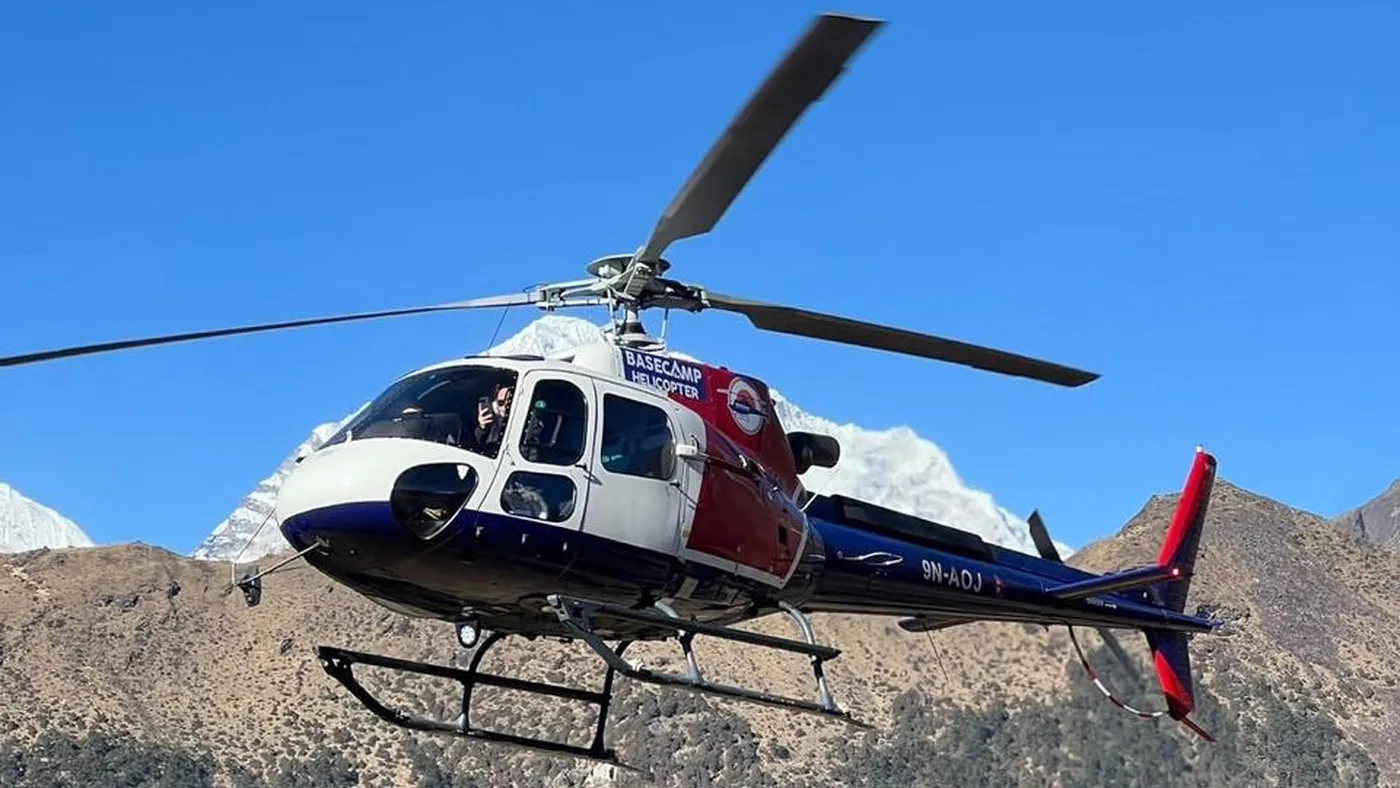
Strip away the brochure language and this is a charter. You are hiring an Airbus H125, the AS350 B3e that does nearly all of Nepal's high-altitude commercial work, and it comes with a pilot and five passenger seats that are yours to fill. The aircraft is billed by the flight block, meaning engine start to engine stop, and the block includes the time it spends getting to you if it is not already parked in Pokhara.
That last detail is what separates this flight from everything else on our Pokhara menu. The Annapurna Base Camp day tour is a packaged product with a published seat price, from $860 per person, and a published whole-aircraft price of $2,585 for up to five passengers. It works as a product because the sector is short, the aircraft is based in the valley, and a half-day block can be sold five seats at a time, several times a morning. An Everest charter from Pokhara meets none of those conditions. The sector is long, the machine usually has to be repositioned from Kathmandu to start it, and the weather window is narrower than the flight is long.
The practical consequence is simple. There is no Pokhara to Everest tariff, and there will not be one, because the number depends on where the aircraft sleeps the night before and how much of the morning the weather gives you. What we can do is quote it honestly, line by line, and show you the cheaper alternative in the same email. That is the standard we hold ourselves to on every route where the geography argues against the booking.
The Route: Two Long Legs and One Narrow Weather Window
The flight leaves from Pokhara International Airport, which replaced the old lakeside airport in January 2023 and sits about 15 to 20 minutes' drive east of the Lakeside tourist strip. Morning departures here start with less valley haze and a shorter transfer than a Kathmandu departure, which is a genuine advantage at 6 a.m. It is the only advantage the route keeps once the aircraft is airborne.
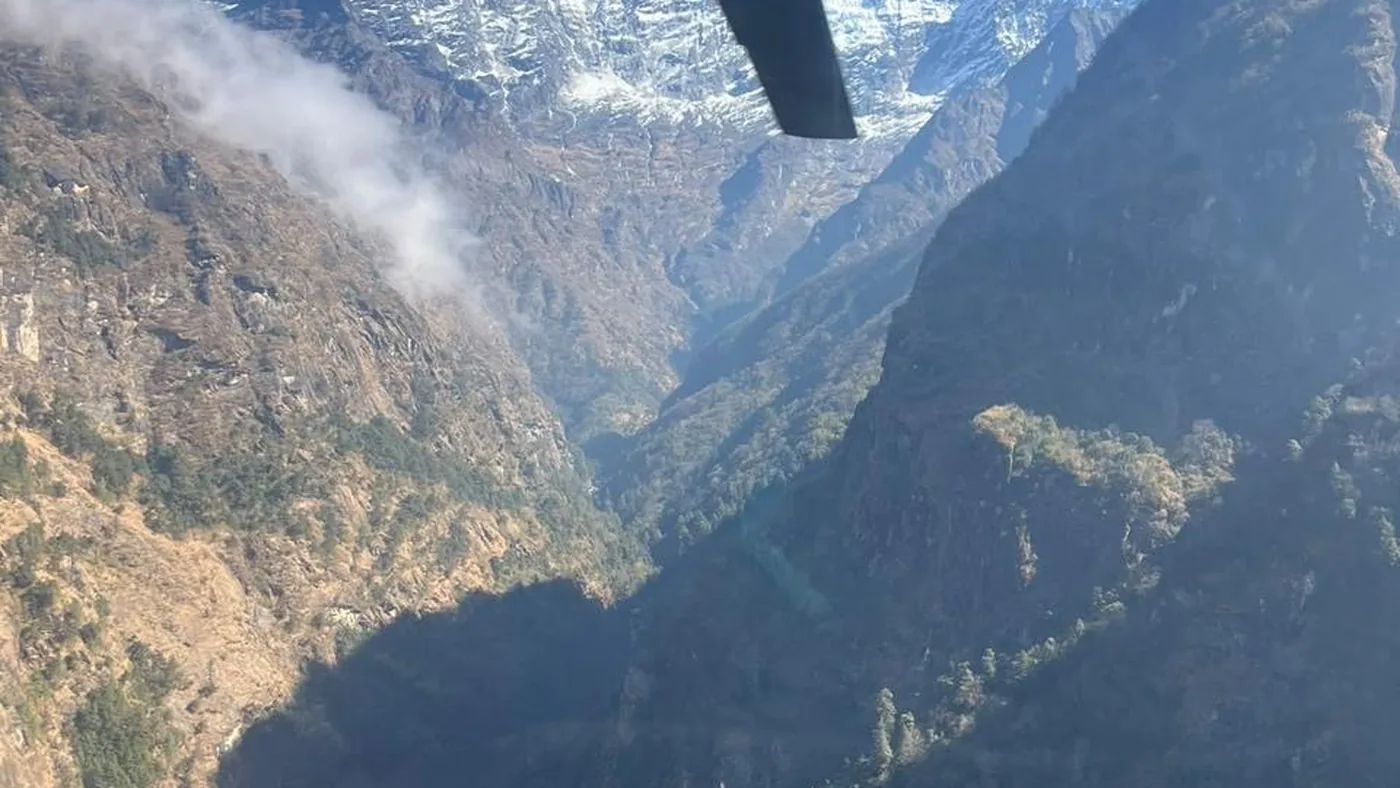
The outbound leg runs north-east across the Annapurna foothills and the Kali Gandaki corridor, then turns east along the Himalaya into the Khumbu. A Kathmandu Everest flight is about 45 to 50 minutes each way to base camp. From Pokhara, add roughly 25 to 35 minutes per leg before any allowance for the fuel and weight calculations that high-altitude flying demands. In plain terms, the outbound sector becomes a 70 to 85 minute flight, and the return matches it.
Those extra minutes matter more than the number suggests, because mountain weather in Nepal runs on a clock. The stable air is early. Cloud builds through the late morning, valley cloud fills the passes, and a corridor that was open at 7 a.m. can be closed by 10. A Kathmandu-based Everest tour is engineered around that clock: dawn lift-off, land, breakfast at the Everest View Hotel, and back in the capital by mid-morning with the whole flight inside the good window. A Pokhara departure spends the front half of the window flying to the mountain rather than flying on it. That does not make the flight unsafe, and a competent operator will simply cancel rather than push a marginal corridor. It does make the flight statistically more likely to be scrubbed, and it makes a buffer day in your itinerary close to mandatory.
One operational question to put in writing before you book: ask where the fuel comes from. An H125 carrying five passengers at altitude cannot carry unlimited fuel, so the operator plans the fuel load against the payload, and on some configurations that means a planned stop on the way in or out. You do not need to design that plan, but you should see it, because a stop adds ground time to the block you are paying for.
Everest Options and the Published Prices Behind Them
Because there is no published Pokhara charter rate, the honest way to price this flight is against products that do carry a published rate. All of the figures below are Kathmandu-based, all are 2026 rates, and all are quoted per person or per aircraft exactly as we sell them. They are the benchmarks a Pokhara quote has to be measured against.
| Everest option | Duration | Format | Published 2026 price |
|---|---|---|---|
| Everest scenic mountain flight | 1 hour | Fixed-wing, window seat | $260 per person |
| Everest Base Camp helicopter day tour | 1 day, about 5 to 6 hours | Shared H125 seat, Kala Patthar landing | $1,260 per person |
| Private Everest helicopter charter | 1 day, about 5 to 6 hours | Whole aircraft, up to 5 guests | $4,500 per aircraft |
| Everest Base Camp helicopter trek | 10 days | Trek up, helicopter return | $1,840 per person |
| Everest View Hotel overnight | 2 days, 1 night | Quoted per group | Quoted per group |
| Everest destination wedding | 1 day, about 6 to 8 hours | Per couple, three tiers | $5,100 per couple |
Two numbers in that table do most of the work. The $1,260 seat is the product most people actually want: a dawn departure, a landing at Kala Patthar or at base camp subject to weather and regulations, breakfast at the Everest View Hotel at 3,880 m, and a return to Kathmandu before lunch. The $4,500 charter is the same day with the cabin to yourself. Neither can be replicated from Pokhara for less, and a Pokhara charter is priced above the charter figure, not between the two.
Where the Aircraft Lands, and for How Long
A helicopter tour to Everest is really a tour of four altitudes, and which ones you touch decides the shape of the day. The table below is the landing and staging list we fly, with the altitudes we publish. The time on the ground is short by design: the aircraft sits at high altitude with rotors turning, and passengers are walked slowly through a few minutes of photographs before boarding again.
| Point on the route | Altitude | What happens there |
|---|---|---|
| Pokhara International Airport | Valley floor | Departure point for a Pokhara charter; 15 to 20 minutes from Lakeside |
| Lukla | 2,845 m | Gateway village of the Khumbu; staging or fuel stop where the plan calls for one |
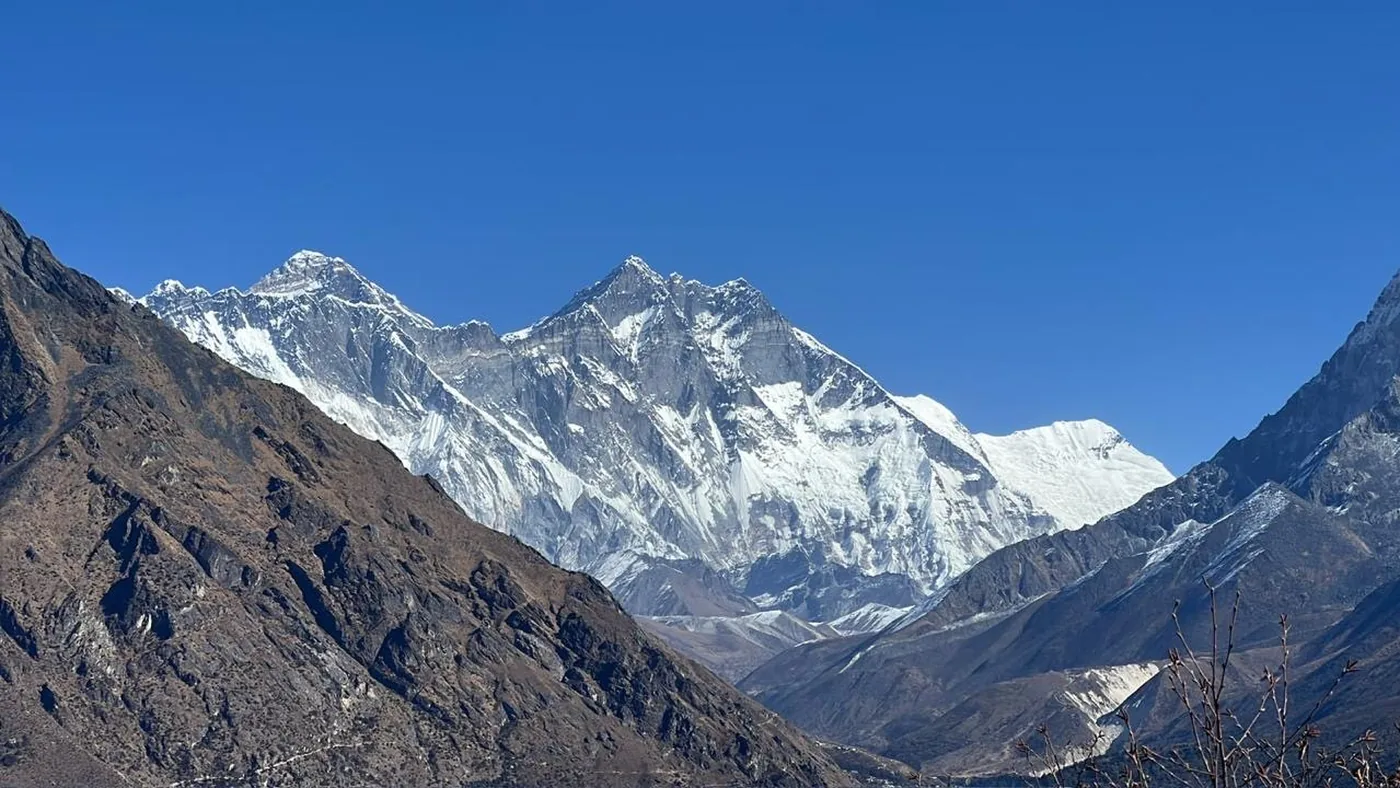
| Everest View Hotel, Syangboche | 3,880 m | Breakfast stop with Everest, Lhotse and Ama Dablam in the window |
| Everest Base Camp | 5,364 m | Landing subject to weather and regulations; a few minutes on the moraine |
| Kala Patthar | 5,545 m | The higher, more reliable viewpoint; the usual landing on the day tour |
| Everest summit | 8,848.86 m | Overflight only; no helicopter lands on the summit |
Two permits matter on this route and neither is optional. Sagarmatha National Park charges NPR 7,000 per person for entry, roughly $55, and it applies to anyone entering the park, including passengers who never leave the aircraft for more than a few minutes. Your passport is required for the flight manifest. If a quote for a Pokhara to Everest Base Camp helicopter charter does not mention the park fee, ask whether it is bundled or excluded, because on a five-seat charter that line alone is worth real money.
What the Charter Costs and Why the Quote Is Built Differently
Here is the arithmetic an operator is doing while you wait for a reply. An Everest charter from Pokhara carries four costs that a Kathmandu departure does not carry in the same proportion. The first is block time: two long legs instead of two standard ones, at an hourly rate that does not fall just because the scenery is better. The second is fuel against payload, which in thin air above 4,000 m is a trade rather than a top-up; more fuel for a longer sector means less margin for bags and bodies. The third is repositioning, the flight that moves the aircraft to Pokhara so your charter can start there, and the flight that takes it home afterwards. The fourth is ground time at the far end, where the machine burns block hours standing still at 5,000 m.
Against the published benchmarks, that pushes a Pokhara to Everest charter well past the $4,500 whole-aircraft price of our Kathmandu private charter, and the gap is usually measured in thousands rather than hundreds. We will not put a fake range on this page, because the honest number depends on your date, your group weight and where the aircraft is based that week. What we will do is quote it with the repositioning charge shown as its own line, so you can see exactly what the convenience of starting in Pokhara costs.
There is a second-order point that catches people out. Shared seats subsidise nothing on this route. On the Annapurna Base Camp day tour, five strangers each paying $860 make the flight work commercially, which is why the seat price exists at all. On a Pokhara to Everest charter there are no strangers: you are the five seats, so the whole block is yours to absorb. Groups of five therefore find the per-person figure tolerable, and solo travellers or couples find it startling. That is not a sales tactic, it is just what happens when a charter is divided by two instead of by five.
Pokhara Departure vs Kathmandu Departure, Line by Line
This is the comparison that settles the decision for most travellers, so it deserves a table rather than a paragraph.
| Factor | From Kathmandu | From Pokhara |
|---|---|---|
| Air distance to base camp | About 140 km | About 200 km, more on some routings |
| Flight time each way | 45 to 50 minutes | Add roughly 25 to 35 minutes per leg |
| Shared seats available | Yes, daily departures | No scheduled shared departures |
| Price basis | $1,260 per person, or $4,500 per aircraft | Charter quote, above the private charter price |
| Repositioning charge | None | Usually applies both ways |
| Weather exposure | One mountain leg in the good window | Two long legs inside the same window |
| Best suited to | Anyone whose goal is Everest | Groups already committed to Pokhara, film and wedding work |
Read the last two rows together and the recommendation writes itself. If Everest is the point of the trip, fly it from Kathmandu. The cost of a domestic connection between the two cities plus a $1,260 seat is still far below a Pokhara to Everest charter, and you get more departure dates, a shorter weather exposure and the same landing. Most Pokhara-based guests do exactly that: a flight or drive to Kathmandu the evening before, the tour at dawn, and back to Pokhara the same day, or Everest scheduled at the start or end of the Nepal trip while they are in the capital anyway.
If Pokhara is fixed and Everest is a wish rather than a requirement, the better use of the same money is on this side of the country. The helicopter tours from Pokhara comparison sets out the whole menu, and the Kathmandu to Pokhara helicopter transfer explains how to move between the two cities by air if you want to fly Everest and still sleep in Pokhara.
Booking From Abroad: USD, Deposits and the Season That Works
For international travellers, the whole transaction is quoted in US dollars, and that is deliberate: the aircraft, the fuel and the permits are all costed in foreign currency long before your booking exists, so a dollar quote is the one that will not move under you. A deposit secures the slot and the balance is settled in Nepal. Card payment is standard. The clause worth reading twice is the weather policy, because on this route it is not a formality: get the rebooking, refund and credit terms in writing before the deposit leaves your account.
On timing, the year splits cleanly. October and November are the most transparent months, with the monsoon gone and the air at its clearest. March to May is the strong spring window, warmer at altitude with rhododendron in bloom on the lower ridges. The monsoon runs roughly June to mid-September and grounds most mountain flying. December to February flies on clear cold days with more wind and more cancellations at the margins.
For anyone booking from the United States or Europe, the sequencing advice is the same and it is boringly effective: put the flight early in the trip, not on your last morning. If the first attempt is weathered out, you still have days left to take the second. A charter booked for the morning of your international departure is a gamble on a single roll of the dice, and mountain weather does not care about your flight home.
The Local Angle: Nepali Groups, Film Crews and Indian Pilgrims
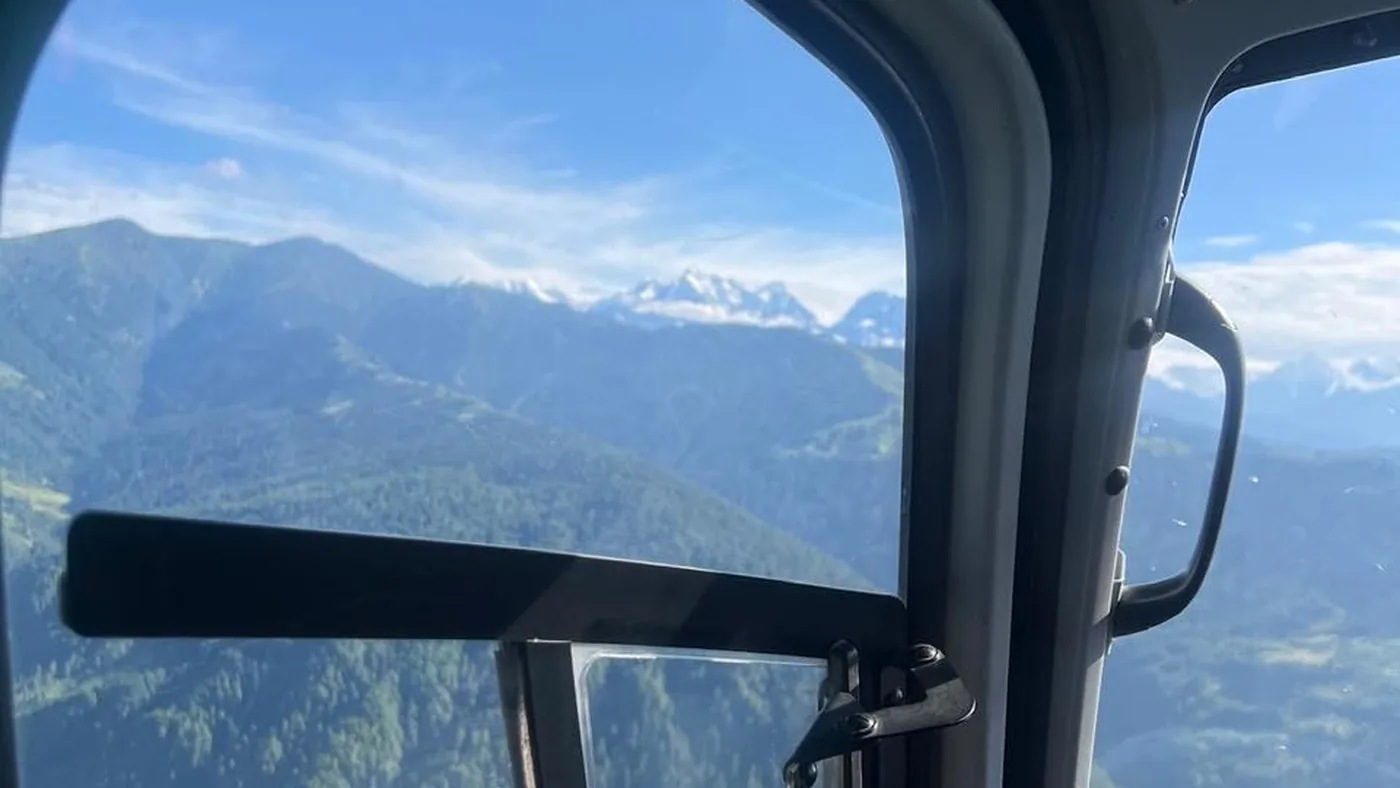
Domestic demand for this route looks nothing like the international demand, and it is worth setting out because a large share of the Pokhara to Everest charters we quote are not sold to foreign tourists at all.
Nepali travellers are quoted separately, in rupees, on enquiry, and the domestic rate differs from the published international price. That is standard across Nepali aviation, and the reason is straightforward: a domestic booking carries different permit handling, different paperwork and a different cost base. If you are a Nepali national planning a family charter, ask for the rupee rate and ask what it includes on the ground, because the gap between the two quotes is not a discount you should have to negotiate for.
The groups that make this flight work economically are the ones who can fill all five seats and split the block: extended families marking a milestone, wedding parties who want the ceremony at altitude, and film or advertising crews who need the aircraft as a camera platform rather than as transport. For a crew, the Pokhara start is often the whole point, because the same charter can shoot Annapurna at first light and be in the Khumbu by mid-morning, which no Kathmandu-based aircraft can offer.
Indian pilgrims are the other steady market, and their itinerary is usually different again. The Everest flight is slotted in as darshan, a sight of the mountain, and it is commonly paired with the Muktinath pilgrimage on the Annapurna side, which is a short sector from Pokhara and a genuinely sensible pairing. If that is your plan, tell the operator both legs at once: a single aircraft commitment across two sectors is priced better than two separate bookings made weeks apart, and the weather buffer can be shared between them.
Who This Flight Is Right For
It is right for a group of five who are already in Pokhara, who want the aircraft for the day, and who value the single-itinerary convenience enough to pay for repositioning. It is right for a crew with a shot list. It is right for a couple who want a private Everest flight and would rather start it from their hotel in Pokhara than add a Kathmandu hotel night at each end.
It is wrong for a solo traveller or a couple buying two seats, because the block does not shrink to match. It is wrong for anyone whose only goal is to see Everest, because the Kathmandu day tour does exactly that for $1,260 a head. And it is wrong for a tight itinerary with no spare morning, because the one thing this route cannot promise is that the weather will cooperate on the day you have chosen.
Frequently Asked Questions
Can you fly from Pokhara to Everest Base Camp in one day?
Yes, as a charter, and it is a long day rather than a half day. Allow two long legs of roughly 70 to 85 minutes each, a landing at Kala Patthar or base camp, a breakfast stop at the Everest View Hotel at 3,880 m, and a return to Pokhara. Because the whole flight has to fit inside the morning weather window, a dawn start is not optional.
Why are there no shared helicopter seats to Everest from Pokhara?
Because shared seats need short sectors and full aircraft to price sensibly, and this route offers neither. A Pokhara departure adds roughly 25 to 35 minutes per leg over the 45 to 50 minute Kathmandu leg, which turns a morning tour into a half-day block. Operators cannot fill five seats at a per-person price that covers that block, so the route sells as a private charter.
How much more does a Pokhara departure cost than a Kathmandu one?
We do not publish a figure, because it depends on your date, group weight and where the aircraft is based that week. What we will say plainly is that it sits above our published $4,500 private Everest charter, usually by thousands rather than hundreds, and part of that is a repositioning charge for moving the machine to Pokhara. Ask for that line to be shown separately.
Is the flight safe at that altitude?
The H125 is the standard Nepali high-altitude machine and the pilots who fly the Khumbu do it constantly. The real risks are weather and altitude effects on passengers, not the aircraft. Landings are a few minutes at 5,364 m to 5,545 m, which is high enough to leave you light-headed, so you move slowly, and the operator will cancel rather than fly a marginal corridor.
Do we land at Everest Base Camp or at Kala Patthar?
Kala Patthar, at 5,545 m, is the usual landing and the better viewpoint, because it looks straight at Everest rather than sitting under it. Base Camp at 5,364 m is possible but subject to weather and regulations on the day. Either way the summit itself is an overflight: no helicopter lands at 8,848.86 m.
How much weight can each passenger carry?
Plan on about 80 kg per person including hand luggage, and confirm the figure with the operator when you book. On a long high-altitude sector the fuel load and the payload are calculated together, so a heavy group can change the fuel plan and, in some configurations, add a stop. Weigh-in happens before departure and is not negotiable.
What permits are needed for the Everest region?
Sagarmatha National Park entry costs NPR 7,000 per person, about $55, and applies to anyone entering the park even if they stay with the aircraft. Your passport is needed for the flight manifest. Ask whether the park fee is included in your quote or payable separately, because on a five-seat charter it adds up.
What is the best season for this flight?
October and November for the clearest air, March to May for warmer conditions and spring colour on the lower ridges. The monsoon, roughly June to mid-September, grounds most mountain flying. December to February can be beautifully clear but windier, with a higher chance of a cancelled morning.
What happens if the weather cancels the charter?
The usual options are a rebooking on the next clear morning, a refund of the unflown portion, or a credit, depending on the terms you booked under. On this route the odds of needing that clause are higher than on a Pokhara valley flight, so build a spare morning into the itinerary and read the policy before paying the deposit.
Do Nepali nationals pay the same price?
No. Domestic departures are quoted in Nepali rupees on enquiry and priced differently from the published international rate. Ask for the rupee figure, the basis it is calculated on, and exactly what is included on the ground, including the park fee and any ground handling at Pokhara.
Can we combine it with an Annapurna Base Camp flight?
That is often the better plan. Annapurna Base Camp is a 4,130 m landing and a short sector from Pokhara, with a published seat price of $860 and a whole-aircraft price of $2,585, so a group can fly the Annapurna sanctuary on one morning and Everest from Kathmandu on the next, with a published price for both legs before anyone signs a charter contract.
How far in advance should we book?
A private charter needs more notice than a shared seat, because the aircraft has to be positioned and the pilot's duty day planned around your date. Give us your dates as early as you can, tell us your group weight honestly, and hold a spare morning. Weather, not availability, is what usually moves a Himalayan charter.
The Booking We Would Actually Recommend
If you want the mountain and you are flexible about where you sleep, book the Everest Base Camp helicopter day tour from Kathmandu at $1,260 per person, or the private Everest charter at $4,500 for the aircraft, and treat the Pokhara leg as a domestic connection. The day tour cost and landing guide sets out exactly what that morning looks like, and the private charter guide covers the whole-aircraft version.
If Pokhara is the fixed point and the group can fill the aircraft, ask us for the Pokhara to Everest Base Camp helicopter quote with the repositioning line shown, and compare it against the two-morning alternative: the Annapurna Base Camp day tour from Pokhara at $860 per person, followed by an Everest day from Kathmandu. The Annapurna and Pokhara helicopter tours hub holds every route out of this valley with its published price, so the comparison takes about five minutes.
One last piece of context for the mountain you are flying toward. The whole Khumbu corridor, from Lukla at 2,845 m to the summit at 8,848.86 m, sits inside a national park that protects both the landscape and the communities who live in it, and the fee you pay on the manifest is what funds that protection. The park's history and boundaries are set out on Wikipedia if you want to read up before you fly. The flight is short; the mountain is not. Plan the morning around the weather, not around the aircraft, and the odds improve sharply.