

Short answer: The Kathmandu to Muktinath helicopter package one day itinerary runs from a 05:30 hotel pickup in Kathmandu to a landing at Ranipauwa, the village below the temple at 3,710 m, and back in the city by early afternoon. The shared seat is $1,080 per person, the flight west takes 75 to 90 minutes each way, and the day is built around roughly two to three hours on the ground for darshan at the 108 spouts and the Jwala Mai flame. It is a morning product: wheels up around 06:30 to 07:00, because the Kali Gandaki wind arrives later than that.
- $1,080Per person, shared flight
- 3,710 mTemple altitude at Muktinath
- 75-90 minKathmandu to the temple, each way
- 108Sacred water spouts at the temple
Most people who ask about a Muktinath day trip are really asking two questions at once: what happens in the eight hours, and what exactly they are buying when they pay for a package rather than a seat. The Kathmandu to Muktinath helicopter package one day itinerary answers both, because the product is not a flight with a stop attached. It is a timed morning in which transport, permit paperwork, the landing, the walk to the temple gate, the ritual itself and the return leg are all one purchase.
That matters more on this route than on the Everest side. Muktinath sits in Lower Mustang at 3,710 m, behind the Annapurna and Dhaulagiri ranges, in the Kali Gandaki valley that trekkers know as the deepest gorge on Earth. The overland approach is two to four days of mountain road through Pokhara and Jomsom, or a multi-day section of the Annapurna Circuit. A helicopter deletes that geography in a single morning, which is why the itinerary is worth reading line by line before you compare quotes: two packages at the same price can contain very different amounts of time at the temple.
This guide is the itinerary, not the invoice. For the money, our breakdown of the Kathmandu to Muktinath helicopter fare examines what the $1,080 seat actually pays for. Here the question is how the day runs, who it suits, how to book it from abroad for spring 2027, and what the local and Indian pilgrim market looks like on the same aircraft.
What the Kathmandu to Muktinath Helicopter Package One Day Itinerary Includes
A package on this route is a door-to-door service, and the honest way to read it is component by component. The published product is the Muktinath helicopter pilgrimage, priced at $1,080 per person on a shared flight, one day, landing at the temple complex at 3,710 m.
- Hotel pickup in Kathmandu at around 05:30, with the transfer to the domestic terminal. At that hour the drive takes about twenty minutes instead of an hour.
- Terminal formalities: passport check against the manifest, a weight check, and the safety briefing. Names on the manifest have to match the passports passengers carry.
- The permit paperwork. Muktinath sits inside the Annapurna Conservation Area, so the flight carries ACAP entry formalities for its passengers. On a package these are handled for you, which is one of the quieter reasons the product exists.
- The flight itself, 75 to 90 minutes west-northwest from Kathmandu, and the landing at the Ranipauwa helipad.
- Ground time at the temple, roughly two to three hours, including the ten-minute walk up to the gate or a short jeep shuttle for anyone who needs it.
- The return leg over the Kali Gandaki gorge, and the hotel drop in Kathmandu in the early afternoon, about eight hours door to door.
What a package does not normally include is worth knowing too, because it is where comparisons get slippery: a priest-led puja is arranged on request rather than assumed, meals and refreshments at Ranipauwa are usually paid locally, and any extra time on the ground beyond the standard window has to be agreed with the operator before the flight, not negotiated at the helipad. Ask for the inclusions in writing, and ask specifically whether the price is per seat or per aircraft.
The Morning, Hour by Hour
Wind, air traffic control and the group itself all move these timings, so treat them as the shape of the day rather than a timetable. They are the same shape whether you fly as a couple, a family of five, or a pilgrim group that has chartered the whole machine.
| Time | What happens | Why the itinerary is built this way |
|---|---|---|
| 05:30-06:00 | Hotel pickup in Kathmandu, transfer to the domestic terminal, passport and weight check, safety briefing | The crew day and ground handling start before the first passenger boards, so the aircraft is ready when the mountain window opens |
| 06:30-07:00 | Wheels up, tracking west-northwest across the Trishuli valleys | Leaves before the valley air starts to move, which is the whole reason the day begins in the dark |
| 75-90 min later | Landing at the Ranipauwa helipad at 3,710 m, then a ten-minute walk or jeep shuttle to the temple gate | The pad sits below the temple village rather than beside the shrines, so the last few hundred metres are on foot or by road |
| Roughly 2-3 hours | The temple circuit: the gilded spouts, darshan at the Vishnu shrine, the Jwala Mai flame, the Buddhist shrines in the courtyard | Real time on the ground, not a photo stop, which is the main thing separating a package from a scenic loop |
| Late morning | Refreshment at Ranipauwa, back on board, the return leg across the Kali Gandaki gorge | The photography window the ground route never gets, with Dhaulagiri close on one side |
| 13:00-14:00 | Kathmandu arrival and hotel drop | About eight hours door to door, which is the number to quote your family when they ask how long you will be gone |
What You See Between Kathmandu and the Temple
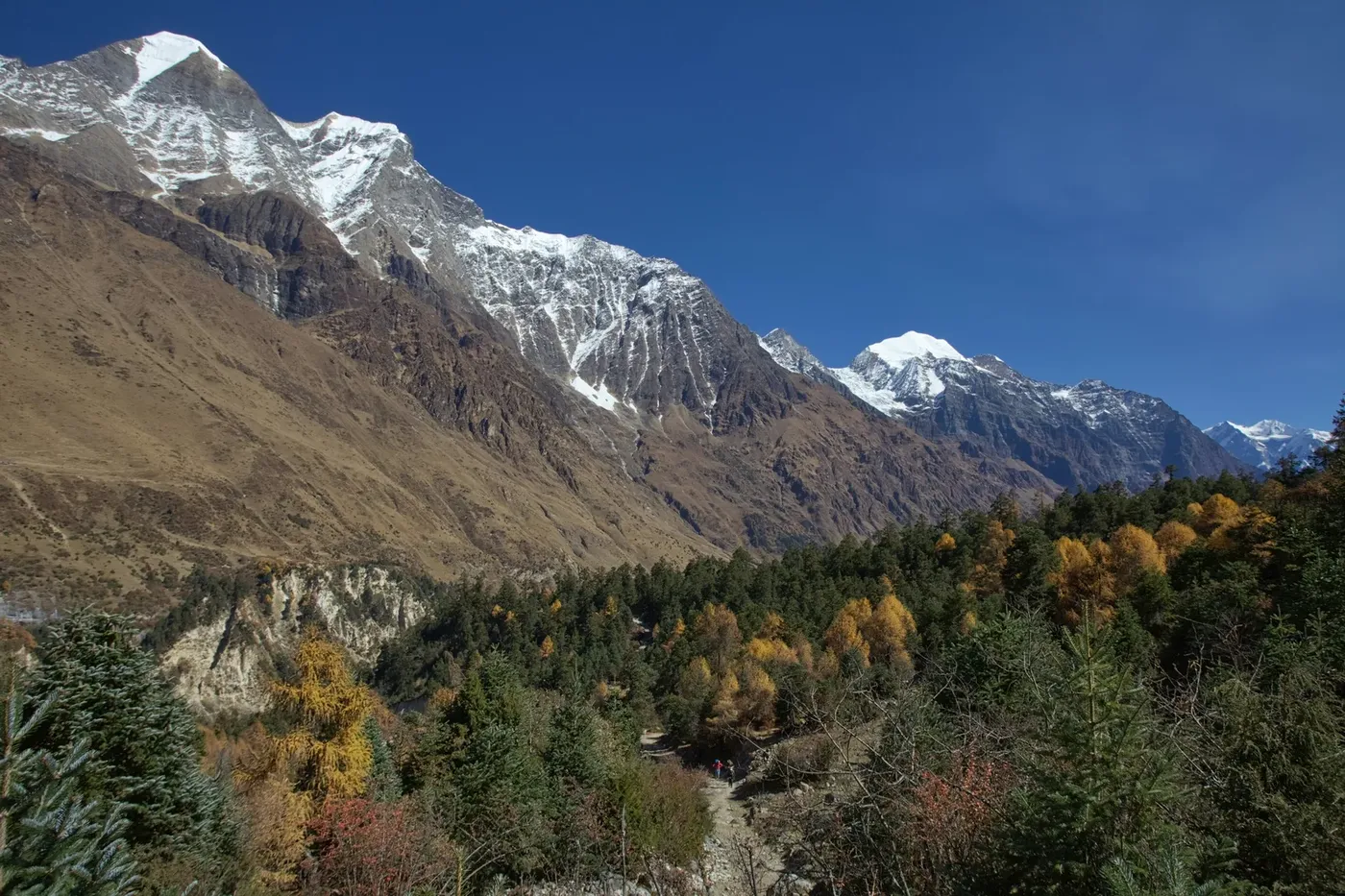
The routing bends with wind and with air traffic control, and the pilot will tell you which line he is flying, but the shape is consistent. The aircraft climbs out of the Kathmandu bowl at 1,400 m and tracks west-northwest over terraced ridgelines and scattered settlements, with the Trishuli valleys below. Then the Annapurna range assembles itself on the horizon as a single white wall, and on a clear morning Dhaulagiri at 8,167 m and the Annapurna massif sit in the same window within the same hour.
The last section is the one passengers remember. The helicopter drops into the Kali Gandaki and follows the valley north, with the black river far below and the Tibetan frontier plateau opening ahead. That transition, from green middle hills to the rain shadow of Mustang, is the reason this route feels like a different country rather than a shorter version of the same trip. It is also why the itinerary cannot be done in the afternoon: by then the gorge is a wind tunnel and the passes either side of the temple are turbulent.
For anyone comparing this with the Everest product, the contrast is useful. The Everest day tour lands at Kala Patthar at 5,545 m and is a high-altitude experience with a short exposure window; Muktinath is a pilgrimage at 3,710 m with more time on the ground and a temple rather than a viewpoint. Our guide to the Mustang helicopter tour covers the same valley in more depth if you want the landscape before you commit to a date.
Two to Three Hours at 3,710 m: What the Ground Time Covers
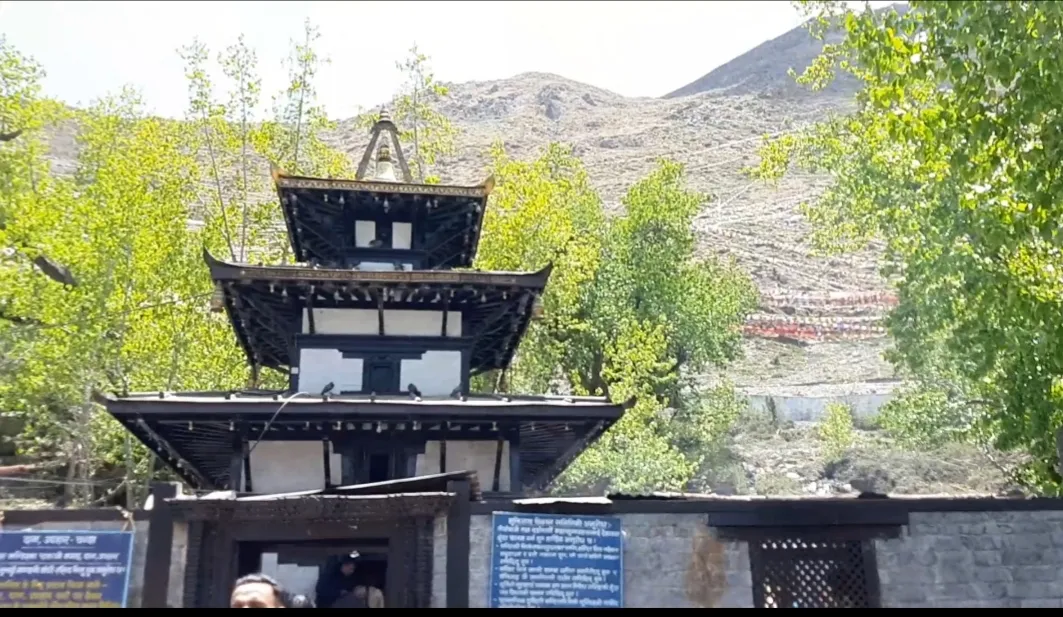
The temple complex is compact, which is exactly why the itinerary works for people who cannot walk far. It is also one of the holiest sites in the Hindu world, the place Hindus call Muktinath and Buddhists call Chumig Gyatsa (Muktinath on Wikipedia). From the gate you are in the courtyard within a couple of minutes, and the three things pilgrims come for are all inside it: the wall of 108 gilded spouts pouring snowmelt, the Jwala Mai flame that burns beside running water, and the Vishnu shrine that Hindus call Muktinath and Buddhists call Chumig Gyatsa.
The full ritual means passing under all 108 spouts. It is cold, it is fast, and it is optional in practice: a partial circuit under as many as are comfortable is fully accepted, and anyone with a heart condition or recent illness should say so before the flight rather than at the wall. Dry clothes in a day bag are not a detail, they are the difference between a comfortable return leg and a cold one. The 108 spouts are the single most photographed thing on the route, and the courtyard is at its emptiest in the first hour after the aircraft lands.
Time disappears here faster than people expect. A family that wants a priest-led puja, photographs at every shrine and a slow circuit of the spouts will use the whole window; a solo traveller doing darshan and a quick walk around will be back at the pad early. That is the argument for a charter if your group has elderly parents or a specific ritual in mind, and the argument for a shared seat if you are happy to move at the group's pace.
Package or Charter: Which Version of the Day You Are Buying
The same itinerary is sold in two shapes, and the difference is not only money. A shared seat is $1,080 per person, and the operator fills the remaining seats. A charter is quoted per aircraft regardless of how many people board, which changes both the schedule and the arithmetic for a family.
| Way to do the day | Time | Published basis | What it changes about the itinerary |
|---|---|---|---|
| Overland via Pokhara and Jomsom | 2 to 4 days | $400 to $800 | Long hours on unpaved mountain roads, real landslide and delay risk, and the temple reached on the ground rather than in the morning |
| Annapurna Circuit, on foot | Part of a multi-day trek | Trek package price, quoted with permits and lodges | The walk is the point of the trip, and the temple is one stop on a much longer route |
| Shared helicopter seat from Kathmandu | 1 day, about 8 hours door to door | $1,080 per person, shared flight | The published itinerary above, at the group's pace on the ground |
| Private charter, same route | 1 day | Quoted per aircraft on your dates | The schedule bends to your group: extra ground time, a later return, a puja at a set hour |
| Pokhara-side start | 1 day | Quoted on your dates | Removes the long western leg and shortens the morning, useful if you are already in Pokhara |
The arithmetic every group should run before booking: multiply the shared seat price by the number of passengers and compare that with the charter quote. If the two numbers are close, the charter is the better product, because you are buying the schedule as well as the seats. If the charter is far above, the shared seat is doing its job and you should book it early rather than late. Our guide to the cost of the one-day Muktinath pilgrimage goes through the line items, and the Jomsom to Muktinath segment covers the case where you are already up the valley.
Booking the Package from Abroad
For a buyer outside Nepal, three things decide whether the day happens. The first is the buffer day. You cannot land at Tribhuvan International Airport at midnight, sleep four hours and make a 05:30 pickup comfortably, and the itinerary needs you at your hotel and ready before the city wakes. Arriving at least one full day before the flight is the single most effective insurance on this product.
The second is names and documents. The manifest is checked against passports, so book in the exact name on the travel document rather than a preferred name, and carry the same passport on the morning. The third is the season, which for spring 2027 means booking now rather than in March: seats are held against a date, and April fills first.
Payment and confirmation are usually handled in US dollars by international transfer or card, with the quote and the inclusions confirmed in writing. Fixed departures are published on the fixed departures page, which lists what runs and how often; specific dates are confirmed in writing at booking rather than promised on a page. If your dates are fixed by an international flight, tell the operator that at the enquiry stage, because it changes how they hold the seat and how they prioritise a rebooking if weather takes the morning.
The spring 2027 window
March and April 2027 are the two months to plan around, and they behave differently. March is the quieter month: clear mornings, fewer trekkers on the trails and easier seat availability, with cold air still sitting in the valley at dawn. April is the busiest month for helicopter tours in Nepal, with the best all-round conditions of the year and more afternoon cloud building over the high peaks. That combination is why April seats go first.
Every flight on this route leaves before sunrise for a reason, not for drama: valley air builds cloud over the high peaks by early afternoon, and the Kali Gandaki is the most wind-driven valley of the lot. The calm window is the first two or three hours after first light, which is why pickup is at 05:30 and the landing happens between 08:15 and 09:00. If you are planning April, confirm the seat several weeks ahead, and do it before you book flights to Kathmandu, because the helicopter is the fixed point in the itinerary and the international ticket is the flexible one. Our guide to the best time for a helicopter tour in Nepal covers the rest of the year month by month.
The Indian Pilgrim and Nepali Family Angle
Muktinath is not a niche destination for the regional market; it is one of the most requested flights we operate, and the itinerary is shaped around that passenger. For Indian travellers there is no visa requirement for Nepal, a passport is the clean document for air entry with voter ID accepted and Aadhaar taken in practice by airlines, and Indian rupees are widely accepted at roughly ₹100 to NPR 160. That removes most of the friction that makes other foreign trips complicated.
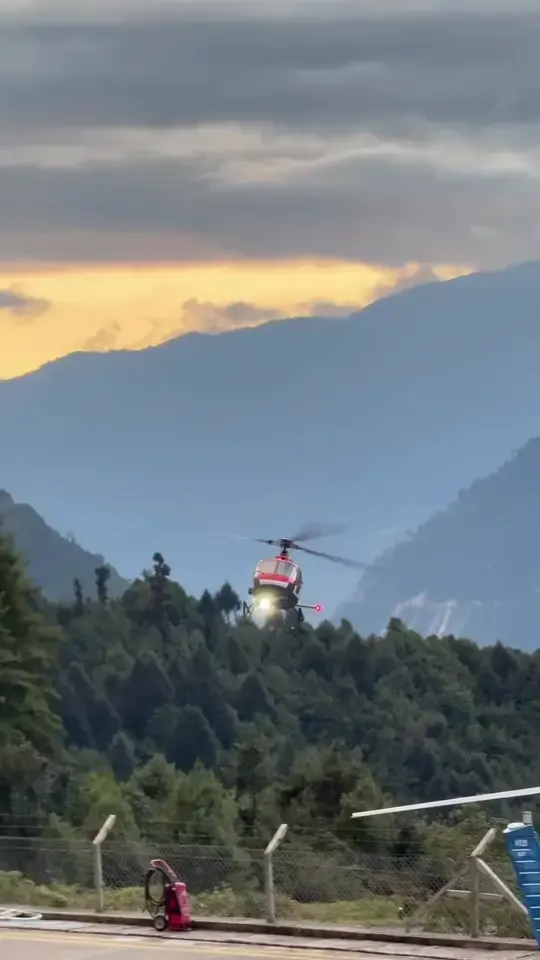
The pattern that repeats is a family booking for parents in their seventies or eighties. The itinerary suits them precisely because it is short: no acclimatisation schedule, no trekking, a jeep shuttle from the helipad to the gate for anyone who needs it, and a crew briefed on altitude before departure. A charter is usually the right purchase for that group, since the ground pace belongs to the family and the aircraft waits. Groups of pilgrims travelling together often book the whole machine for the same reason: it lets the puja happen at the hour the group wants rather than the hour the shared departure allows.
Nepali families book the same product for the same reason, usually around festivals and family obligations rather than the trekking calendar. The one caution for everyone is that demand clusters: around the big pilgrimage periods the shared seats go early and the charter fleet is committed, so a date that is comfortable in March is not automatically available in a peak week. Our guide for Indian travellers flying to Muktinath and Everest covers documents, currency and the long-weekend pattern in more detail.
What Goes Wrong, and How to Protect the Day
The failure modes on this route are ordinary and well known. Wind closes the valley more often than cloud does. Air traffic control sequencing at Kathmandu can hold a departure even on a perfect mountain morning. A passenger list that does not match the passports can cost twenty minutes at the terminal. None of these are exotic, and all of them are survivable if the itinerary has a spare day behind it and the operator communicates early rather than at the helipad.
The one thing no itinerary can promise is the weather. What a good operator does instead is tell you at 04:30 rather than at 08:00, rebook the morning rather than the week, and hold the seat against a later date without re-quoting the whole trip. Read the cancellation terms before you pay, ask what happens to the ACAP paperwork if the flight moves, and check that the price you were quoted is the price you will be charged if the aircraft is not full. Our guides to weather cancellation policy and safety and insurance are the honest versions of those conversations.
Packing for a One-Day Landing at 3,710 m
The temperature gap is the thing people underestimate. Kathmandu in spring sits around 15-25°C; the temple courtyard can be between -5 and 5°C at the hour you land, with wind on top of it. Layers, a windproof outer shell, gloves and a hat are the correct answer, and a change of clothes belongs in the day bag because the 108 spouts are wet. Sunglasses matter more at altitude than in the city, and the sun at 3,710 m burns through thin air even when the temperature is low.
There is no acclimatisation requirement for this profile: you land, spend about two to three hours at altitude and fly down again, with oxygen on board. That is precisely why the product works for older pilgrims. It is still worth telling the crew about heart conditions, recent illness or pregnancy before departure rather than after landing. The full kit list lives in our Nepal helicopter tour packing guide.
Frequently asked questions
How long is the Kathmandu to Muktinath helicopter package one day itinerary in total?
About eight hours door to door. Pickup in Kathmandu is around 05:30, wheels up between 06:30 and 07:00, the flight west takes 75 to 90 minutes, you spend roughly two to three hours at the temple, and you are back at your hotel in the early afternoon. The mountain portion is a morning, but the day as a whole fills the morning and the early afternoon.
What does the Muktinath helicopter package cost from Kathmandu?
The published product is $1,080 per person on a shared flight, one day, landing at the temple complex at 3,710 m. A private charter is quoted per aircraft on your dates rather than per seat, so a family of four or five should ask for both numbers and compare the total before deciding. The seat price is the same product either way; only the schedule and the arithmetic change.
Is the temple landing included, or does the helicopter stop at a viewpoint?
The aircraft lands at the Ranipauwa helipad, below the temple village, and you walk about ten minutes up to the gate or take a short jeep shuttle. It is not a scenic loop that turns around above the valley. That distinction is the main difference between this product and a mountain flight, and it is the first thing to check when comparing two quotes.
Can I do Muktinath darshan in one day from Kathmandu without trekking?
Yes, that is exactly what the product is for. There is no trekking section at any point: the helicopter flies you to the helipad, the temple is a short walk or shuttle away, and the return is the same morning. It is the reason the flight is requested so often by families travelling with elderly parents who could not manage the overland route through Pokhara and Jomsom.
How many hours do you actually get at Muktinath temple?
Roughly two to three hours on the ground, which is enough for the circuit of the 108 spouts, darshan at the Vishnu shrine, the Jwala Mai flame and the Buddhist shrines in the courtyard, with time for photographs. If your group wants a priest-led puja or a slower pace, say so at booking, because the ground window is planned around the aircraft's next movement rather than extended at the helipad.
What is the best month for the helicopter package in 2027?
March and April are the two months most people choose for spring. March is quieter, with clear mornings and fewer people on the route; April is the busiest month for helicopter tours in Nepal, with the best all-round conditions and more afternoon cloud. Autumn is the other clear window. Whichever you pick, the flight is a morning flight and the weather call is made early.
Do I need a permit for Muktinath by helicopter?
Muktinath sits inside the Annapurna Conservation Area, so ACAP entry formalities apply to passengers, and on a package they are handled as part of the day. Bring the passport you booked with, since the manifest is checked against it at the domestic terminal before departure. Your guide or operator should be able to tell you exactly what is covered before you pay.
How far in advance should I book an April 2027 seat?
Several weeks ahead, and before you book international flights to Kathmandu. April is the busiest month of the year for helicopter tours in Nepal, fixed departures fill first, and the aircraft fleet is committed across the Everest and Annapurna products at the same time. Booking the helicopter first makes the Kathmandu flights and the hotel nights adjustable rather than the other way round.
Is the flight safe at 3,710 m, and is oxygen available?
The route is flown by crews who work this valley regularly, with oxygen on board and a briefing before departure. The exposure at altitude is about two to three hours with no sleeping high and no acclimatisation schedule, which is the profile elderly pilgrims fly comfortably. Tell the crew about heart conditions, recent illness or pregnancy at booking rather than at the helipad.
Can the flight be cancelled by weather, and what happens then?
Wind is the usual reason, with cloud and Kathmandu air traffic control sequencing behind it. Operators who fly this route daily make the call early in the morning and rebook the next available morning rather than the next week. Ask for the cancellation terms in writing before paying, and build one spare day into the itinerary if the flight is the centrepiece of a short Nepal trip.
What should I wear for a one-day Muktinath helicopter tour?
Layers, a windproof outer shell, gloves and a hat, plus a change of clothes in the day bag because the 108 spouts are wet and the water is snowmelt. Kathmandu may be 15-25°C when you leave and the temple courtyard can be between -5 and 5°C when you land, so dressing for the city is the common mistake. Sunglasses are worth carrying for the altitude glare.
Planning the Day Around the Aircraft
The last thing worth saying about this product is that it is a schedule, not a menu. The temple, the permit, the wind window and the aircraft's next movement are all fixed points, and the itinerary is the shape those points allow. Once you accept that, the decisions become simple: shared seat or charter, which month, which buffer day, and how much ground time your group actually needs. Everything else is detail.
If you are comparing the quiet destinations before committing, our hub guide to Langtang, Gosaikunda, Rara, Muktinath and Lumbini puts the routes side by side. If Muktinath is the one, start with the one-day pilgrimage page for the product and the inclusions, then send your dates and group size for a written quote. For the seasonal detail behind the spring recommendation, the best time guide explains how the same weather pattern shapes every high landing in Nepal.