
Short answer: A helicopter trip to Everest Base Camp is one morning out of Kathmandu. You lift off between 7:30 and 8:00 AM, stop at Lukla (2,860 m) to refuel, land at Kala Patthar (5,545 m) or at Everest Base Camp (5,364 m), break for breakfast at the Everest View Hotel (3,880 m), and are back at your hotel by 11:30 AM to 12:00 noon. A shared seat on the 2026 departure costs $1,260 per person; a private charter is $4,500 per aircraft for up to five guests. Nepali and SAARC passport holders should ask us for a current NPR quote, and Indian travellers need no visa to book one.
- $1,260shared seat per person
- 5,545 mKala Patthar landing
- 5,364 mEverest Base Camp
- 6 hrshotel to hotel
A helicopter trip to Everest Base Camp compresses the whole Everest experience into a single morning: no 12-day trek, no expedition permit, no months of training. You leave Kathmandu before the wind gets up, stand on ground that only trekkers and mountaineers normally reach, eat breakfast in the most photographed dining room in the Himalaya, and you are back in the city in time for a late lunch. This guide is written for the two markets we fly most: international travellers booking from abroad in USD, and Nepali and Indian travellers who want to know what the same morning costs on a local rate.
What a Helicopter Trip to Everest Base Camp Actually Is
The phrase gets used loosely, so here is the plain version. This is a one-day round trip from Kathmandu by helicopter into the Everest region of Sagarmatha National Park, with a landing high on the trail at Kala Patthar (5,545 m) or at Everest Base Camp itself (5,364 m). It is not a trek with a helicopter shuttle, and it is not a scenic mountain flight in a fixed-wing aircraft that circles the peaks and turns around without landing. The difference matters: a mountain flight gives you an hour of window views and no snow under your boots; a helicopter day trip gives you roughly ninety minutes of flying in total, but it also puts you on the ground at altitude.
We have operated these departures since 2012, and the structure has barely changed, because the mountains set it. There is one long flying window each day, early in the morning, before the valley clouds build. Everything about the itinerary is built around catching that window and being home before the weather closes in. That is also why the whole day takes five to six hours door to door while the airborne part is closer to an hour and a half.
Who takes this trip? Three groups, mostly. Travellers with two or three spare days in Kathmandu who will never have time for the trek. Trekkers who have run out of days and want the ending without the walk. And local families and pilgrim groups, including many from India, for whom Everest is a lifetime pilgrimage rather than a bucket-list item. If your question is whether the helicopter actually lands, the answer is yes: our departures are sold with a guaranteed high landing, and if the aircraft cannot put down at the landing point that morning, the trip is shifted to the next day or refunded. You can read the full operational detail on the Everest Base Camp helicopter day tour page.
The Route, Step by Step: Kathmandu to Kala Patthar
Here is how the morning actually runs. Timings are the standard 2026 schedule and they are set by daylight and mountain weather, not by us.
- Early morning hotel pickup in Kathmandu and transfer to the domestic helipad area at Tribhuvan International Airport.
- Before departure a short safety briefing and the weight and balance check that every helicopter flight in Nepal requires. Passengers are weighed at check-in; the weight limit is roughly 80 kg per person including a day bag.
- 7:30 to 8:00 AM wheels up. The pilot climbs gently north-east out of the valley so passengers adjust to the altitude as they fly.
- Around 45 minutes in a refuelling stop at Lukla (2,860 m), the gateway airstrip of the Khumbu and the last flat ground before base camp.
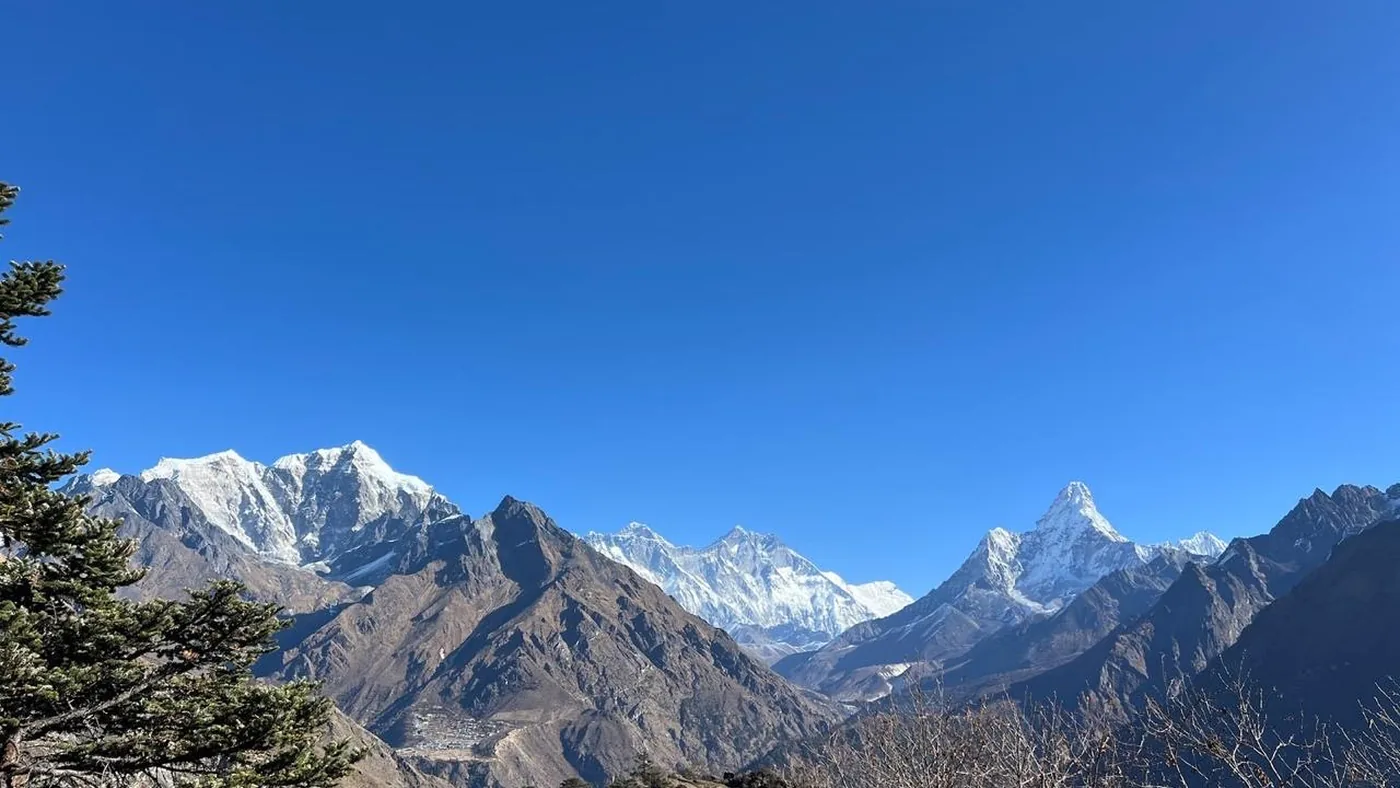
- Then the Khumbu corridor, climbing the Dudh Koshi valley past Phakding and Monjo to the Sagarmatha National Park gate, then over Namche Bazaar (3,440 m), the Sherpa capital, whose amphitheatre shape is unmistakable from above. Tengboche Monastery (3,860 m) follows on its ridge, then Pangoboche, before the climb to the landing point. Ground time at Kala Patthar or Everest Base Camp is ten to fifteen minutes: long enough for photographs and the view, short enough to keep everyone safe at that altitude.
- Around 9:30 AM breakfast at the Everest View Hotel (3,880 m), the hotel above Namche whose every table faces the peaks.
- 11:30 AM to 12:00 noon back at the Kathmandu helipad and transfer to your hotel.
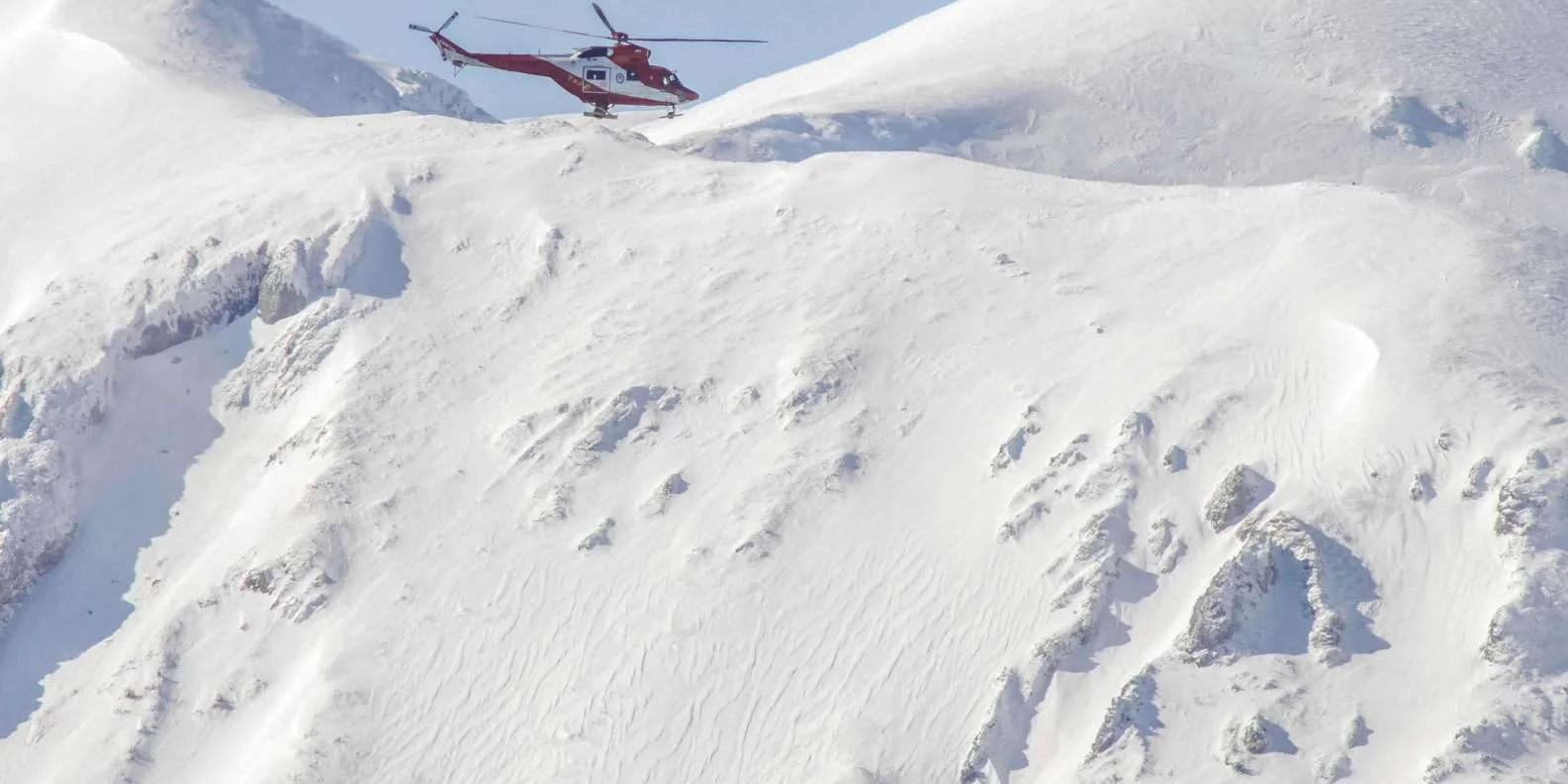
If you want the geography before you fly, the Everest Base Camp entry covers the glacier position at 5,364 m and how the camp moves each season; it is a useful five-minute read on the plane.
Two things about the route surprise first-time passengers. The first is how quickly the landscape changes. Within twenty minutes of Lukla you have left green terraced hillsides behind and you are flying over moraine and glacier. The second is how short the high-altitude stop is. Passengers often expect half an hour on the snow; the pilots keep it to ten or fifteen minutes because that is what the body tolerates without acclimatisation, and it sits well below the six hours at altitude that acute mountain sickness typically needs to develop.
If you are weighing up the two landings, the short version is this: Kala Patthar is the classic photographic viewpoint of Everest's south face, and Base Camp is the place itself, with the Khumbu Icefall above it. Which one you get on the day depends on snow and wind conditions at the landing zone, and the pilot makes that call.
What the Trip Costs in 2026: Seat, Charter and the Two Extras
The published 2026 prices for our Everest Base Camp day trip are simple, and they have not changed since we set them for the season.
| Option | Price | What you get |
|---|---|---|
| Shared seat (group joining) | $1,260 per person | Round-trip helicopter from Kathmandu, guaranteed high landing at Kala Patthar or Everest Base Camp, hotel pickups and drops |
| Private charter | $4,500 per aircraft, up to 5 guests | Same route on your own schedule, no other passengers, breakfast stop at the Everest View Hotel |
| Everest View Hotel breakfast | About NPR 4,600 per person | Paid at the hotel on the day; not included in the flight price |
| Sagarmatha National Park permit | NPR 3,000, about USD 20 | Arranged for you in advance; price set by the park authority, not by us |
Two items sit outside the ticket price and both catch people out. The first is the Sagarmatha National Park permit, NPR 3,000 or roughly USD 20, which we arrange for you in advance but which is set by the park and not by us. The second is breakfast at the Everest View Hotel, about NPR 4,600 per person, paid at the hotel on the day. Everything else in the morning is included: round-trip helicopter from Kathmandu, the guaranteed high landing, all flight-sector insurance and oxygen, hotel pickups and drops, government-permitted flight routes, ground support team, and English, German, Spanish and French guiding.
That means the number on the booking page is not quite the number on your card at the end of the day. Budget for the ticket plus the park permit plus breakfast, and you have the true cost of the morning. We would rather tell you that now than have you find out at the hotel.
Group Joining: How to Share a Helicopter to Everest Base Camp
There is no such thing as a group tour in the coach-party sense here. A helicopter in the Everest region seats a maximum of five passengers, and the aircraft is chartered per departure whether one person or five are on board. A group Everest helicopter tour simply means you have bought one of those seats and we have filled the rest with other travellers on the same date. Same helicopter, same pilot, same route north out of Kathmandu, same landing, same breakfast stop. What changes is who pays for the empty seats.
The arithmetic is straightforward. A private charter at $4,500 for up to five guests works out at about $900 per person if you fill all five seats, which is why families and friend groups often charter rather than buy individual seats. A solo traveller who wants to fly tomorrow, on the other hand, is usually better off taking a shared seat at $1,260 than paying $4,500 to have an aircraft to themselves.
Shared seats fill fastest in October and November, when the autumn window is at its best. If your dates are fixed and you are travelling as one or two people, book the seat early rather than the date early. We explain the trade-offs in our group Everest helicopter tour guide.
The Nepali Rate Question: What Local Travellers Actually Pay
This is the question we get asked more than any other, and it deserves a straight answer. For fixed-wing mountain flights out of Kathmandu, Nepali and SAARC nationals pay a published local fare that is a fraction of the foreigner price. In 2026 the Buddha Air Everest Experience is USD 235 for foreign nationals, INR 8,610 for Indian nationals and NPR 13,776 for Nepali citizens. Shree Airlines flies the same route at USD 230 for foreigners and NPR 15,000 for Nepali citizens. Those are the real local rates, and they require proof of nationality at check-in.
Helicopter charters are a different product and they are quoted per aircraft or per seat in US dollars, because that is how the operators, the fuel and the insurance are contracted. So if you hold a Nepali passport, do not assume the mountain-flight local rate carries over. Ask us directly for a current NPR quote for your date, and we will tell you what we can do on the day. What we will not do is sell you a foreigner-priced seat if a local rate applies to you, or the other way around.
| Traveller | Fixed-wing mountain flight (2026) | Helicopter day trip with landing |
|---|---|---|
| Foreign national | USD 235 (Buddha Air) / USD 230 (Shree Airlines) | $1,260 shared seat; $4,500 private charter |
| Indian national | INR 8,610 (Buddha Air) | Quoted in USD; ask us for the SAARC rate |
| Nepali citizen | NPR 13,776 (Buddha Air) / NPR 15,000 (Shree Airlines) | Ask us for a current NPR quote for your date |
If you are comparing options and the budget is the deciding factor, the honest comparison is this: a mountain flight at the local fare is the cheapest way to see Everest from the air, and it does not land. The helicopter day trip costs several times more and puts you on the ground. Both are legitimate choices; they are just not the same experience. We break the two products down side by side in our Everest mountain flight cost guide.
For Indian Travellers: Everest Darshan by Helicopter
Indian travellers are the single largest group of pilgrims and families we fly to the Everest region, and the logistics are easier than most people expect. There is no visa requirement for Indian nationals entering Nepal, direct flights from Delhi, Mumbai, Kolkata, Varanasi and other major Indian cities land in Kathmandu in under two hours, and Indian currency is accepted almost everywhere in Nepal. You can arrive in the morning, fly to Everest the next morning, and be home the day after.
For Indian families, the helicopter changes what is possible. A grandfather who could never complete the trek to Base Camp can still stand at Kala Patthar. A honeymoon couple can fly to the Everest View Hotel for breakfast and be back in Kathmandu by noon. A pilgrimage group can add Everest darshan to a Muktinath itinerary without adding a fortnight to the trip. Our Muktinath pilgrimage departures, which land at 3,710 m, are priced from $1,080 per person for the day, and they are frequently booked as the second half of an Everest-plus-Muktinath itinerary by Indian groups.
Payment is quoted in USD because that is how the charter is contracted, but Indian rupees are accepted in Nepal and we are happy to work with Indian travel agents and group organisers on a consolidated booking. We have been arranging flights for Indian families, pilgrimage groups and honeymooners since 2012, and the Nepal helicopter tours guide for Indian travellers covers the documents, the currency question and the darshan angle in full.
Three Ways to Reach Everest Base Camp Compared
Everest Base Camp is reachable three ways in 2026, and the helicopter day trip is the fastest by a wide margin. Here is the comparison travellers actually need.
| Way to reach Everest Base Camp | Duration | Price | Highest point |
|---|---|---|---|
| Helicopter day trip from Kathmandu | 1 day, about 6 hours door to door | $1,260 per seat (shared) | Kala Patthar 5,545 m / Base Camp 5,364 m |
| Trek up, fly back | 10 days | $1,840 per person | Kala Patthar 5,545 m |
| Everest scenic mountain flight | 1 hour | $260 per person, window seat | Views to 8,849 m, no landing |
| Private charter day trip | 1 day, about 5 to 6 hours | $4,500 per aircraft, up to 5 guests | Everest View Hotel 3,880 m and the landing point |
The trek up and fly back option is the middle path: ten days on the trail with the walk in and a helicopter out, priced at $1,840 per person, and it takes you to the same 5,545 m high point. It suits travellers who have the time and want the walk but not the two-week return leg. The mountain flight at $260 is the budget option, one hour in the air over the eastern Himalaya, with the peaks at eye level and no landing at altitude at all.
What the day trip buys you over both of them is time. You get the landing and the breakfast and the photographs, and you keep your other ten days for the rest of Nepal. If you have a fortnight free and want the trek, take the trek. If you have two days, the helicopter is the only version of this experience that fits.
Best Season and the Morning Weather Window
The two windows that matter for this flight are October through November and March through May. Those are the periods when the monsoon has cleared and the high peaks stand out against blue sky, and they are the backbone of Nepal's helicopter tourism season. The summer monsoon, roughly June into early September, is the single biggest factor in whether a helicopter can reach Everest Base Camp on any given morning.
Within any season, the day has its own weather clock. Clear air and calm winds belong to the early morning; by midday, convection builds over the valleys and the Khumbu starts to cloud in. That is why your pickup is early and not at a more civilised hour. It is also why the first departure of the day has the best record, and why we build a spare day into itineraries whenever a traveller's schedule allows one. If the morning is not flyable, your trip moves to the next available day at no extra charge; if we cannot reschedule you at all, the trip is refunded in full.
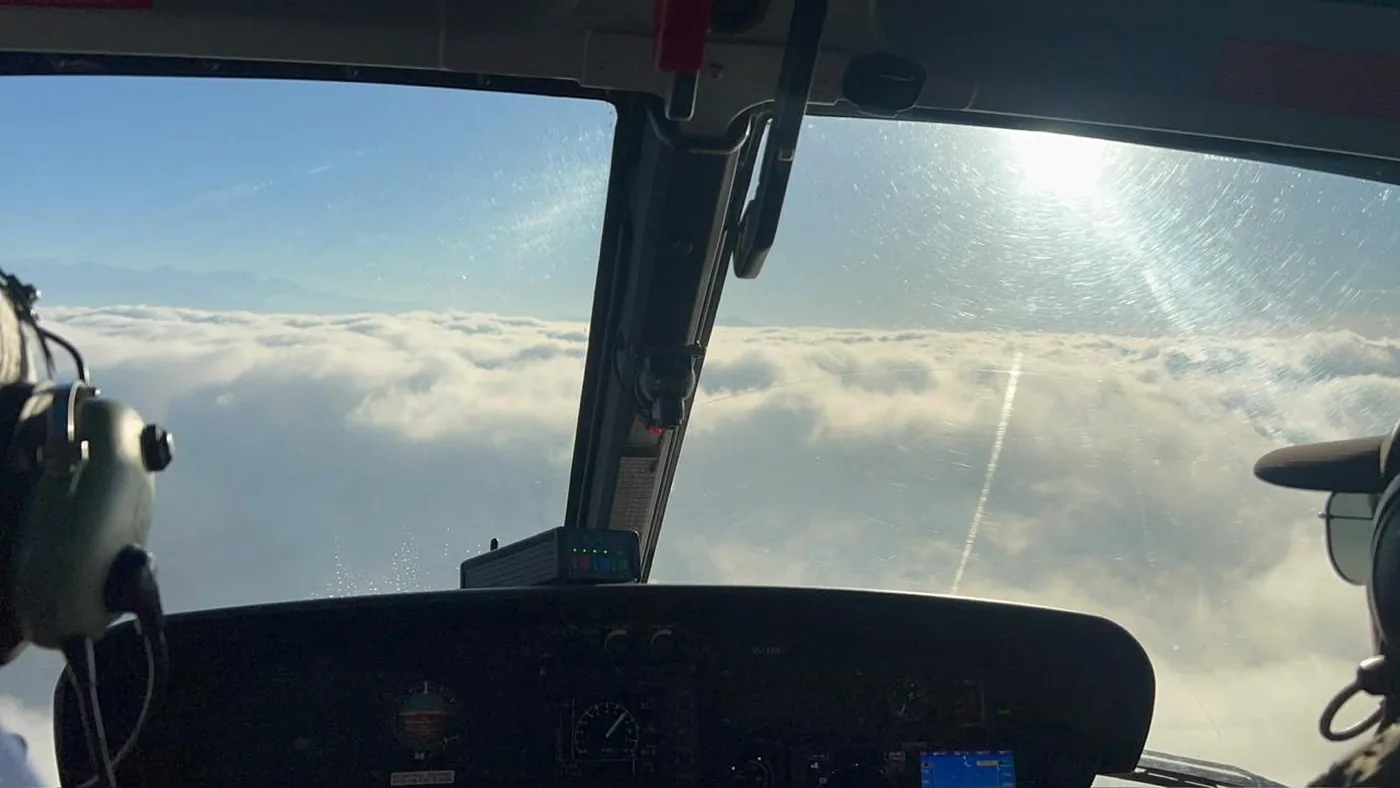
For travellers from abroad, the practical advice is to book your Everest morning early in your Kathmandu stay, not on your last day. If weather intervenes, an early slot gives you two or three more chances before your flight home. For travellers based in Nepal or India, the same logic applies in reverse: a Friday morning in October fills up weeks ahead, so pick your date early if it matters.
Altitude, Safety and Who Should Not Fly
You are flying to 5,545 m and spending ten to fifteen minutes there. That is a real altitude and it deserves respect, even though the exposure is short. Every aircraft carries supplemental oxygen and a medical kit, the pilots are CAAN-certified mountain specialists, and there is a ground support team at the landing point. The standard precaution at Kala Patthar or Base Camp is simple: move slowly, breathe deliberately, and if you feel light-headed, tell the crew immediately. Mild dizziness at that height is common and it passes quickly once you are sitting and breathing oxygen.
Because the ground time is short, there is no acclimatisation day built into the itinerary. The climb from Kathmandu at roughly 1,400 m to the landing zone is done gradually in the aircraft rather than on foot, which is why most passengers handle it comfortably. That said, this is not the trip for everyone. If you are pregnant, if you have a serious cardiac or respiratory condition, or if a doctor has advised you against rapid ascent, do not book this flight without clearing it medically first. Children travel regularly on these departures and handle the altitude well; infants do not.
One more practical point: the landing point is chosen on the morning, by the pilot, based on snow cover, wind and the condition of the landing zone. Kala Patthar and Everest Base Camp are both at similar altitudes and both give you the Everest panorama. Trust the call. A pilot who declines a landing zone is protecting the reason you are able to do this at all.
How to Book a Helicopter Trip to Everest Base Camp
Booking is a short conversation, but there are four things worth deciding before you start.
- Shared seat or private charter. If you are one or two travellers on a fixed date, take a shared seat at $1,260. If you are a group of three to five who want your own schedule, the $4,500 charter is the better deal once you divide it.
- Your date, plus a buffer. Give us your first-choice morning and at least one alternative. October, November, March and April are the busiest months; the earlier you book, the more choices you keep.
- Your documents. Passport details for the flight manifest, and your nationality, because that determines which rate applies to you.
- Your group's weights. Helicopter performance at 5,000 m is weight-critical, so we ask for passenger weights at booking. This is a safety requirement in Nepal, not a formality.
From abroad, everything can be arranged before you land in Kathmandu: we confirm your date, your seat or charter, and your hotel pickup by email, and you pay in USD. From Kathmandu or from India, the same booking works on shorter notice, subject to seats being free. Full details, inclusions and the weather policy are on the Everest Base Camp helicopter day tour page, and the wider booking process is explained in our guide to booking a helicopter tour in Nepal.
Frequently Asked Questions
How much does a helicopter trip to Everest Base Camp cost in 2026?
A shared seat is $1,260 per person. A private charter is $4,500 per aircraft for up to five guests. Breakfast at the Everest View Hotel, about NPR 4,600 per person, and the Sagarmatha National Park permit, NPR 3,000, are paid separately.
Can I book a helicopter trip to Everest Base Camp from Nepal on a Nepali rate?
Helicopter charters are quoted in USD, so the fixed-wing local fare does not automatically apply. If you hold a Nepali or SAARC passport, ask us for a current NPR quote for your date and we will tell you what is available.
Do Indian travellers need a visa for a Nepal helicopter tour?
No. Indian nationals do not need a visa to enter Nepal. Flights from major Indian cities land in Kathmandu in under two hours, and Indian rupees are accepted almost everywhere in Nepal.
Does the helicopter actually land at Everest Base Camp?
Yes. Our departures include a guaranteed high landing at Kala Patthar (5,545 m) or Everest Base Camp (5,364 m), depending on snow and wind conditions on the morning. Ground time is ten to fifteen minutes.
How long does the whole trip take?
Five to six hours door to door. Pickup from your Kathmandu hotel is early morning, wheels up at 7:30 to 8:00 AM, and you are back at your hotel by 11:30 AM to 12:00 noon. Total flying time is around ninety minutes.
Is breakfast at the Everest View Hotel included?
No. The stop at the Everest View Hotel (3,880 m) is part of the itinerary, but breakfast is paid at the hotel and costs about NPR 4,600 per person.
What happens if the weather grounds the flight?
Your trip is shifted to the next available day at no additional charge. If we cannot reschedule you at all, the trip is refunded in full. This is why we recommend booking your Everest morning early in your Kathmandu stay.
What is the best time of year for this flight?
October through November and March through May. Those windows bracket the summer monsoon, when clear skies and calm morning winds give the best flying conditions and the clearest Everest views.
Do I need acclimatisation for a one-day Everest helicopter trip?
No acclimatisation day is built into the itinerary because the ground time at altitude is short, ten to fifteen minutes. The aircraft climbs gradually from Kathmandu and carries supplemental oxygen on board. If you are pregnant or have a serious cardiac or respiratory condition, consult a doctor first.
How many passengers fit in the helicopter?
A maximum of five guests per aircraft. That is the limit for Everest-region helicopters operating at this altitude, whether the aircraft is booked as a shared-seat departure or as a private charter.
Is a helicopter trip better than the Everest scenic mountain flight?
They are different products. The mountain flight is one hour in a fixed-wing aircraft at $260 per person and does not land. The helicopter day trip costs $1,260 per seat and puts you on the ground in the Khumbu with a breakfast stop on the way back.
What should I bring on the morning of the flight?
Passport or photo ID for the manifest, warm layers and a windproof jacket for the landing, sunglasses and sunscreen, and a camera with a spare battery. The cold at 5,545 m surprises people who left Kathmandu in a t-shirt.
Why Book Your Everest Trip With Heli Tours Nepal
We have been flying the Everest region since 2012 and we are the operator, not a reseller. That means the pilot, the aircraft, the landing slot and the weather call are all ours, and the person answering your email is the person who can move your date if the mountain says no. Our Everest departures carry a guaranteed high landing, supplemental oxygen and a medical kit on board, flight-sector insurance, hotel pickups and drops in Kathmandu, and English, German, Spanish and French guiding.
If you are still deciding between the day trip and the trek, start with our Everest helicopter tours hub, which maps every Everest product we fly, from the one-day landing to the ten-day trek up and fly back. Then compare the numbers: $1,260 for a shared seat on the day trip, $1,840 for the ten-day trek up and fly back, $260 for the hour-long mountain flight. Whichever you choose, the booking is one email away, and we will tell you honestly whether your dates are realistic.