

Short answer: December and January give the clearest mountain views of the Nepali year, and the worst cancellation odds at the Kathmandu end — the sky over the Khumbu is clean while the valley sits under fog. At the seasonal fare of $220 a seat, fly early, build two spare mornings into your stay, and expect a rebooking rather than a refund. The reward for the risk is Everest in cold, dry, dust-free air with the cabin half empty and the seat at its seasonal low.
Why winter is the best and worst time to fly
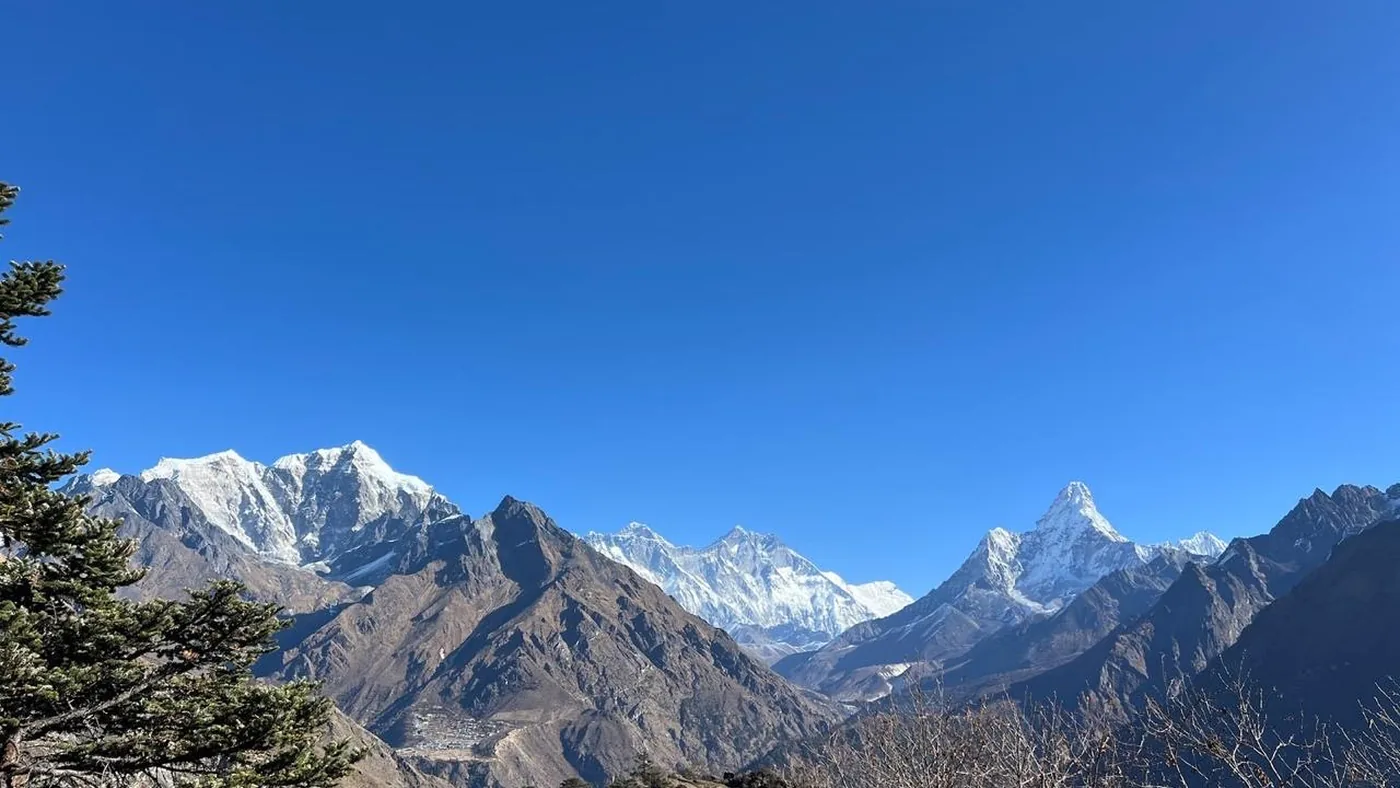
Two things happen to the atmosphere over Nepal in December. The monsoon, which has been pumping moisture north from the Bay of Bengal since June, is gone. The jet stream has dropped south, and the resulting air is dry, stable and unusually transparent. On a good winter morning you can pick out the individual spurs on the south face of Everest from 150 km away, which is not something you can say about April.
The same dryness creates the problem at the other end. Kathmandu sits in a bowl at 1,400 m, and on cold, still, clear nights the valley radiates its heat away and the air saturates. By dawn there is fog — thick, ground-hugging, and completely disconnected from conditions over the mountains. An aircraft cannot depart into it, so a morning when the range is flawless can still produce a cancelled flight.
Both halves of that sentence are true, and any guide that gives you only one of them is selling something. The flight itself is better in winter. The chance of actually operating is lower in winter. You manage the second with scheduling, not with optimism.
What the valley fog does to a morning
Fog usually forms in the small hours and burns off between about 8 and 10 am, depending on sun and wind. Mountain flights are scheduled in the early window, before the peaks lose their morning light and before convective cloud builds, which is exactly the window the fog occupies. That is the crux of winter flying: the best light and the worst visibility share the same hour.
In practice the operators watch it closely and delay rather than cancel where they can. A 6:30 departure becomes 7:15, then 8:00, and if the ceiling lifts the flight goes. Passengers who have allowed the morning to be flexible usually fly. Passengers with a 10 am international connection usually do not, and should not have booked the flight for that morning in the first place.
The mountains themselves are rarely the reason a winter flight is cancelled. Cloud sitting on the range does happen — a passing western disturbance can put a lid on the Khumbu for a day or two — but fog at the departure end is the more common cause by a wide margin.
Sunrise, light and departure timing in December and January
Sunrise in Kathmandu in late December is around 6:50 am, and the peaks 150 km east catch first light a few minutes earlier because of their height. The classic flight is timed so that you are airborne as the summit pyramids go from grey to gold — that transition lasts perhaps ten minutes and it is the reason photographers put up with the cold.
Later departures, 8:30 or 9:00, still work, but you lose the alpenglow and you gain a small risk of the valley cloud building before you return. If you have a choice, take the earliest slot offered. If you are offered a late-morning slot in the first week of January, ask whether it is because the earlier aircraft are full or because the operator expects a fog delay — the answer tells you a lot about what to plan for.
What the mountains look like in winter
Winter changes the range in two visible ways. Snow cover is at its most complete, so the higher flanks and the glacier basins read as continuous white rather than the rock-and-snow patchwork of autumn. And the air is cleaner, so the far peaks — Cho Oyu to the north, Makalu to the east — come up sharply instead of fading into haze.
The Khumbu Glacier and the icefall are usually visible from the flight, and in winter the light rakes across them at a lower angle, which picks out the seracs. Base Camp itself, at 5,364 m on the moving glacier, is a cluster of specks at that distance and is not the point of the flight. The point is the wall: Everest's south face, Lhotse's sheer flank, and Nuptse's ridge running between them, all in one frame.
One honest caveat for anyone flying in the hope of a photograph: at 7,000–7,500 m of cabin altitude, in a moving aircraft, through a scratched window, you will get a record of the morning rather than a gallery print. The flight is a viewing product. The pictures are a bonus, and the seat-side technique — lens against the glass, hood or jacket to kill reflections, shutter fast enough for the vibration — matters more than the camera body.
Cold, comfort, and what to wear
The cabin is heated and you will not be cold in your seat. The cold happens on the tarmac in Kathmandu at 6 am, and in the unheated terminal while you wait. December mornings there sit close to freezing, and the domestic terminal is not a place to be underdressed.
Wear layers you can shed in the cabin: a warm outer layer for the apron, a fleece or jumper underneath, and nothing so bulky that you cannot sit comfortably with a camera. Gloves that leave your fingertips free are worth more than a thicker pair. If you are flying with children, a hat and a spare layer each is the whole kit list.
The upside of the quiet season
Winter is the low season in Nepal for a reason that has nothing to do with the mountains being less beautiful. The trekking routes are cold and some high passes close, so the volume of visitors drops sharply after the first week of December. For a traveller with a fixed holiday window, that produces a set of practical advantages that are worth as much as the fare reduction.
Hotels in Kathmandu and Pokhara are easier to book and cheaper, often substantially so. The domestic terminal at 6 am is calm rather than chaotic. Restaurants take walk-ins. The trekking trails, if you are combining the flight with a short trek, are quiet in a way they never are in October. And the aircraft — this matters more than it sounds — are frequently half empty, which means more room at the windows and a crew with time to point things out.
The trade-off is that some teahouses and smaller operators on the trekking routes close for the season, and a few of the higher passes are genuinely impassable. If your plan is mountain flight plus a low-altitude trek, you will have a very good time. If it is mountain flight plus a high-pass crossing, check the route before you commit.
Photographing the winter flight
Winter light is the photographer's reason to take this flight in December rather than April. The sun is low, the air is dry, and the contrast on snow is cleaner. The challenges are also specific.
Window glass is the first problem. It carries reflections of the cabin and it carries scratches, and at 500 km/h neither is forgiving. Press the lens hood or the front of the lens directly against the glass to kill reflection, and accept that you will be shooting through a filter that was never designed for optics. A dark jacket held up behind the camera helps in bright cabin light.
Exposure is the second. Snow in direct low sun is the brightest thing most cameras will ever see, and a meter reading on the whole frame will underexpose the mountain and produce grey snow. Meter for the snow and add a little; check the histogram on the first few frames and adjust once rather than chimping every shot.
Shutter speed is the third. The aircraft vibrates, and at 150–200 mm equivalent you want to be at 1/1000 or faster if you intend to crop. That usually means a wider aperture and a higher ISO than you would choose on the ground, and it is worth it — a sharp frame at ISO 800 beats a soft one at ISO 100.
Finally, the light. The transition from grey to gold on the summit lasts perhaps ten minutes. Be ready before it starts, with your settings already dialled in, rather than adjusting while it happens.
Cancellations: how often, and how to plan around them
Rather than quote a cancellation percentage — which varies by week and by operator, and which nobody can honestly predict for your specific morning — plan for the possibility structurally:
- Book the flight for your first full morning in Kathmandu, not the last. This single decision converts a cancellation from a disaster into an inconvenience.
- Keep two mornings free if the flight is the reason for the trip. Two spare mornings covers the overwhelming majority of winter weather sequences.
- Do not book it for the morning of an international departure. Ever. The margin is too thin.
- Stay reachable on WhatsApp. The rebooking conversation happens the evening before, and it happens fast.
If the flight is cancelled, the seat moves to the next available morning at no extra cost. That is the standing policy on every mountain flight booked here, and it applies to the seasonal fare as well.
Which days in the window are best
If you can choose freely, aim for the days after a cold front has passed rather than during one. In practice this means looking at the forecast two or three days out and being flexible about which morning you fly — something the seasonal fare makes easier, because moving the date does not trigger a repricing.
The days immediately around 25 December and 1 January are the busiest of the window and the aircraft fill first. They are not better mornings meteorologically; they are simply the ones everyone wants. If your dates are fixed, book early. If they are not, the second week of January is usually quieter, just as clear, and easier to confirm at short notice.
Winter versus spring and autumn
Spring (March to May) brings warmer mornings and more reliable departures, but also haze and the first pre-monsoon cloud. Autumn (late September to November) is the classic trekking season: stable, clear and busy, with the best overall balance of visibility and operability. Winter trades some of that reliability for the best air quality of the year and the lowest prices.
That is the honest ranking. If you want the highest chance of flying and you do not care about the price, come in October or November. If you are here over Christmas anyway, winter will give you a better view on the mornings that work, at a lower fare, with a higher chance of a second attempt.
Practical answers for a winter booking
Is December too cold to enjoy the flight? No. The cabin is heated; the exposure is on the apron and in the terminal.
Can the aircraft fly if it is foggy in Kathmandu but clear in the mountains? Not from Kathmandu. Departure visibility is a hard limit regardless of conditions en route.
Should I book the earliest slot? Yes, if light matters. It also leaves the most room for a delay to still resolve into a flight.
What if my whole stay is two days? Book the first morning and keep the second as the reserve. Do not split the risk across two different products.
Is the seasonal fare still available if I move my date? Yes, within the Christmas and New Year window. Moving outside it returns you to the standard fare.
Bringing it together
Winter flying is a trade you make knowingly: the clearest air of the year, the lowest seat price of the year, and a departure airport that occasionally refuses to cooperate. Give the flight two mornings and it will almost always deliver. Give it one, on the morning before your flight home, and you are gambling on the valley fog for no reason.
For the offer itself, including what the seasonal fare covers, see the Christmas and New Year offer page. For the product, itinerary and inclusions, see the Everest mountain flight. For the landing alternative over the same season, the mountain flight versus helicopter comparison is the place to start.