

Short answer: The Pokhara to Annapurna Base Camp helicopter cost in 2027 is USD 860 per person on a shared seat, or USD 2,585 to charter the whole aircraft for up to five passengers. The flight lands at 4,130 m, spends 15 to 30 minutes on the ground and takes 3 to 4 hours door to door from a Pokhara hotel. On a full charter of five the per-head figure drops to about USD 517, so group size moves the price far more than the mountain does.
- $860Shared seat, ABC day flight
- $2,585Whole aircraft, up to 5 guests
- 4,130 mAnnapurna Base Camp landing
- 3-4 hrsDoor to door from Pokhara
Anyone who searches for the Pokhara to Annapurna Base Camp helicopter cost is usually past the dreaming stage. They have picked the mountain, they have a rough idea of their dates, and the only thing standing between them and a confirmed booking is a number they can trust. The difficulty is that the number is quoted four different ways, as a per-seat fare, as a per-aircraft charter, as a trek-and-fly package and as a fixed-wing scenic hop, and each of those quotes includes different things. This page unpacks the cost from the Pokhara end, where it is cheapest, and shows how the total changes with the size of your group and the month you fly.
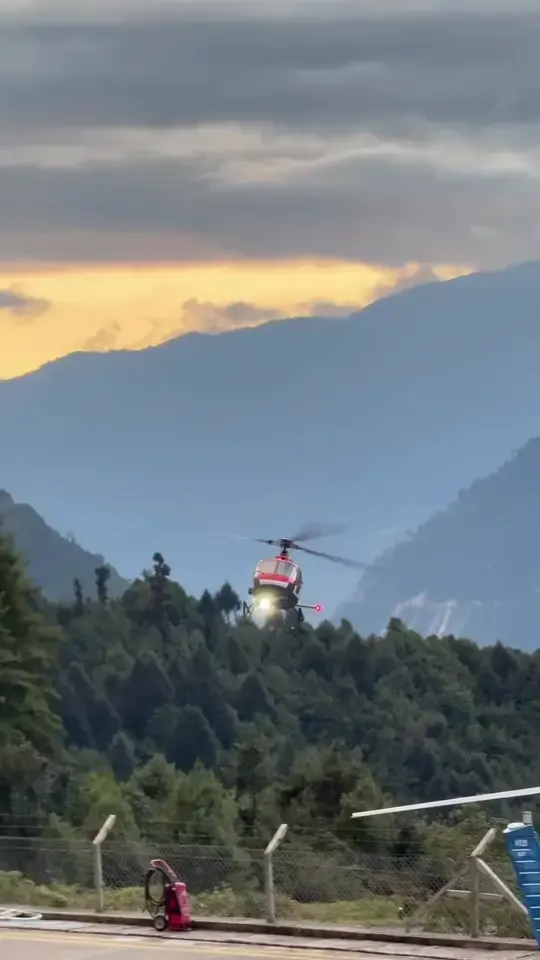
Pokhara is the launch point for the Annapurna range because the city sits at the foot of it. Annapurna Base Camp is roughly 40 km north of the lakeside as the helicopter flies, up the Modi Khola valley into a glacial amphitheatre ringed by Annapurna I at 8,091 m, Annapurna South, Hiunchuli and Machhapuchhre. On foot that distance is several days of walking with permits, a guide and a sleeping bag. In an Airbus H125 it is two short legs and a landing on the moraine shelf, which is exactly why the Pokhara departure undercuts a Kathmandu departure on this route by a wide margin.
What the Pokhara to Annapurna Base Camp Helicopter Cost Actually Buys
The fare is not a ticket in the airline sense. It is a share of a chartered rotation, and what you are buying is aircraft time, crew time and a landing slot inside a national park. The table below separates what the shared seat covers from what it does not, because almost every unpleasant surprise in this market comes from assuming a line item was included when it was not.
| Cost line | Inside the $860 seat | Notes |
|---|---|---|
| Landing at Annapurna Base Camp | Yes | 15 to 30 minutes on the ground at 4,130 m |
| Air time | Yes | About one hour total across the two legs |
| Aviation permissions | Yes | Handled by the operator before departure |
| Trekking permits | Not required | The fly-in day tour does not enter on foot |
| Hotel pickup in Pokhara | Yes | Transfers to the helipad at first light |
| Oxygen on board | Yes | Standard on high-altitude rotations |
| Passenger insurance | Yes | Confirm the coverage limit in writing |
| Meals and drinks | No | Eat before departure, not at altitude |
| Body weight declaration | Required | Given at booking with hand baggage |
Two lines cause most of the friction. The first is the landing itself, because not every cheap quote in Nepal includes a landing at Base Camp, and a scenic loop that turns around above the Sanctuary is a different product at a different price. The second is the weight declaration, which is not a formality: payload is calculated per passenger and the aircraft has a hard ceiling, so a group of five large adults with heavy bags is a different operational problem from five light travellers. Ask for the allowance in kilograms before you pay, and ask whether it includes hand baggage.
Shared Seat or Whole Aircraft: The Per-Head Maths by Group Size
This is the single most useful calculation on the page. A shared seat is sold at a fixed per-person fare of USD 860 and you fly with other travellers on the same rotation. A private charter is sold as one aircraft price of USD 2,585 for up to five passengers, and the per-head cost is simply that figure divided by how many of you are in the cabin. Up to three passengers the charter looks expensive against a shared seat. From four passengers it starts to look cheap, and at five it is decisively cheaper.
| Group size | Cost per head, shared seat | Cost per head, private charter | What the charter adds |
|---|---|---|---|
| 1 traveller | $860 | $2,585 | Whole aircraft, but poor value solo |
| 2 travellers | $860 each | $1,293 each | You choose the slot within the safe window |
| 3 travellers | $860 each | $862 each | Effectively break-even on price |
| 4 travellers | $860 each | $646 each | About $215 per head cheaper |
| 5 travellers | $860 each | $517 each | Cheapest per head of any option we run |
The three-person row is the interesting one. At USD 862 a head a charter costs almost exactly what three shared seats cost, and for that identical money you get the aircraft to yourselves, a departure time you agree rather than one that is assigned, and the freedom to ask the pilot for a different line into the Sanctuary. Photographers and families with young teenagers usually take the charter at three. Solo travellers and couples almost always take shared seats, and the reason is arithmetic rather than preference. Our guide to Annapurna Base Camp helicopter tour cost compares the same ladder for the Kathmandu-origin products if you have not yet fixed on Pokhara.
What Positioning from Kathmandu Really Adds
Most international itineraries begin in Kathmandu, so the honest cost of an Annapurna flight includes getting to Pokhara first. There are three ways to do the 200 km, and they differ in price by a factor of twenty. A fixed-wing airline seat costs around USD 90 to USD 120 and takes 25 to 35 minutes in the air. The road takes six to eight hours, longer in monsoon and longer still behind a slow truck on the Prithvi Highway. The helicopter transfer flies the corridor in 35 to 40 minutes, but it is sold per aircraft rather than per seat, so it only makes sense from about four passengers upward.
Add that to the flight price and the logic becomes clear. Two people flying to Pokhara by air and taking shared seats spend roughly USD 2,000 to USD 2,100 between them including the domestic legs. Four people who charter the Kathmandu to Pokhara transfer and then charter the Base Camp rotation are paying for two aircraft but spreading the cost across four, and they gain a day of their holiday back. If you are working through that comparison, our guide to the Kathmandu to Pokhara helicopter transfer price sets out the charter economics in full, and the helicopter tours from Pokhara page covers every route that actually operates from the city.
The Full Trip Budget: Lines That Never Appear in the Quote
The helicopter quote is one line in a larger budget, and travellers who plan only for that line are the ones who feel overcharged at the end. The table below lists the surrounding costs at their published 2027 levels. None of these are hidden fees. They are simply outside the aircraft.
| Budget line | Typical 2027 cost | Who pays it |
|---|---|---|
| ABC day tour, shared seat | $860 per person | Everyone flying |
| ABC private charter | $2,585 per aircraft | Groups of 3 to 5 |
| Trek-and-fly, 6 days | From $1,199 per person | Travellers who want to walk in |
| Fixed-wing scenic flight | $150 to $250 per person | No landing, one hour |
| Kathmandu to Pokhara airline seat | $90 to $120 | Anyone starting in the capital |
| Pokhara accommodation | $15 to $100+ per night | Everyone, at least one night |
| Nepal entry visa | $50 for 30 days | Most foreign passport holders |
| High-altitude travel insurance | $50 to $150 | Strongly recommended, not optional |
Two of those lines deserve emphasis. The insurance line is not bureaucratic padding: a helicopter at 4,130 m is a high-altitude operation, and a policy that excludes helicopter evacuation is worthless on this trip. Read the altitude ceiling and the evacuation clause before you buy, not after. The accommodation line matters because the flight leaves at first light, which means you need to be in Pokhara the night before, not on a bus arriving at 7am. Build in a spare night at each end and the weather risk stops being a crisis.
Spring 2027: March, April and What the Calendar Does to the Cost
Spring is the season this flight is built for, and the two months behave differently enough that the choice changes both your experience and your booking lead time. March is the quieter month: mornings are clear, the rhododendron is out lower down, and there are fewer trekkers on the trails and fewer rotations booked on the helipad, which means shared seats are easier to join at short notice. April is the busiest month for helicopter tours in Nepal, with the best all-round conditions of the year and more afternoon cloud building over the high peaks as the month goes on. In April you are competing for aircraft with every other operator's clients, so confirm the seat several weeks ahead, before you book your flights to Kathmandu. Rebooking an international ticket because the helicopter was full is an expensive way to learn that lesson.
| Spring window | Conditions | Booking lead time |
|---|---|---|
| March 2027 | Clear mornings, fewer trekkers, quieter helipad | Days to two weeks for a shared seat |
| Late March 2027 | Transition building, still reliable before noon | One to two weeks |
| April 2027 | Best all-round conditions, busiest month, more afternoon cloud | Several weeks, before you book flights |
| Late April 2027 | Warm valley, earlier cloud build on the peaks | Several weeks, with a buffer day |
Prices do not swing wildly month to month, because the cost base is aircraft hours and fuel rather than hotel-style seasonal demand. What changes is availability, and availability has a price of its own: the last two seats on a popular April morning are frequently the ones that cannot be moved when the weather turns, because every later slot is already sold. The calendar we actually operate is listed on the fixed departures page, which shows what runs and how often rather than promising a date. Dates are confirmed in writing at the time of booking, so treat any date you see elsewhere as an intention until that confirmation lands.
For the wider seasonal picture beyond spring, including autumn and the winter trade-offs, read our guide to the best time for a helicopter tour in Nepal. If your plan is to combine the Annapurna flight with an Everest sector in the same trip, the best time to go to Everest Base Camp covers how the two regions line up month by month.
Why Every Departure Leaves Before Sunrise
The early start is not a scheduling quirk or an operator trying to fit extra rotations into the day. It is meteorology. Valley air is stable and cold before dawn, and as the morning warms, the air in the Modi Khola gorge rises and condenses, building cloud over the high peaks by early afternoon. A helicopter that lands at Base Camp at 7am is flying in clear, smooth air with the whole ring of peaks visible. The same aircraft at 1pm is often looking at a white wall with no safe line into the Sanctuary. This is why every flight leaves before sunrise, and why the departure window at the helipad is compressed into the first few hours of daylight.
Practically, that shapes the cost too. A morning rotation is a fixed asset: if your group is not at the helipad, the aircraft flies without you and the slot is gone. It also explains why the day tour is priced per rotation rather than per hour. You are buying one of a small number of flyable windows, and the operator has to hold a buffer for the days when the window closes. When you compare quotes, ask what happens if the flight cannot depart because of cloud, because a cheap quote with no reschedule clause is not cheaper in the end.
When Weather Costs You Money: Cancellation, Buffer and Deposit
Weather is the one variable nobody controls, and it is the reason a realistic budget for a Pokhara helicopter trip includes time rather than only dollars. The standard practice is straightforward: if the morning is not flyable, the flight is rescheduled to the next available slot rather than cancelled outright. That is generous on paper and demanding in practice, because it requires you to still be in Pokhara. Travellers who book the flight for the last morning of their trip and fly home the same evening have effectively no protection at all.
Our advice is unchanged every season. Schedule the helicopter early in your stay in Pokhara, keep the following morning light, and do not book a domestic connection for the same afternoon. A 20 percent deposit holds the date, with the balance settled before departure. Ask for the cancellation terms in writing along with the weight allowance, and read the reschedule clause as carefully as the price. A slightly higher quote from an operator who owns the aircraft and can move you to their own next rotation is usually worth more than a discount from a reseller who has to re-buy a seat.
Booking from Abroad: What to Send and What Comes Back
The booking itself takes about ten minutes of typing. Send your preferred dates, the number of passengers, and each person's body weight with hand baggage. You will get back a written confirmation naming the aircraft, the departure slot, the landing, the total price and the weather terms. Pay the deposit, hold the date, and settle the balance before the flight. That is the whole process, and it works the same from Sydney, London or San Francisco because the pricing, the aircraft and the paperwork are identical for foreign and domestic passengers on this route.
Two practical notes for long-haul travellers. First, altitude: the flight is short but the landing is at 4,130 m, and 15 to 30 minutes at that height is enough to make an unacclimatised person dizzy. Arrive in Nepal a couple of days before the flight, sleep low in Pokhara, and tell the pilot if you have heart or respiratory conditions. Second, jet lag works in your favour here. The 6am departure that feels brutal to a Nepali passenger is a normal afternoon for someone arriving from the United States, which is one small consolation for the time difference.
If You Are Booking from Nepal or India
Nepali travellers and Indian pilgrims make up a large share of Pokhara helicopter demand, and the pricing structure reflects that. Nepali citizens are quoted a domestic rate rather than the published USD fare, and the verification is a citizenship document at booking rather than anything complicated. Indian nationals travelling on the same religious and family circuits usually book through the same local desks, often in groups of five, which is precisely the group size at which a charter becomes the cheapest per-head option. Our separate guide to Annapurna Base Camp helicopter tour cost for Nepali travellers explains the local rate and the documents required, because the numbers are different and should not be mixed with the USD fares quoted here.
For groups arriving from India, the pattern that works best is a five-person charter with an early slot and a spare morning behind it. The Muktinath pilgrimage circuit and the Annapurna Base Camp landing are frequently combined in the same Pokhara stay, and the aircraft can be held for both if you book them together rather than as two separate requests.
Three Cost Mistakes That Show Up Every Spring
The first is comparing a landing quote with a non-landing quote. A scenic loop over the foothills and a landing inside the Sanctuary at 4,130 m are not the same product, and the price gap reflects the difference in aircraft time and permissions rather than operator greed. The second is booking for five but declaring weights for four. Payload is calculated honestly or the aircraft cannot legally depart, and discovering that at the helipad is the worst possible moment. The third is treating the cheapest April slot as the best April slot. A late-morning departure in a busy week is the one most likely to be affected by cloud build, so the money saved can cost you the flight.
There is a fourth, subtler one worth mentioning: assuming the flight is the only way to reach Base Camp on your dates. If the valley closes for two mornings running, the trek-and-fly option from USD 1,199 per person across six days gives you a walking route in and a helicopter exit, which is a different product but a genuine fallback for travellers with time. The updated 2027 price comparison sets all four options side by side, and the Annapurna Base Camp flight from Pokhara guide covers the sector mechanics if you want the operational detail before you commit.
What the Money Buys at 4,130 Metres
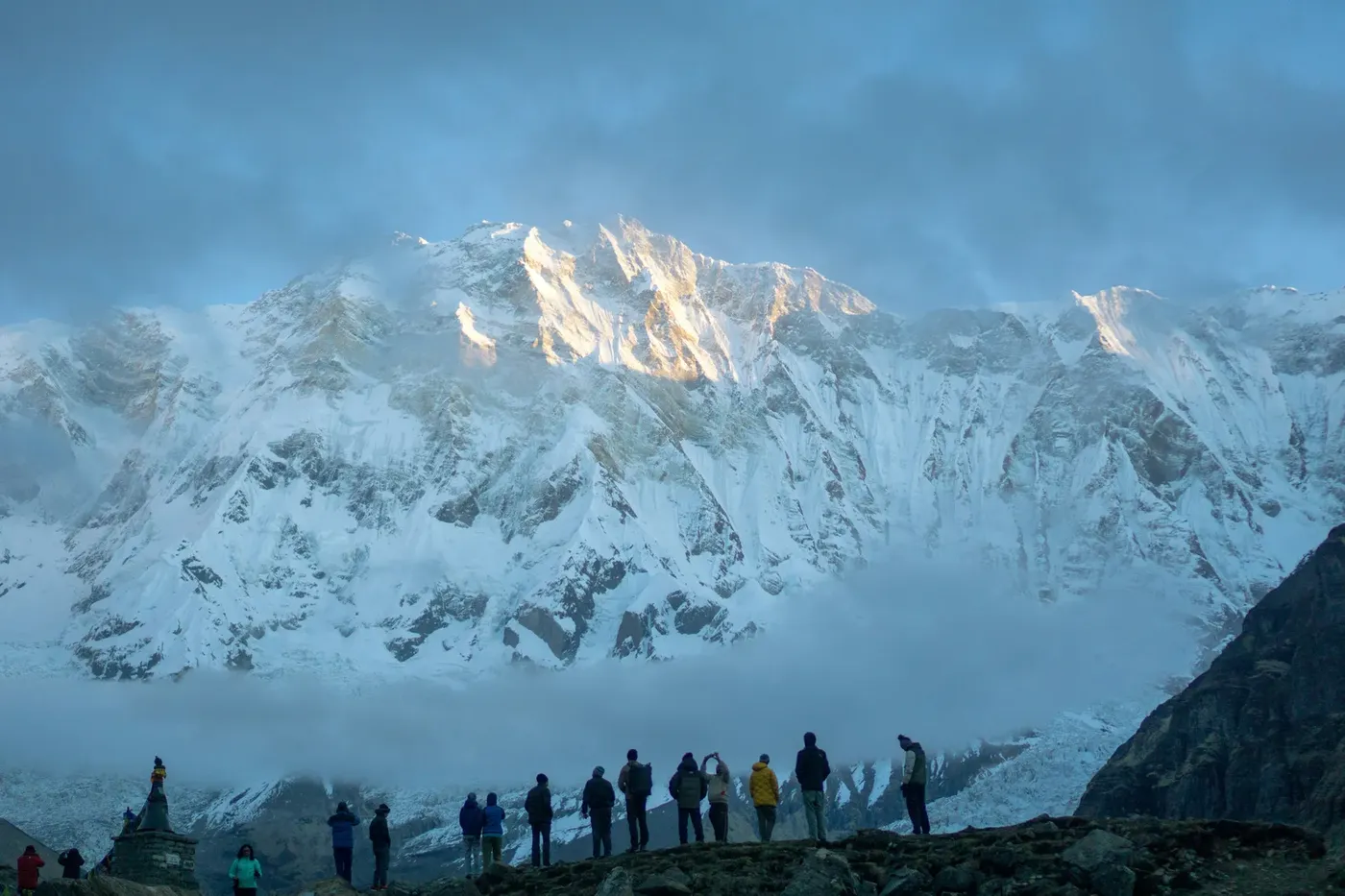
It is worth stepping back from the arithmetic for a moment. The Annapurna Sanctuary is one of the few places on earth where a helicopter can land inside a ring of 7,000 and 8,000 metre peaks. From the basin floor you look up at Annapurna I, the tenth-highest mountain in the world and the first 8,000 metre peak ever climbed, at Annapurna South, at Hiunchuli, and at Machhapuchhre, the Fishtail, which is sacred to Nepalis and has never been summited. Dhaulagiri sits on the western horizon and the Manaslu range shows to the east on clear mornings. Background on the massif itself is worth twenty minutes before you fly: the Annapurna Massif entry covers the geography and the climbing history.
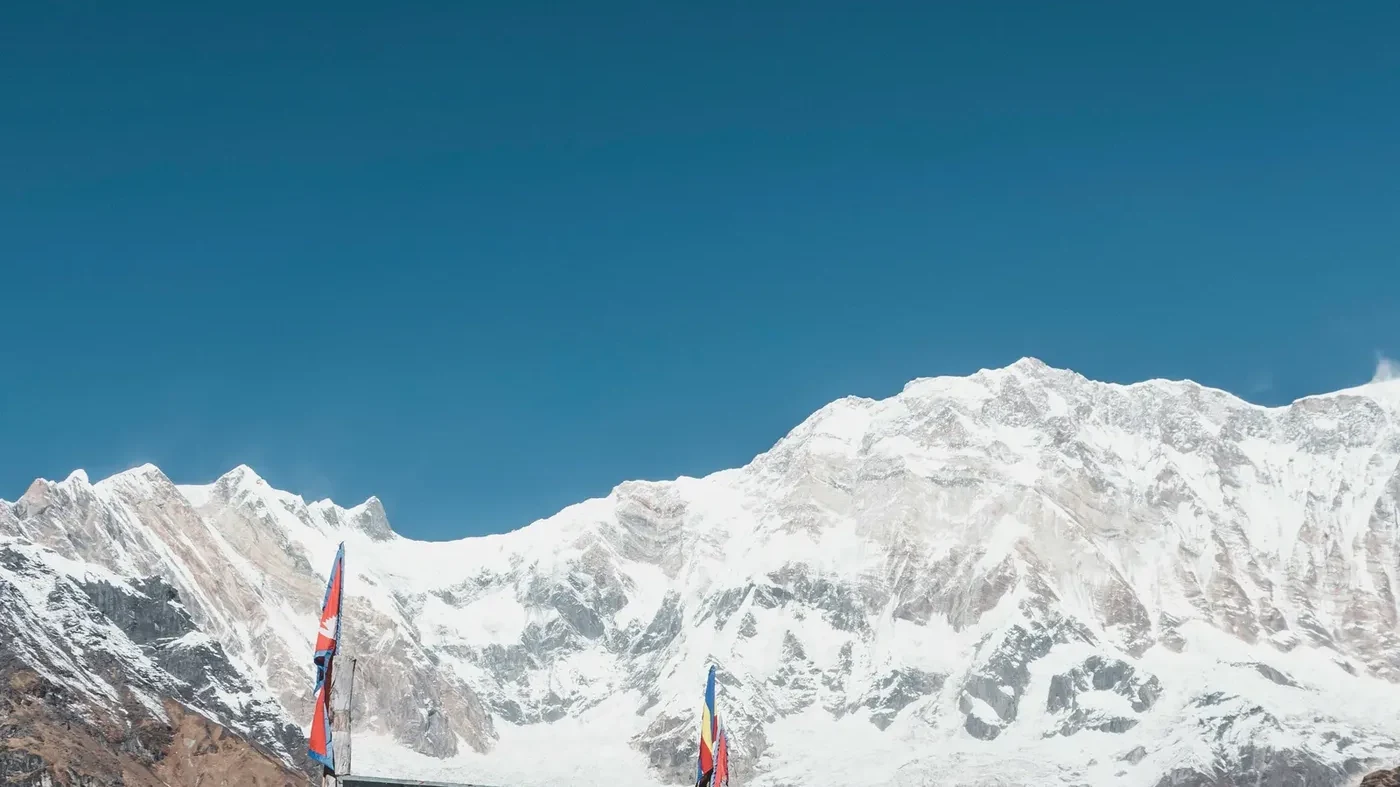
The ground time is deliberately short, 15 to 30 minutes, and that is a cost decision as much as a safety one. Longer sits at 4,130 m raise the risk of altitude symptoms in unacclimatised passengers and lengthen the rotation, which reduces how many groups can fly in the morning window. If you want more time under the peaks, the answer is not a longer landing but a different product: the trek-and-fly itinerary gives you days in the sanctuary and a 25 minute exit by air at the end of it.
Frequently Asked Questions
How much does a helicopter from Pokhara to Annapurna Base Camp cost in 2027?
USD 860 per person on a shared seat, or USD 2,585 for a private charter of the whole aircraft carrying up to five passengers. Both prices land at Annapurna Base Camp at 4,130 m and include about an hour of air time across the two legs, 15 to 30 minutes on the ground, hotel pickup in Pokhara and the aviation permissions.
Is it cheaper to fly to Annapurna Base Camp from Pokhara or from Kathmandu?
Pokhara is cheaper for this route. The aircraft starts at the foot of the range instead of crossing the middle hills in both directions, so fuel and crew time are lower, and the whole product collapses into a half day. The trade-off is getting yourself to Pokhara, which costs USD 90 to USD 120 by airline seat or six to eight hours by road.
How many people can share one charter?
Up to five passengers in an Airbus H125. At five the per-head cost is about USD 517, at four about USD 646, and at three about USD 862, which is effectively the same as three shared seats but with the aircraft to yourselves.
Does the price include the landing at Base Camp?
On our day tour, yes. The aircraft lands on the moraine shelf inside the sanctuary for 15 to 30 minutes. Confirm this explicitly when you compare quotes elsewhere, because some lower prices are scenic loops that never touch down.
What is the best month for this flight in spring 2027?
April has the best all-round conditions but is the busiest month for helicopter tours in Nepal and carries more afternoon cloud. March is quieter, with clear mornings and fewer trekkers, and shared seats are easier to find at short notice. Book April several weeks ahead, before you commit to international flights.
Why do flights leave so early in the morning?
Because valley air builds cloud over the high peaks by early afternoon. The morning is stable and clear, the Sanctuary is visible, and the approach is safe. Every flight in the schedule departs before sunrise to use that window.
What happens if the weather cancels my flight?
The flight is rescheduled to the next available slot rather than cancelled. That is why we ask you to book it early in your Pokhara stay and keep the following morning free, and why you should not book a same-day domestic connection after the flight.
How much deposit is required?
A 20 percent deposit holds the date, with the balance settled before departure. The aircraft, departure slot, landing, total price and weather terms are confirmed in writing at booking, and dates are only fixed by that written confirmation.
How much luggage can I bring?
The allowance is limited and calculated per passenger, so declare each person's body weight with hand baggage at booking. Payload is a legal limit on this aircraft, not a guideline, and the figure is lower than most travellers expect on a high-altitude rotation.
Is the flight suitable for older travellers or children?
The flight itself is short and comfortable, and the landing is the demanding part at 4,130 m. Older passengers with heart or respiratory conditions should speak to a doctor first, and children need to be able to sit secured for the sector. Tell us the ages and any medical notes at booking so the pilot can brief accordingly.
Can I combine Annapurna Base Camp with Muktinath in one Pokhara stay?
Yes, and many Indian and Nepali groups do exactly that, because both routes launch from Pokhara and the aircraft can be held for consecutive mornings. Book them as one request rather than two, which usually keeps the total lower and simplifies the weather buffer.
Do I need trekking permits for the day tour?
No. The fly-in day tour does not enter the park on foot, and the aviation permissions are arranged by the operator. Permits only become relevant if you add a walking section, such as the trek-and-fly itinerary or a hike-out variant.
Booking the Pokhara to Annapurna Base Camp Flight
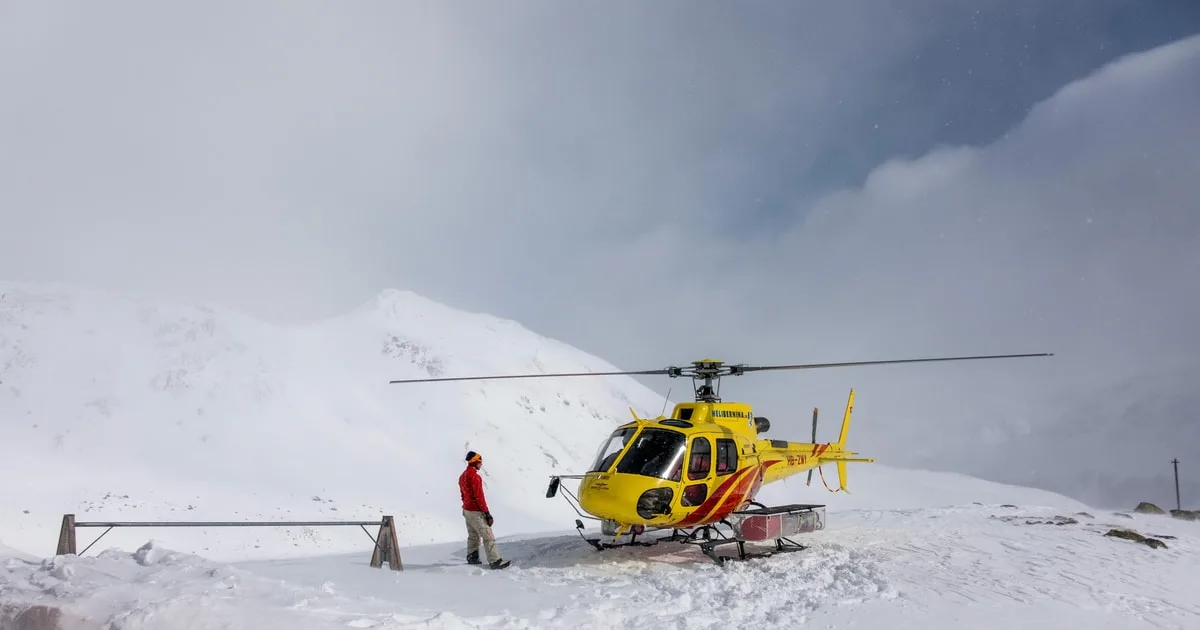
The product itself is the Annapurna Base Camp helicopter day tour from Pokhara, priced from USD 860 per person and run as a shared seat or a private charter. It leaves from the Pokhara helipad at first light, flies up the Modi Khola valley, lands at 4,130 m for 15 to 30 minutes and returns you to the city before lunch. For the full map of routes in this region, including Tilicho Lake at 4,919 m and the Mardi Himal sector, the Annapurna and Pokhara helicopter tours hub links every guide in the cluster.
Send your dates and group size and we will come back with a written price, the aircraft type, the slot and the weather terms, usually within 12 hours. If you are planning for March or April 2027, do it now rather than in the last fortnight: April seats in particular are sold weeks out, and the Pokhara to Annapurna Base Camp helicopter cost you are quoted today is the number you can plan an international ticket around. We are Enticing Himalayas Travel, a government-licensed Kathmandu operator flying helicopters in Nepal since 2012.