

Short answer: Manaslu Samagaun Nepal is a question about access before it is a question about mountains. Samagaun, also written Sama Gaun, is the largest village on the Manaslu Circuit, sitting at 3,530 m on the upper Budhi Gandaki in west-central Nepal. It is reached on foot, on a short four-hour walking day from Shyala at 3,575 m, and it is where nearly every Manaslu trek takes its acclimatisation day. No packaged helicopter product lands in the village itself: the two pick-up points published for this valley are Samdo at 3,860 m above it and Bimthang on the far side of the Larkya La at 5,160 m. The way a flight and this village are combined is the 13-day Manaslu Helicopter Return Trek at $2,160 per person on a shared flight.
- 3,530 mSamagaun, the largest village on the Manaslu Circuit
- 8,163 mManaslu, the eighth-highest mountain, rising above the valley
- 13 DaysManaslu Helicopter Return Trek, helicopter exit included
- $2,160Per person, shared flight, spring 2027 departures
Most people who search for Manaslu Samagaun Nepal are trying to settle one question before they book anything: whether the village they keep seeing in photographs is somewhere an aircraft can put them down, or somewhere they have to walk to. The answer changes the shape of the whole trip, and it changes the budget. It also explains why two journeys that both promise the eighth-highest mountain can differ by ten days and by more than a thousand dollars.
This guide treats the village as the subject rather than the mountain. It sets out where Samagaun sits on the circuit, what 3,530 m does to a first-time Himalayan traveller, what is actually inside the settlement, how a helicopter connects to it in practice, and how to plan a March or April 2027 trip from the United States or Europe so that the seat is confirmed before the international air tickets are paid for.
Where Samagaun Sits on the Manaslu Circuit
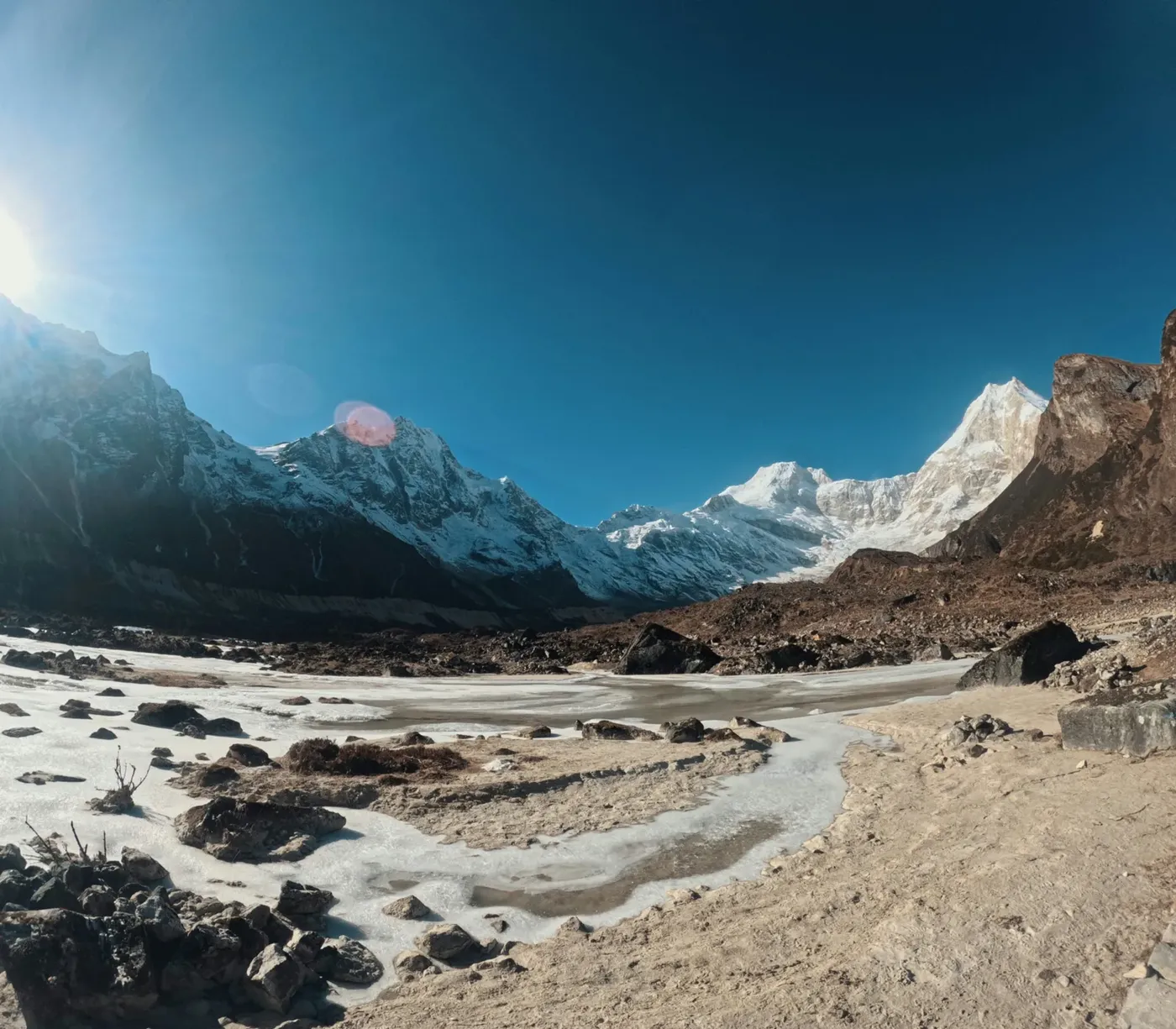
Manaslu stands at 8,163 m, the eighth-highest mountain in the world, north of Pokhara and close to the Tibetan border, inside the Manaslu Conservation Area. The Manaslu entry on Wikipedia is a sensible place to check that headline figure against any brochure. There is no road into the valley and no airstrip anywhere in the region, which is the single fact that shapes every itinerary, every price and every helicopter booking on this mountain.
The circuit walks in from Machha Khola at 870 m and climbs the Budhi Gandaki gorge village by village: Jagat, Deng at 1,860 m, Namrung at 2,630 m, then Lho with its long monastery wall, then Shyala at 3,575 m. Samagaun comes next, and it sits a little lower than Shyala, at 3,530 m, because the trail drops off the shoulder and into the valley floor to reach it. That small descent is deliberate in every itinerary: four hours of walking, a shorter day than the ones before it, and a rest day that follows.
The sequence matters for anyone planning around the flight. Samagaun is roughly two walking days below the Larkya La, the pass at 5,160 m that is the high point of the whole route. Above the village the trail continues through yak pasture to Samdo at 3,860 m, then Dharamsala at 4,460 m, then the pass itself. Every helicopter pick-up published for this valley sits at or beyond Samdo, which is the reason the village and the aircraft are usually discussed as two separate things.
What Samagaun Is Actually Like
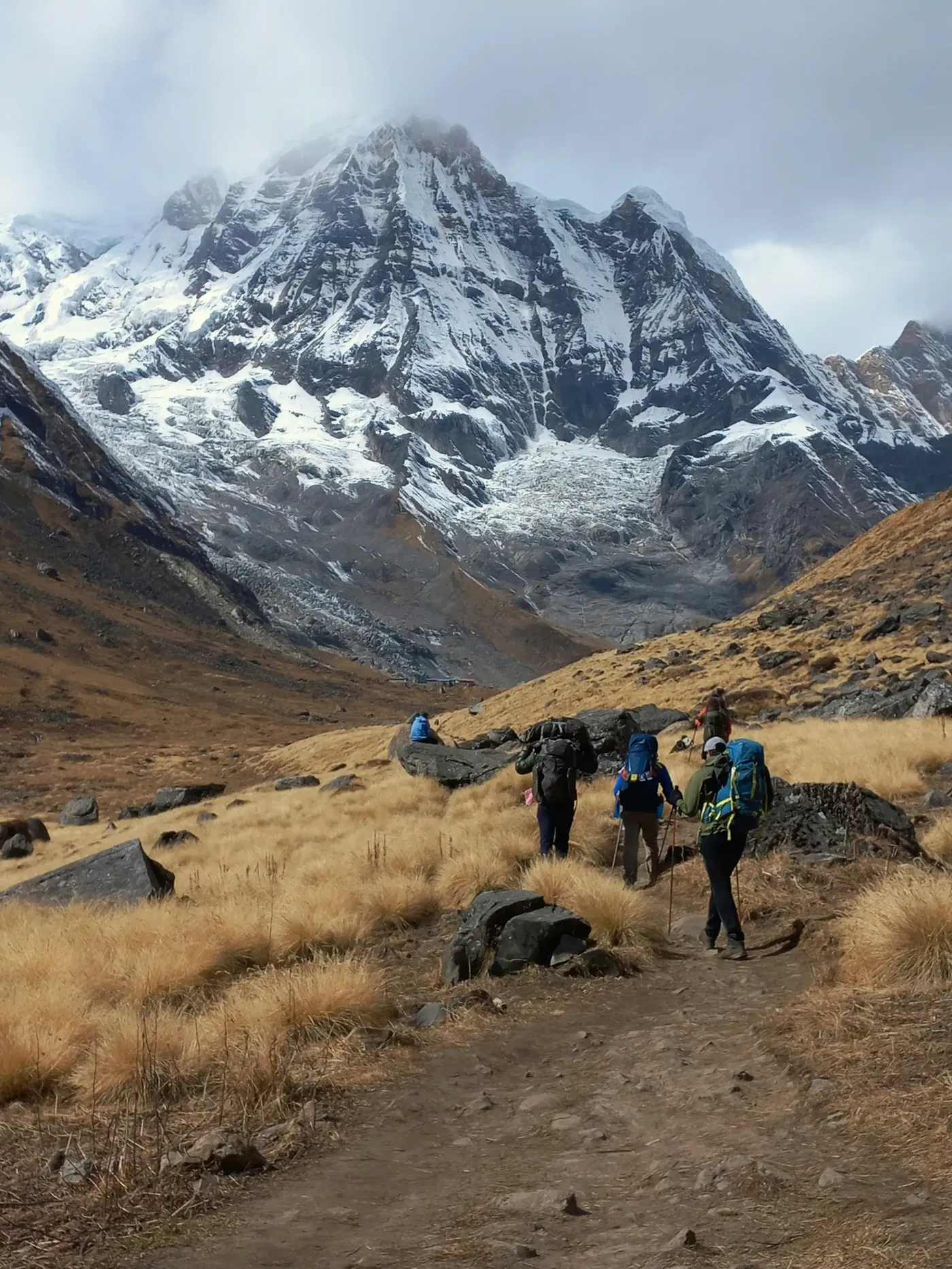
Samagaun is the largest and most important settlement in the region, and it shows. The houses are stone with flat roofs and firewood stacked on top of them, the lanes are walled with mani stones carved with prayers, and the village is one of the few places on the circuit where people go about ordinary work rather than waiting for trekkers to arrive. Locals are often dressed in traditional Tibetan attire. That is not a performance for visitors; it is simply what the upper valley wears.
For a traveller, the village functions as three things at once. It is a rest stop, deliberately placed after the climb from Namrung and Shyala. It is a base for the two side trips that justify the rest day: the walk to Manaslu Base Camp, a full day up onto the glacier that reaches roughly 4,400 m before turning back, and the quieter walk to Pungyen Gompa, an old monastery set on the slope above the village with the twin peaks framed behind it. And it is the last place on the route with any margin of comfort, because above it the settlements thin out to Samdo and then to the seasonal shelters at Dharamsala.
Three practical details are worth knowing before you arrive. There is no ATM anywhere after Machha Khola, so carry rupees for the whole upper valley. Electricity and wifi exist in the lower villages for a small fee and become unreliable as you climb, which means Samagaun is a sensible place to send the last message home. And the altitude is not a figure you can ignore: the village sits at 3,530 m, higher than most travellers have ever slept, and the rest day that follows is not a spare day in the itinerary but the acclimatisation that makes the pass possible four days later.
Does a Helicopter Land at Samagaun?
Not as a published product, and this is the point where most online answers to this question go wrong. The flights that serve the Manaslu valley are not scenic loops out of Kathmandu that circle the summit and come home. They are working transport into and out of a restricted conservation area with no road and no airstrip, and they use a small number of landing points that pilots and operators can support.
The two that matter are Samdo at 3,860 m, on the Tibetan-facing side above Samagaun and below the pass, and Bimthang on the far side of the Larkya La, on the descent toward Dharapani. Samdo is the highest Manaslu pick-up point currently published for the trekking product, and it is where a group that has walked up the gorge but run out of days, or run into weather, is most often collected. Bimthang is the pick-up used by the standard helicopter-return itinerary, because after the pass the walk out is three days of eroded descent through forest to a road that only leads to another drive.
What no operator in Nepal sells is a landing at Manaslu Base Camp, under the south face at the head of the glacier. The ground there is not a licensed site, and any page promising a base camp helicopter landing or a summit landing is promising something that does not happen. The Manaslu Base Camp guide on this site sets out why the camp is a walking destination and where the aircraft actually goes.
There is one genuine grey area worth handling carefully. A half-day scenic flight from Kathmandu that shows the massif and puts down for a short stop is sold in the market, and the published price range on this site for that product is roughly $900 to $1,300 per person depending on landing arrangements and group size. Where such a flight puts down is decided by the operator and the pilot on the day, not by the booking page. If a village stop at Samagaun is the thing you are paying for, get the landing point confirmed in writing, in the itinerary, before any deposit moves. A helicopter that circles the mountain and lands somewhere else is still a fine morning, but it is not the trip you thought you bought.
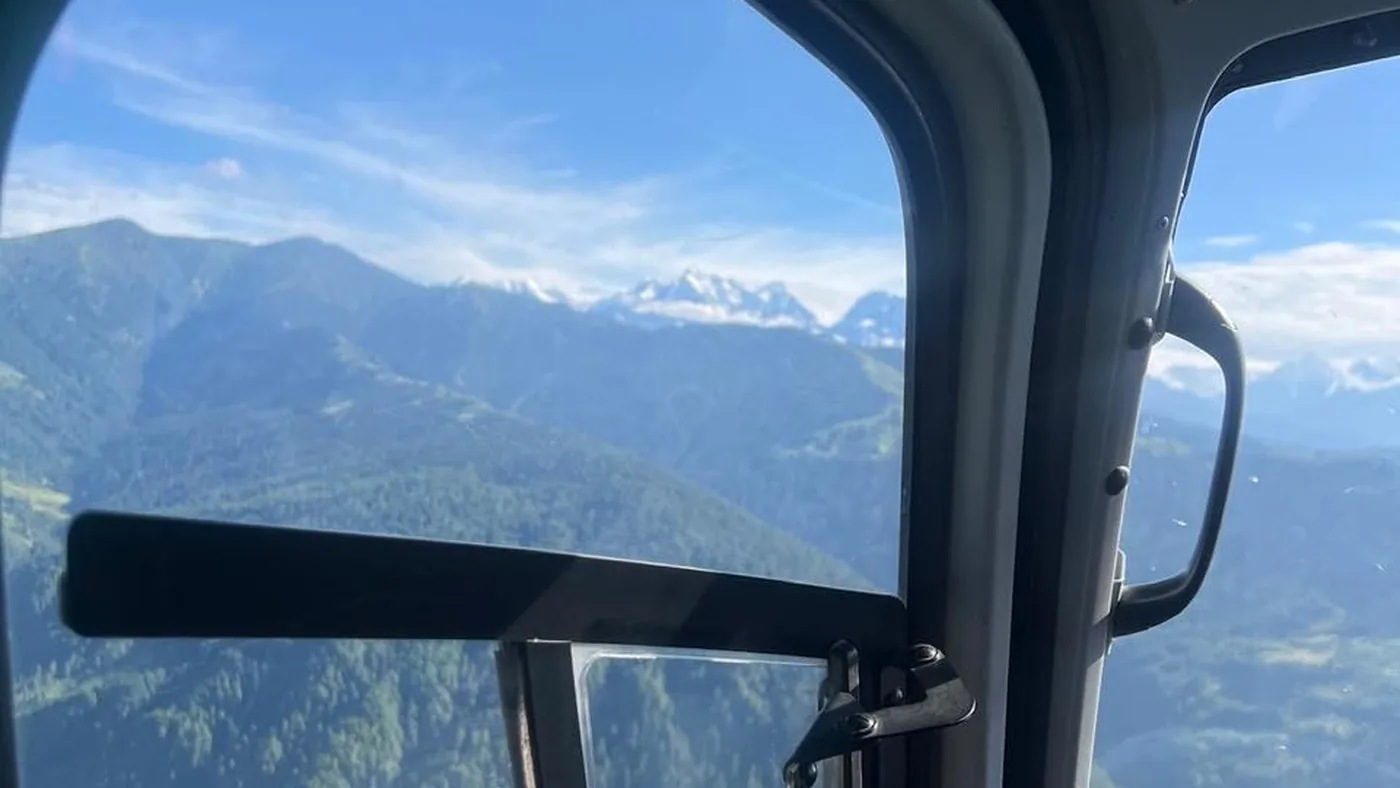
The aircraft themselves are single-engine turbine machines of the Airbus H125 / AS350 B3 class, the standard high-altitude helicopter in Nepal, carrying up to five passengers. At 3,500 m and above, payload is the real constraint rather than performance, which is why bag weight is enforced on every high landing and why the exit flight allowance is 10 kg per person plus a day pack. It is also why the final decision to land or to turn back belongs to the pilot, and why no honest operator guarantees a specific landing time in advance.
The Three Ways to Reach Samagaun in 2027
There are only three ways a 2027 traveller gets to this village, and they are priced on completely different bases, which is why comparisons on the internet are so unreliable. One is a trekking package with a flight attached at the end. One is a charter aircraft bought by the group. One is a half-day scenic flight that may or may not include a stop. Everything else is a variation on those three.
| Way to reach Samagaun | Published price | Time on the ground | What it actually gives you |
|---|---|---|---|
| Manaslu Circuit on foot, helicopter exit after the Larkya La | $2,160 per person, shared flight | 13 days | The village rest day, the base camp walk, the pass at 5,160 m, then a lift out from Samdo or Bimthang instead of three days of walking down |
| Private charter into Samdo, walking down to the village and out | Quoted per aircraft, up to 5 guests | One flying morning plus the walking days you keep | Control of the date and the group; the aircraft carries your party rather than sharing seats with strangers |
| Half-day scenic flight from Kathmandu with a landing stop | $900 to $1,300 per person, depending on landing arrangements and group size | Half a day | Sight of the massif and a short stop; the landing point is the operator and pilot call, so confirm it in writing |
| Standard Manaslu Circuit on foot, walking out the long way | Quoted per group, no flight element | 14 to 16 days | The full circuit and the same village, with three or four extra days of descent after the pass |
The arithmetic that surprises people is the first row against the last. The helicopter-return package is not a luxury add-on to a trek; it replaces the least rewarding part of it. On a restricted-area route where the permit is charged by the day, the extra days of walking out are also extra days of permit, which is why the flight often costs less than the days it deletes. The Manaslu Circuit trek guide with the helicopter exit walks through the full route and where the aircraft meets the trail.
Manaslu Samagaun Nepal in Spring 2027: March and April at 3,530 m
The spring window is the reason most 2027 bookings for this valley are made in December, January and February. Flights, permits, guides and lodge beds for March and April are committed months ahead, and the two months behave differently enough that the choice between them should be made deliberately rather than by whichever date is convenient.
March is the quieter month. The mornings are clear, the trail carries noticeably fewer trekkers than it will a month later, and the lodges in Samagaun have space. For a photographer or for anyone who wants the village to feel like a village, March is the better of the two. It is also colder, and the upper trail still holds old snow in shaded sections, which matters if you are walking to the pass rather than flying past it.
April is the busiest month for helicopter tours in Nepal and it has the best all-round conditions of the spring: warmer mornings, more reliable flying, and the rhododendron in flower lower down the gorge. The trade is cloud. Afternoon build-up is more pronounced in April than in March, which is exactly why every flight leaves before sunrise, and why the valley air building over the high peaks by early afternoon is a planning constraint rather than a piece of trivia.
Two booking rules follow from that. For April, confirm the seat several weeks ahead, and do it before booking flights to Kathmandu, because the seat is the scarce item and the long-haul ticket is not. And treat every departure as a date confirmed in writing at booking rather than a fixed promise: the fixed departures page lists what runs and how often, and the written confirmation is what your plans should hang on. The month-by-month picture, including the autumn window and the monsoon, is set out in the best time for a helicopter tour in Nepal guide.
| Month at Samagaun | Morning flying | Trail and lodges | The booking move |
|---|---|---|---|
| March 2027 | Clear mornings, the quietest of the spring weeks | Fewer trekkers, easiest beds above Namrung, cold nights | Book two to three months out; ask for the earliest slot of the day |
| April 2027 | Best all-round conditions, more afternoon cloud to work around | Busiest month for helicopter tours, lodges filling in the upper villages | Confirm the seat several weeks ahead, before the Kathmandu air tickets |
| October 2027 | Clearest air of the year, stable mornings | Busiest trekking month, highest permit rate | Book by mid-year; this is the first month to sell out |
Booking Samagaun From the United States or Europe
Everything below applies to any Manaslu Samagaun Nepal itinerary that keeps the walk-in, the rest day and a flight out; operators differ on permits and aircraft, not on the village. Almost every enquiry that comes into this site from North America or Europe follows the same sequence, and the sequence is usually the thing that goes wrong. The instinct is to buy the long-haul ticket first, because it feels like the real commitment, and to sort out the mountain afterwards. On this route it should be the other way round. The scarce item is the helicopter seat on a spring departure and the restricted-area permit that goes with it; the international ticket is plentiful.
The practical order for a March or April 2027 trip is this. Fix the dates and the group size first. Send the enquiry and get the guide, the permits and the helicopter seat confirmed, which on this operator happens within about twelve hours, and secure the departure with a 20 percent deposit. Only then book the flight to Kathmandu, and leave a buffer day at the end, because the itinerary already carries a contingency day and weather in the high valley can still move the lift.
Three items need attention before you leave home. Travel insurance has to cover helicopter evacuation and trekking above 5,200 m explicitly, since the Larkya La is over 5,000 m and many standard policies stop at 3,000 or 4,600. Luggage has to be planned around the exit flight allowance of 10 kg per person plus a day pack, with the rest sent ahead to Kathmandu. And the fitness question should be answered honestly: this is a grade four trek, five to seven hours of walking on most days, roughly 140 km in total, with one long pass day that starts before dawn.
Pricing is quoted in US dollars per person, which removes the exchange-rate guesswork for a traveller paying from abroad. The package figure covers the permits, the licensed guide, porters, teahouse lodging and trail meals, the helicopter exit and the transfers in Kathmandu. It does not cover insurance, Kathmandu hotels, tips or personal spending, and any quote that appears far below the permit floor is either excluding the restricted-area permit or not entering the restricted area at all.
If You Are Travelling From Nepal or India
The published shared-seat price for this route is a US dollar figure per person, and there is no separate local rate printed for the Manaslu helicopter return in the way there is for some domestic fixed-wing sectors. Travellers from Nepal and from India book onto the same departures and are quoted at booking according to the date, the group size and the aircraft, so the number to work from is the one confirmed in writing for your dates rather than a rate table.
Two rules apply equally to everyone, whatever passport is in your pocket. Manaslu is a restricted area, and the permit is issued only through a registered trekking agency, with a licensed guide mandatory on the route. Since March 2027 a solo trekker can hold the permit, which removed the old two-person minimum, but it did not remove the agency or the guide, and this site places solo travellers with others on the same departure so the shared rate applies rather than a private charter.
One clarification is worth making for Indian travellers in particular, because the searches overlap. Manaslu is a trekking circuit, not a pilgrimage route, and there is no fly-in darshan product here of the kind that exists at Muktinath. If the trip you actually want is a short helicopter pilgrimage with a temple at the landing point, the Muktinath helicopter pilgrimage cost guide is the right page, and it is a one-day product priced per shared seat. Samagaun is a different proposition: a village at 3,530 m that you reach on foot, with the aircraft arranged around the walk rather than instead of it.
The Altitude Ladder Above the Village
The reason Samagaun matters so much in a Manaslu itinerary is that it is the last settlement where a rest day makes physiological sense. Above it the sleeping altitude jumps, and the body needs the night at 3,530 m to cope with what comes next. The ladder below is the sequence the published itinerary follows, and it is the single most useful table to check before booking anything, because a cheap itinerary that cuts a stop here is not a bargain.
| Point on the route | Altitude | What happens there |
|---|---|---|
| Machha Khola | 870 m | Road head and first night on the trail, subtropical river valley |
| Namrung | 2,630 m | The Tibetan-influenced villages begin; mani walls and carved stones line the path |
| Shyala | 3,575 m | Last village before Samagaun, ringed by peaks including Manaslu and Himal Chuli |
| Samagaun | 3,530 m | Largest village on the circuit; rest day, base camp walk, Pungyen Gompa, Birendra Lake |
| Samdo | 3,860 m | Highest helicopter pick-up point published for the valley; stone houses in the rain shadow |
| Dharamsala (Larkya Phedi) | 4,460 m | Seasonal shelter below the pass; the short night before the crossing |
| Larkya La | 5,160 m | The high point, walked on foot, crossed by aircraft in the air but never landed on with a group |
| Bimthang | 3,720 m | First settlement on the far side; the usual helicopter exit point on the return itinerary |
Two things follow from that ladder. The first is that the village rest day is not padding, and the second is that a traveller who flies into the valley rather than walking in still has to respect the altitude, because the aircraft does not acclimatise anybody. A charter that puts a group down at Samdo at 3,860 m and walks down to Samagaun the same day is a very different physiological proposition from walking up over six days, and it should be planned with the same care.
Permits, Paperwork and What to Ask Before You Pay
Samagaun sits inside the Manaslu Conservation Area, which means three permit items sit behind every price on this page: the restricted-area permit, the Manaslu Conservation Area entry, and the Annapurna Conservation Area entry for the exit section, plus a municipal charge collected locally in the corridor. The restricted-area permit is charged in US dollars, per person, by the week and then by the day, at a higher rate from September to November than in the low season, and it is issued only to a registered agency. That is the reason Manaslu sits above Annapurna on price, and no operator can discount it away.
When you compare two quotes, then, ask four questions in this order. Is the restricted-area permit inside the price, and for how many days. Is the guide government-licensed for the Manaslu restricted area. Is the helicopter exit included as a shared seat or quoted separately as a charter. And what happens if the weather closes the valley on the morning of the lift. The answers separate a real quote from a headline number, and they cost nothing to ask. The guide to where a helicopter can land in Nepal explains the licensing logic behind the landing points, and the Manaslu helicopter tour guide covers the flight itself in more detail.
One more piece of expectation-setting is fair, because it is the question that recurs in every enquiry about the summit. No helicopter lands on Manaslu, at 8,163 m, and none lands at base camp. The Manaslu summit guide explains where the aircraft drops you instead and why that is not a compromise so much as the whole design of the route.
Samagaun Questions, Answered
Where is Samagaun in Nepal?
Samagaun sits on the upper Budhi Gandaki in west-central Nepal, inside the Manaslu Conservation Area, north of Pokhara and close to the Tibetan border. On the Manaslu Circuit it comes after Shyala and before Samdo, roughly two walking days below the Larkya La. There is no road to it and no airstrip anywhere in the region.
How high is Samagaun?
The village sits at 3,530 m, slightly lower than Shyala at 3,575 m, because the trail drops off the shoulder into the valley floor to reach it. It is the largest settlement on the circuit and the last one where a rest day is built into every published itinerary.
Can you fly to Samagaun by helicopter?
Not as a published product. The pick-up points served in this valley are Samdo at 3,860 m above the village and Bimthang at 3,720 m on the far side of the pass. Half-day scenic flights that stop somewhere in the massif are sold, but the landing point is the operator and pilot decision, so if a village stop is what you want, have it written into the itinerary.
Where can a helicopter land in Nepal, if not at the village?
At licensed or operator-supported sites rather than wherever the view is best: the Lukla and Everest corridor, Kala Patthar and Everest Base Camp viewpoints, the Annapurna Base Camp area, Muktinath and Jomsom, Langtang at Kyanjin, and the two Manaslu points at Samdo and Bimthang. Altitude, approach angle, rotor clearance and permission all decide the list, which is why no operator can add a site because a customer asked for it.
How long is the walk from Shyala to Samagaun?
About four hours. It is deliberately shorter than the days before it, and the itinerary follows it with the rest day, because the village is the last sensible place to acclimatise before Samdo and the pass.
Is Samagaun worth a rest day, or should it be skipped?
It should not be skipped. The day is doing two jobs at once: it gives the body a night at 3,530 m before the sleeping altitude climbs, and it is where the two best side walks start, to Manaslu Base Camp on the glacier and to Pungyen Gompa above the village. An itinerary that removes it is cheaper for a reason.
What is the best month for a Samagaun trip in 2027?
March and April for spring, October and November for autumn. March is quieter, with clear mornings and fewer trekkers on the trail. April has the best all-round conditions and is the busiest month for helicopter tours in Nepal, with more afternoon cloud to work around. Every flight leaves before sunrise, and in April the seat should be confirmed several weeks ahead, before the international tickets are booked.
Do I need a special permit for Samagaun?
Yes. Manaslu is a restricted area, so a restricted-area permit, Manaslu Conservation Area entry and the Annapurna Conservation Area entry for the exit section are all required, plus a municipal charge collected locally. The permit is issued only through a registered agency and a licensed guide is mandatory on the route.
How much does it cost to reach Samagaun with a helicopter exit?
The published package is $2,160 per person on a shared flight for the 13-day Manaslu Helicopter Return Trek, which includes the permits, guide, porters, teahouse lodging and meals, the helicopter exit and the Kathmandu transfers. A half-day scenic flight without the trek is published in the $900 to $1,300 per person range, and a private charter is quoted per aircraft for up to five guests.
Can I do this alone now that the two-person rule has gone?
Since March 2027 a solo trekker can hold the restricted-area permit, so the old two-person minimum is no longer the obstacle. The agency and licensed guide requirements remain, and solo travellers are usually placed with others on the same departure so they pay the shared rate instead of chartering an aircraft.
What is the difference between Samagaun and Manaslu Base Camp?
Samagaun is a village of stone houses at 3,530 m where people live and work all year. Base camp is a working expedition camp on the glacier under the south face, with no lodge, no shop and no shelter for trekkers, reached on a full-day walk from the village that climbs to roughly 4,400 m and returns. Confusing the two is the most common error in Manaslu planning.
Does the helicopter replace the acclimatisation?
No. Flying in shortens the journey but does not prepare the body for altitude, and a group that lands at Samdo at 3,860 m and walks down has skipped the slow build that makes the pass safe. If you fly in rather than walk in, the rest day at the village matters more, not less.
Planning the 2027 Trip Around the Village
The short version for anyone still deciding on Manaslu Samagaun Nepal: Samagaun is the human centre of the Manaslu Circuit, at 3,530 m, reached on foot, and best visited in a spring that is booked in the winter before it. The aircraft in this valley does not land in the village; it lifts you out from Samdo or Bimthang when the walk is done, which is what the 13-day package at $2,160 per person actually buys.
If the mountain rather than the village is your reason for looking, the Nepal beyond Everest helicopter guide puts Manaslu beside Langtang, Gosaikunda, Rara and Muktinath so the quiet options can be compared properly. If you are weighing a spring Everest flight instead, the best time to go to Everest Base Camp guide sets out the same March and April logic for the Khumbu.
For dates, the fixed departures page lists what runs and how often, and confirmation of any specific departure is given in writing at booking. Send your dates and group size through the Manaslu Helicopter Return Trek page, and the reply will tell you honestly whether the spring window you have chosen suits the walk, the flight and the altitude in the order they need to happen.