

Short answer: A helicopter tour to Langtang puts you on the ground at Kyanjin Gompa at roughly 3,800 m after about two hours of flying time from Kathmandu, and the published rate starts at $2,400 for the whole aircraft on a day block. The trek to the same village is a multi-day walk from the roadhead. That is the entire trade: you buy the geography without the days, and what you give up is the texture of getting there — the Tamang villages, the nights in teahouses, the slow climb that acclimatises you on the way up. This page is an honest comparison of the two, so you can decide which one you are actually buying.
- $2,400Published Langtang day charter, whole aircraft
- ~2 hrsPublished block time out of Kathmandu
- 3,800 mLanding height near Kyanjin Gompa
- 4,984 mRidge above the valley, the walker's high point
What a Helicopter Tour to Langtang Actually Replaces
Langtang is the valley immediately north of Kathmandu, folded against the Tibetan border inside Langtang National Park, the country’s first Himalayan national park, gazetted in 1976. It is close enough that an aircraft can leave the capital, cross the valley rim, run up the gorge and set you down in the upper valley inside a single morning. That proximity is the whole commercial case for the product.
On foot, the same journey starts a long way down. The road north from Kathmandu climbs to Dhunche, the district headquarters on the park boundary, and continues by jeep track to Syabrubesi, where the trail begins in earnest. From there the route works up the Langtang Khola past Lama Hotel and Ghodatabela, through bamboo and rhododendron forest, then above the tree line to the Tamang settlements of Thangshyap, Langtang village and Mundu before reaching Kyanjin Gompa. It is one of the great valley walks in Nepal, and it takes days because the terrain says so, not because anyone designed it that way.
That walk is the thing a helicopter tour to Langtang removes. What it does not remove is the altitude: the aircraft deposits you at roughly 3,800 m, which is higher than most trekkers’ first night and high enough that you feel it when you step out. So the trade is honest and specific. You save the days, you skip the acclimatisation those days would have given you, and you lose the villages as a lived experience — though not as a view, because the flight tracks the valley floor and you see every one of them from above.
If you want the route, the cost factors and the booking process in general, our Langtang helicopter tour cost and route guide covers that ground in detail. This page is the decision: fly or walk, and what each one actually delivers.
The Flight North from Tribhuvan International Airport
Langtang departures leave from the domestic side of Tribhuvan International Airport, which sits at 1,400 m in the Kathmandu Valley. You are checked against the manifest, your passport details are matched to the park permit paperwork, the pilot briefs the group, and the aircraft lifts out over the city before turning almost immediately north. Within minutes the dense urban grid gives way to terraced hillsides, and the machine climbs over the Shivapuri ridge that walls the valley in on its northern side.
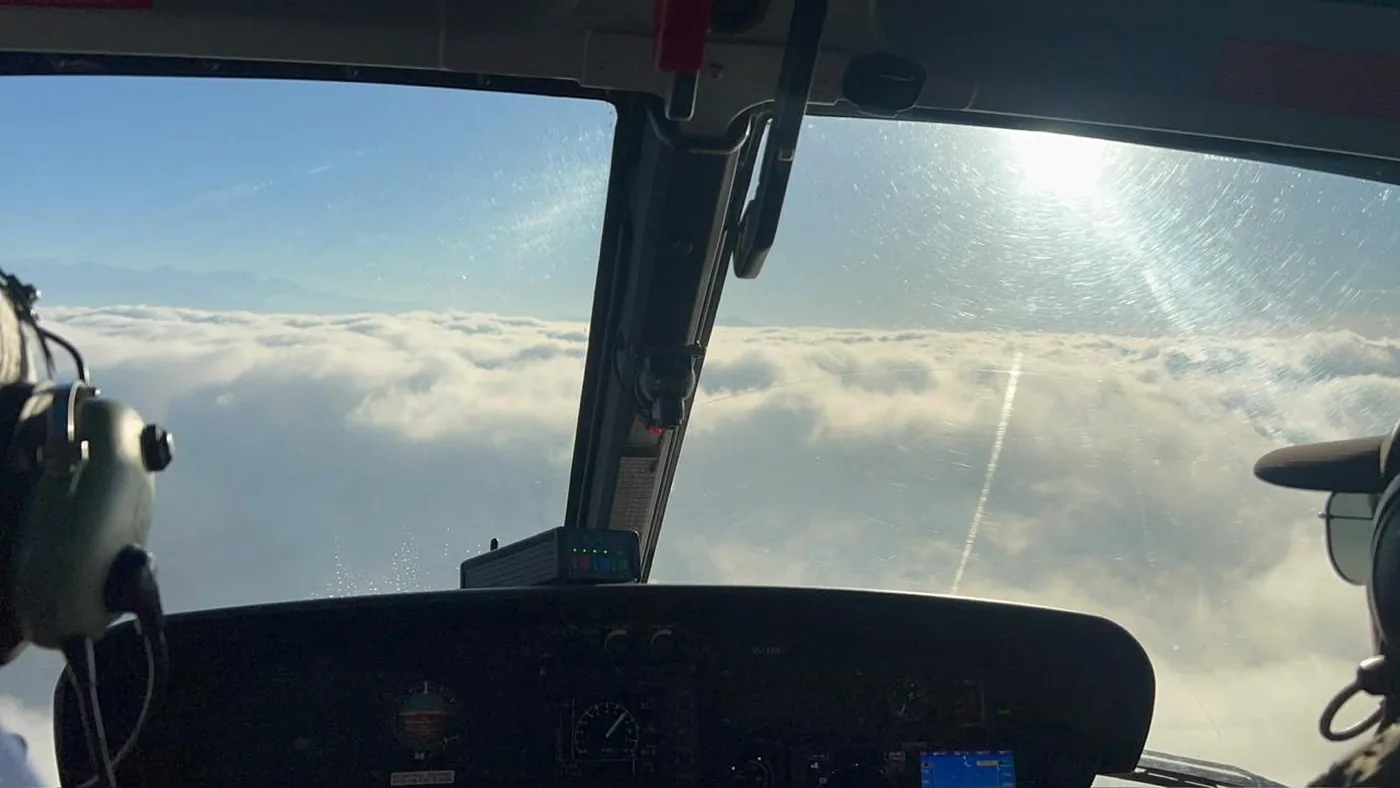
Beyond that rim the terrain changes character. The route follows the Trishuli drainage north, then swings into the Langtang Khola, crossing the park boundary near Dhunche, which you will see below as a scatter of roofs on a ridge above the river. From there the aircraft tracks the valley itself: forest, then yak pasture, then the wide glaciated upper basin, with the headwall of the Langtang range filling the windscreen.
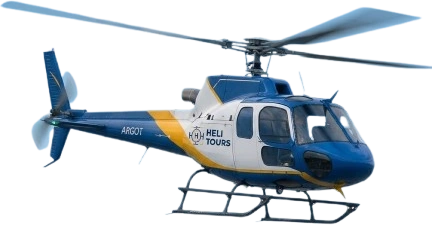
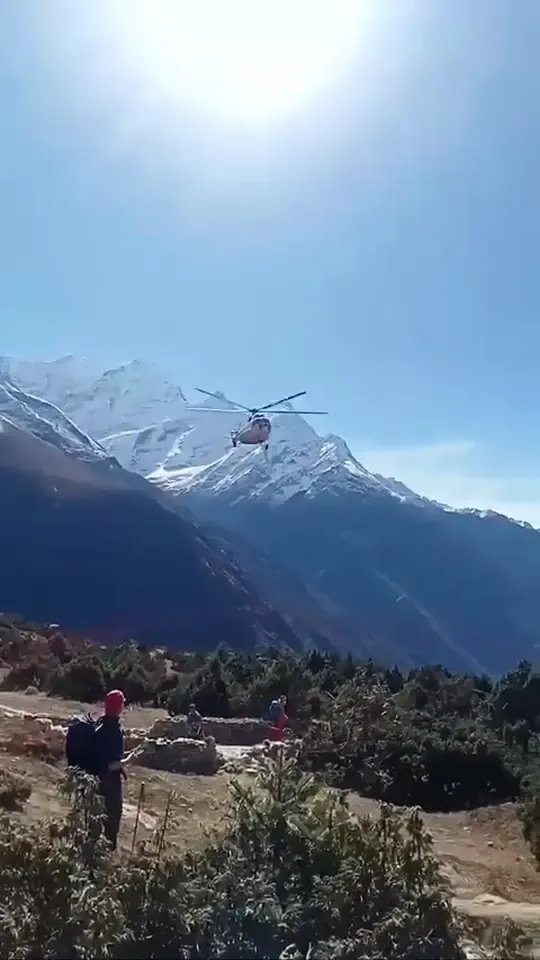
The aircraft used on this route is the single-engine Airbus H125, known in Nepal by its original designation, the AS350 B3e — the workhorse of Himalayan helicopter flying because it performs well at altitude and carries a useful load. It seats up to five guests, which matters for the arithmetic further down this page. The published block time for the Langtang day tour is about two hours out of Kathmandu, and that figure is the reason the price sits where it does: a helicopter is billed for engine hours, and Langtang is short.
Departures are early, and there is a reason for that beyond tradition. The valley wind comes up through the morning, and cloud builds against the headwall as the day warms; a seven o’clock lift-off usually means a smoother ride north and a clearer run home than a ten o’clock one. It also means the flight is over before the afternoon build-up that so often closes the Khumbu, which is part of why Langtang is sometimes flyable on days when Everest flights are grounded.
Landing at Kyanjin Gompa and What Happens on the Ground
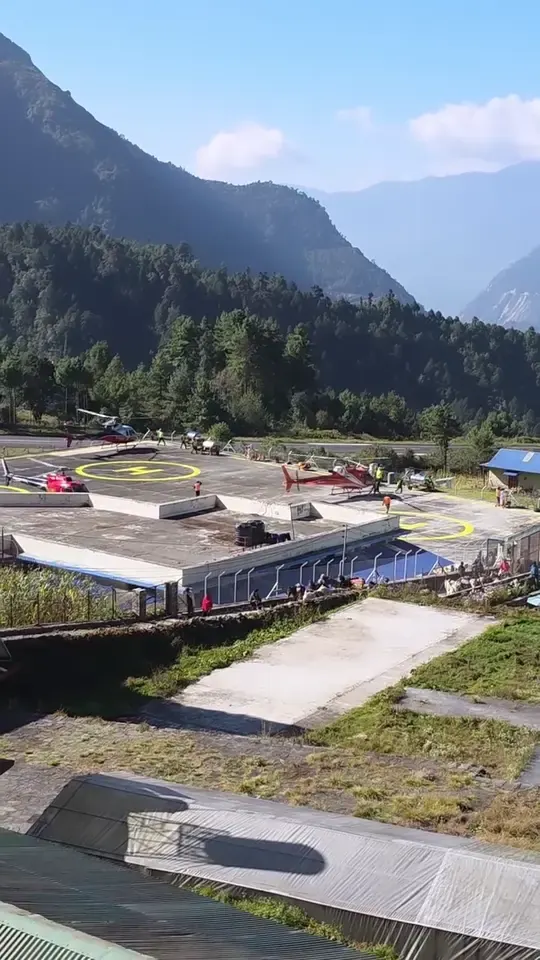
Kyanjin Gompa, at roughly 3,800 m, is the last permanent settlement in the valley and the usual landing point. The aircraft sets down on open ground near the village, the crew cuts the engine or holds it at idle depending on the day, and you step out into air that is thin and usually cold. The monastery that gives the village its name sits above the houses, and long strings of prayer flags run from the ridge line down toward the valley floor.
Ground time is typically twenty to thirty minutes, which is short but sufficient for the thing most passengers actually want: to stand under the wall of Langtang Lirung, see the Langtang and Lirung glaciers spilling off the headwall, and walk a short way up the valley floor. The mani walls, carved houses and yak pastures around the village give the upper valley a distinctly Tibetan character — this is Tamang country, and the cultural landscape is as much the point as the peaks.
Two practical notes belong here. First, do not sprint off the field to photograph something: at 3,800 m the air holds roughly two thirds of the oxygen you are used to at sea level, and a short, slow walk is a better idea than a hundred-metre climb. Second, the valley carries a history that visitors should know about. In April 2015 an avalanche of ice and rock triggered by the earthquake swept through the village of Langtang, and the losses are still felt. Families rebuilt, the trail reopened, and the lodges and teahouses of Kyanjin Gompa welcome visitors again. Flying over the valley today you see new buildings beside old foundations — and spending money in the valley is one of the more direct ways tourism supports that recovery.
Helicopter Tour to Langtang Cost, and How a Seat Price Is Built
The published Langtang Valley day charter starts at $2,400 for the whole aircraft on a block of roughly two hours. Because the machine seats up to five guests, the per-person figure is not a brochure number; it is a division sum that depends on how many people share the cabin. At a full load of five the seat lands near $480 before permits and extras. Four passengers puts it near $600 each, three near $800, and a couple buying the aircraft outright pays about $1,200 each — still below one shared seat on the Everest day tour.
That comparison is worth sitting with, because it explains the market. Everest is quoted from $3,500 for the aircraft on a four to five hour block and sells as a shared seat at $1,260 per person. The Langtang aircraft rate is lower to begin with and the block is half as long, so the same five-way split produces a fundamentally different number. Nothing about that requires a discount or an offer; it is geography and engine hours.
| Flight | Block time | Whole aircraft | Shared seat |
|---|---|---|---|
| Kathmandu – Langtang Valley, day tour with landing near Kyanjin Gompa | ~2 hours | from $2,400 | aircraft rate divided by passengers, about $480 at a full load |
| Kathmandu – Everest region day tour (Kala Patthar and Everest View Hotel) | ~4 to 5 hours | from $3,500 | $1,260 per person |
| Pokhara – Annapurna Base Camp with landing | ~1.5 hours | from $2,585 | $860 per person |
| Kathmandu – Muktinath, day tour with ground time | ~4 hours | from $4,200 | $1,080 per person |
Read the block-time column first. It is the single best predictor of what any of these flights costs, because it is what the operator is actually buying from the aircraft. Everything else — the fame of the destination, the landing fee, the breakfast — is a smaller variable riding on top.
What sits outside the $2,400 is worth confirming in writing before you pay. The Langtang National Park entry permit is a real document with your name on it and the park authorities check manifests, so ask by name whether it is inside the quote; it is a per-person charge rather than a per-flight one. Hotel transfers, domestic terminal handling and the weather policy are the other lines that move between operators. If you are weighing a shared seat against buying the aircraft, our guide to group joining on the Langtang route works through the cabin arithmetic at every load factor.
Helicopter or on Foot? The Honest Comparison
Most people asking about a helicopter tour to Langtang are really asking whether they are cheating themselves out of the trek. The answer depends on what you came for, and the two products are not substitutes in the way the marketing implies.
The trek gives you the valley as a sequence: the forest, the villages, the teahouses, the slow rise that lets your body adapt. It also gives you height. The ridges above Kyanjin climb to 4,984 m, and a fit walker who takes a rest day can stand on one of them looking down the entire valley — something no helicopter passenger does, because the aircraft lands at 3,800 m and the ground stop does not go higher.
The flight gives you the valley as a single image. You see the whole geography in one pass, you land inside it, and you are back in Kathmandu before lunch. For a traveller with four days in Nepal, a family with children, or anyone whose knees or lungs will not tolerate a week of walking at altitude, that is not a compromise; it is the only version of Langtang that exists.
| What you are comparing | Helicopter tour to Langtang | Trekking the valley |
|---|---|---|
| Time from Kathmandu | One morning; about two hours of flying | A multi-day walk from the roadhead at Syabrubesi |
| Ground you actually stand on | Landing near Kyanjin Gompa at roughly 3,800 m, with a short walk | The valley floor, plus side ridges that reach 4,984 m |
| Fitness needed | Very little; a short walk on uneven ground | Sustained daily walking at altitude, carrying a day pack |
| Cost basis | Per aircraft: $2,400 divided between up to five passengers, plus permits and extras | Per-day costs on the trail over the length of the walk |
| Weather exposure | One morning; a cancellation usually means the next dawn | Days of exposure, with the walk adjusting around the weather |
| Culture | A landing, a monastery, twenty to thirty minutes among the mani walls | Nights in Tamang villages and teahouses along the route |
| Best for | Short trips, families, older travellers, mobility limits, photography from the air | Walkers who want the valley slowly and have the days to give it |
There is a third option that gets less attention: fly in, walk out, or walk in and fly out. It is the reverse of the classic trek-up-fly-back format used on Everest, and it works well in Langtang because the landing is in the upper valley and the trail runs straight down from it. You get the high country on foot at the start, when you are freshest, and you skip the last two days of road walking at the end.
Best Months to Fly, and What Weather Does to the Plan
Langtang follows the same rhythm as the rest of the Nepali Himalaya. October to November and March to May are the two reliable windows, with the clearest skies and the most stable flying conditions. Autumn comes after the monsoon has washed the dust out of the air, which gives the longest sightlines of the year; spring brings rhododendron on the lower slopes and long bright days. June to September is the monsoon, with cloud, rain and frequent cancellations. December to February can be cold and hazy in the valley, though the settled winter days are often spectacular and the aircraft flies them routinely.
What makes Langtang different from the Khumbu is that it sits lower and closer to Kathmandu. The route is shorter, the headwall is lower, and the cloud that shuts the Everest corridors does not always reach the Langtang basin. If your dates are fixed and your first choice was Everest, Langtang is worth keeping as the fallback, because it is genuinely sometimes flyable when the higher routes are not.
Any honest operator will tell you that a mountain flight is a weather-dependent product. Book it early in your trip rather than on the morning of your international departure, and check the cancellation clause: reputable operators reschedule rather than refund-and-shrug, and a flight that moves to the next dawn is normal rather than exceptional. There is more on month-by-month conditions in our guide to the best time for a helicopter tour in Nepal.
Permits, Paperwork and What to Fix Before You Pay
Langtang National Park requires an entry permit for visitors, and operators normally arrange it in advance against your passport details. Because it is tied to your name, spelling matters: the permit, the manifest and your passport should all agree, and a late change to a passenger name is the kind of detail that costs a morning. Ask directly whether the permit sits inside your quote, because two apparently similar prices often differ only by which of these lines has been bundled.
Insurance is the other item to check rather than assume. Many standard travel policies exclude helicopter evacuation above a stated ceiling, and the ceiling varies by insurer. The landing on this route is at roughly 3,800 m, which is well inside most exclusions’ limits but worth confirming in writing rather than discovering on the apron.
Finally, decide what you are buying before you ask for a price. A shared seat on a committed departure is a different product from a private charter with a departure time of your choosing and the ability to extend the ground stop. If you want the flexibility, say so at the quoting stage rather than at the helipad. Our planning guide for helicopter tours in Nepal covers the sequence of decisions from route to deposit.
Langtang, Everest or Annapurna: Which Flight Fits
Langtang is not the only option, and the choice usually comes down to what you want to be able to say afterwards. If the answer is “I stood under the world’s highest mountain”, nothing but the Everest product will do: the day tour lands at Kala Patthar at 5,545 m and sells at $1,260 per person. If you want a landing and a shorter day, the Pokhara-based Annapurna Base Camp flight lands at 4,130 m and sells at $860 per person, but it departs from Pokhara rather than Kathmandu and therefore needs a domestic connection.
If you want the mountain panorama without any landing at all, the fixed-wing Everest scenic mountain flight runs about an hour from Kathmandu at $260 per person for a window seat. It is the cheapest way to see the high Himalaya from the air, and it is a genuine alternative for anyone whose priority is photographs from a window rather than time on the ground.
Langtang wins on two counts: it is the closest real Himalayan valley to Kathmandu, so no domestic connection is needed, and at a full load it is the cheapest landing we publish. Between the three, it is also by far the quietest. On a clear morning you can fly the whole route and share the sky with almost no other aircraft, which is not a claim anyone can make about the Khumbu in October.
Frequently Asked Questions
How long does a helicopter tour to Langtang take?
The published block time is about two hours of flying out of Kathmandu, and the whole outing — hotel pickup, domestic terminal formalities, the flight, twenty to thirty minutes on the ground at Kyanjin Gompa and the return — is normally finished by lunchtime. It is a half-day product, not a full-day one.
How much does a helicopter tour to Langtang cost?
The Langtang Valley day charter is published from $2,400 for the whole aircraft, which seats up to five guests. That works out at roughly $480 per person at a full load before permits and extras, and about $1,200 each for a couple who buy the aircraft outright.
Do I need to be fit for the flight?
No. The aircraft does the climbing and the ground stop involves a short walk on uneven ground near the village. That is precisely why the product exists: it opens the upper Langtang valley to travellers who could not manage the multi-day trek in.
What altitude does the helicopter land at?
The usual landing is near Kyanjin Gompa at roughly 3,800 m, the last permanent settlement in the valley. The ridges above the village climb to 4,984 m, but those are a walker’s objective and the ground stop does not go that high.
Is Langtang safe to fly when Everest flights are cancelled?
Sometimes, yes. Langtang sits lower and closer to Kathmandu, so the cloud that closes the Khumbu corridors does not always reach the Langtang basin. It is a judgement call for the pilot on the morning, not a rule you can rely on in advance.
Which months are best for a Langtang helicopter flight?
October to November and March to May give the clearest skies and the most stable conditions. The monsoon months of June to September bring cloud, rain and frequent cancellations, and December to February is cold and sometimes hazy, though settled winter days fly beautifully.
Do I need a permit for Langtang National Park?
Yes. The park requires an entry permit, and the operator normally arranges it in advance against your passport details. It is a per-person charge, so confirm explicitly whether it is included in the quote or billed separately.
Can I combine the flight with trekking?
Yes, and it is a good format. Flying into the upper valley and walking out from Kyanjin Gompa gives you the high country first and the descent on foot, while walking in and flying out skips the least interesting road walking at the end of the trek.
What should I wear for the landing?
Layers, with a warm jacket for the ground stop — Kyanjin Gompa is markedly colder than Kathmandu at any time of year. Sunglasses, sun protection and shoes with some grip are worth having for the walk away from the aircraft.
How far ahead should I book?
For peak-season dates in October, November, March and April, several weeks is sensible, especially if you want a shared seat on a departure that is already filling. Outside peak season a few days is usually enough, and a private charter can often be arranged at shorter notice.
Is the flight suitable for children and older travellers?
Generally yes. The short flying time, the single landing and the absence of trekking make it far more manageable than a full Everest rotation. Anyone with a heart or lung condition should still speak to a doctor before flying to 3,800 m.
How does it compare with flying to Everest Base Camp?
The Everest day tour is a longer block, lands at Kala Patthar at 5,545 m and sells at $1,260 per shared seat. Langtang is a shorter morning, lands lower at roughly 3,800 m, and is the cheaper landing per person at a full load — but it is not Everest, and it does not pretend to be.
Deciding, Booking and What Comes After
The clean way to settle this is to ask what you would regret. If you would regret not standing under the Langtang wall at all, take the flight: it is one morning, one landing and a price that divides by however many of you are in the cabin. If you would regret not walking the valley — the teahouses, the forest, the slow mornings — the helicopter will feel like skipping the book and reading the last page.
Most travellers who book the flight are making a rational trade against time, not against effort. The valley is close to Kathmandu, the aircraft is in the air for about two hours, and the landing puts you inside the park rather than looking at it through glass. That is a real product, and it is priced accordingly.
For the wider set of quiet Himalayan destinations — Gosaikunda, Rara, Lumbini and the rest of the valley routes — start with our guide to Langtang, Gosaikunda, Rara and Lumbini helicopter tours, which sets each of them against the others. If you are comparing what a quote actually contains rather than what it costs, the breakdown of what a Langtang package includes is the companion piece to this one. And if you already know the route and only want to know what the cabin arithmetic does to your seat price, the group joining guide linked above is the page to read before you send a deposit.