
Short answer: A helicopter ride Nepal Himalayas travellers can actually book is a dawn departure from Kathmandu at 1,400 m that climbs into the Khumbu and puts you on the ground at Kala Patthar, 5,545 m, or a shorter Pokhara departure that lands at Annapurna Base Camp at 4,130 m. Expect a sealed cabin, headsets instead of conversation, roughly ten minutes on the ground at the top, and a return before the valley cloud builds. The Everest version is a one-day product of about six hours door to door; the part nobody prepares for is how fast the altitude arrives.
- 5,545 mHighest landing — Kala Patthar
- 1,400 mKathmandu, where every ride starts
- 5 + pilotSeats in an Airbus H125
- $1,260Everest day tour, per person
Almost everyone who looks up a helicopter ride Nepal Himalayas itineraries include is picturing the same thing: a small aircraft hanging above a wall of snow, a few minutes of quiet, then a landing on ground that has no road to it. That picture is accurate. What it leaves out is everything that decides whether the morning actually works — the hour you get up, the weight you declare on the manifest, the seat you are given, the ten minutes you spend standing at altitude, and the weather that either allows the flight or cancels it while you are still in the hotel car.
This guide is about the ride rather than the itinerary. It covers what the cabin is really like, what the climb does to the air and to your body, what the landing feels like, how long each format keeps you airborne, and how to photograph any of it through glass. Every price and altitude below is one we publish on our own tour pages. Where a figure is not something we can verify, the sentence is written without it rather than with a guess.
Helicopter Ride Nepal Himalayas: Four Products Behind One Word
In Nepal the word ride covers four genuinely different products, and the difference decides what your morning feels like. A scenic overflight is a sightseeing hop with no landing. A landing tour is a fixed product with a named landing point and a published seat price. A transfer moves you from one place to another, usually Lukla or Pokhara, with no sightseeing loop. A private charter is the whole aircraft for the day, which is the only format where the route is negotiable.
That matters because the phrase people search for — a helicopter ride Nepal Himalayas style — is sold in all four forms, at prices that span $860 to $4,500. The cheapest published seat is the one-hour Everest scenic mountain flight at $260, and that is a fixed-wing aircraft with a window seat, not a helicopter at all. The most expensive is a private Everest charter at $4,500 per aircraft for up to five guests. Between them sit the landing tours that most travellers actually book.
| Landing point | Altitude | Format that lands there |
|---|---|---|
| Kala Patthar | 5,545 m | Everest Base Camp day tour, shared or private |
| Everest Base Camp | 5,364 m | Overflown on every Everest route, not landed |
| Tilicho Lake | 4,919 m | Annapurna private charters |
| Gokyo | 4,790 m | Gokyo lakes extension of an Everest flight |
| Annapurna Base Camp | 4,130 m | ABC day tour out of Pokhara |
| Everest View Hotel | 3,880 m | Breakfast stop, and the overnight on the two-day version |
| Muktinath | 3,710 m | Pilgrimage flight from Kathmandu |
| Kathmandu | 1,400 m | Every ride starts and ends here, or in Pokhara |
Read that table as a ladder and the pricing stops looking arbitrary. Every rung above 4,000 m costs more because the aircraft carries less, burns more fuel to reach the same height, and needs a wider weather window to do it safely. Kala Patthar at 5,545 m is not simply higher than Annapurna Base Camp at 4,130 m; it is a different flight, on a different aircraft loading, with a shorter usable morning.
The First Hour: Kathmandu at 1,400 m
Every Himalayan helicopter ride starts on the ground at 1,400 m, and the first hour is entirely administrative. Pickup from a Kathmandu hotel is typically between 05:30 and 06:00 for a landing tour, because the aircraft has to be airborne before the valley cloud forms and before the wind picks up on the ridges. You are weighed with your bag, your name goes on a manifest, and the pilot briefs the group on the route, the landing, the headsets and what to do if you feel unwell.
This is the hour when most first-time passengers expect to feel excitement and instead feel slightly bored. The domestic apron at Tribhuvan International Airport is a working apron: fuel bowsers, baggage carts, a handful of helicopters parked nose-out, crews loading boxes. The romance starts at rotation, not at check-in.
The Climb: What Changes, and How Fast
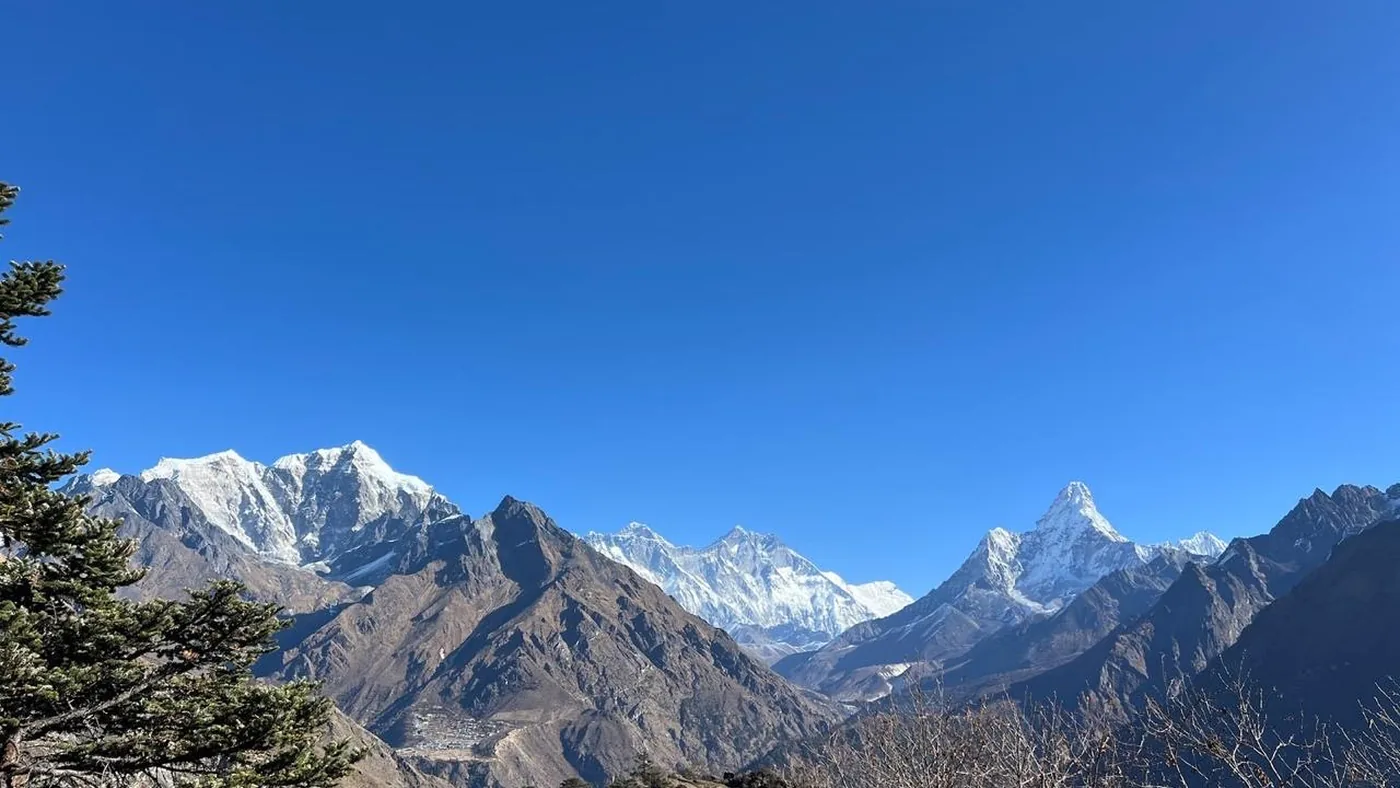
From 1,400 m the aircraft does not climb in a straight line to 5,545 m. It climbs in stages, following valleys, gaining height where the terrain allows and holding where it does not. What you notice, in order, is the temperature dropping, the farmland turning into pine forest, the forest thinning into scrub, and then a horizon that stops being a horizon and becomes a serrated edge of rock and ice.
The air changes too, in a way you can feel without instruments. Above roughly 4,000 m the helicopter is working in air thin enough that lift, engine performance and payload all fall together; that is why a machine that carries five passengers plus the pilot at Pokhara carries fewer, or lighter, passengers on a Kala Patthar leg. It is also why every operator asks for real body weights instead of a round number. The aircraft is not being fussy. It is doing arithmetic that has to close before the skids leave the ground.
The peaks themselves arrive without drama. Everest is 8,848.86 m and Manaslu is 8,163 m, but from a cabin at 5,000 m they do not read as numbers. They read as weather: a plume of snow blowing off a summit, a cloud caught on a shoulder, a shadow moving across a glacier. Ama Dablam, the peak the Khumbu flights pass beneath, is the one most passengers photograph first, because it is the one that looks like a mountain is supposed to look.
Inside the Cabin: Noise, Heat and Glass
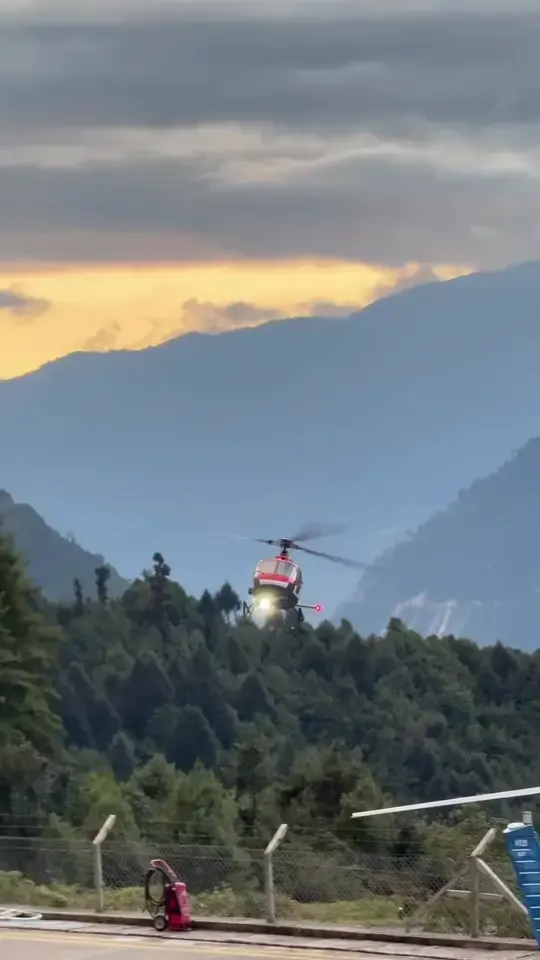
The two helicopters used for this work in Nepal are the Airbus H125, sold as the AS350 B3e, and the Bell 407. The H125 is the high-altitude workhorse and the one you are most likely to fly: four passengers plus the pilot in the cabin, five plus the pilot when the load allows, in a compact cabin with a bench behind the pilot and forward-facing seats beside it. There is no aisle, no overhead bin and no cabin crew. Your bag travels in the hold or stays at the office.
Sound is the first surprise. The cabin is loud enough that conversation is impossible without the headsets, and the headsets are not a courtesy — they are how the pilot talks to you, warns you about a turn, and tells you which side to look at. Passengers who take the headset off to hear better hear less. If you want to record the flight, test your phone once on the ground with the headset on, because the microphone sits on the earpiece and will pick up the intercom as clearly as it picks up your voice.
Heat behaves strangely. On the apron at dawn you will want a jacket. In the air, with the sun on the glass, the cabin can become genuinely warm within minutes, and passengers unzip. Then you land at 5,545 m, the door opens, and the cold arrives with a wind that makes it feel far worse than the thermometer suggests. The answer is layers, not a heavier coat, and the packing list for a Nepal helicopter tour is short for exactly that reason.
Motion sickness is less common in a helicopter than in a small fixed-wing aircraft, because the machine is not being pushed around by thermals in the same way, but the transition at the landing point is real: a hover, a set-down, a pause, then a lift-off that feels like an express elevator. Passengers who know they are susceptible should say so at the briefing, take the forward seat if it is offered, and look at the horizon rather than down at their phone.
The Landing: Ten Minutes at 5,545 m
On the Everest day tour the aircraft sets down at Kala Patthar at 5,545 m, not at Base Camp. Base Camp sits at 5,364 m on the Khumbu glacier, and the glacier is not a landing site: it moves, it is crevassed, and no operator lands a paying passenger on it. What you get instead is the viewpoint above it, which is higher, drier and a better photograph than the camp itself.
The ground stop is short, and it is not a rest. Ten minutes at 5,545 m is enough for photographs, a slow walk to the prayer flags, and a reminder that the air has about half the oxygen of the air you woke up in. Passengers who jog to the ridge feel it immediately: a pounding head, a rush of breathlessness, a strange urge to sit down. The instruction from every pilot is the same, and it is not modesty — move at half speed, turn slowly, and if your vision starts to narrow, stop and tell someone.
This is also where the ride stops being a sightseeing product and becomes a physiological one. Two passengers on the same flight can have completely different experiences of the same ten minutes, and the difference is not fitness. It is how fast each body responds to a sudden 4,145 m gain from the Kathmandu valley floor. That is why the Everest day tour is sold as a one-day product rather than a short hop, and why the same landing appears on the two-day version with a night at the Everest View Hotel at 3,880 m in between: acclimatisation, even a little, changes the morning.
On the descent the geography reverses. The glacier gives way to moraine, the moraine to forest, and the forest to the terraces you flew over at first light. Passengers who slept on the way up are usually awake for this leg, because the light is better, the aircraft is lighter, and nobody is thinking about the landing any more.
Ride Formats: What Each One Actually Feels Like
The published formats differ less in the air than they do on the ground, which is why the table below is the most useful thing on this page. Two products can both land at 5,545 m and still be different days: one is a shared seat on a scheduled morning, the other is your own aircraft with a breakfast stop and no fixed return time.
| Ride format | Time | Price | Where it lands |
|---|---|---|---|
| Everest Base Camp day tour, shared seat | 1 day, about 6 hours | $1,260 per person | 5,545 m, Kala Patthar |
| Everest shared tour with hotel breakfast | 1 day, about 6 hours | $1,450 per person | 5,545 m, Kala Patthar |
| Private Everest charter | 1 day, about 5 to 6 hours | $4,500 per aircraft, up to 5 guests | Everest View Hotel, 3,880 m |
| Annapurna Base Camp day tour from Pokhara | 1 day, about 3 to 4 hours | $860 per person | 4,130 m, Annapurna Base Camp |
| Muktinath pilgrimage flight | 1 day | $1,080 per person | 3,710 m, Ranipauwa helipad |
| Everest View Hotel, two-day version | 2 days, 1 night at 3,880 m | Quoted per group | Overnight 3,880 m, landing 5,545 m |
| Everest Base Camp helicopter trek | 10 days, trek up and fly back | $1,840 per person | Up to 5,545 m |
The cheapest seats feel the most scheduled. A shared Everest seat means sharing the aircraft with strangers, leaving at the operator chosen time, and accepting the landing that comes with the group. The private charter feels like the opposite: the aircraft waits, the breakfast stop at 3,880 m is not rushed, and the route can bend around what you want to see. For a group of four or five the charter arithmetic can undercut the shared fare per head, which is the single most useful thing to know before you book six seats separately.
The Pokhara product is the one that surprises people. Because the aircraft starts on the flank of the range rather than in Kathmandu, the Annapurna Base Camp day tour is a half-day rather than a full one, with a landing at 4,130 m and a return that can have you back at a Lakeside hotel before lunch. It is also the least expensive way to stand above 4,000 m in Nepal by helicopter.
What the Fare Covers, and What It Does Not
Almost every complaint about a Himalayan helicopter ride traces back to one of three things that were never in the fare: a park permit, a breakfast, or weight. The seat price buys the aircraft, the pilot, the clearance and the landing. It does not automatically buy everything that happens on the ground at either end.
| Item | Usually in the seat price | What to check |
|---|---|---|
| Aircraft, pilot, fuel, landing fees | Yes | Confirm the landing point is named in writing, not implied |
| Kathmandu hotel transfers | Yes on day tours | Pickup window is early, typically 05:30 to 06:00 |
| Flight clearance and route permissions | Yes | Filed by the operator, not by you |
| Sagarmatha National Park entry permit | No on Everest routings | NPR 7,000 per person, paid at the gate |
| Breakfast at the Everest View Hotel | Optional on the day tour | About USD 40, or included on the $1,450 shared product |
| Extra baggage above the declared weight | No | Weight is the binding constraint, not seat count |
| Travel insurance and medical cover | No | Check that helicopter evacuation is covered before you fly |
The permit line is the one that catches Indian and Nepali pilgrims as well as foreign trekkers, because the Khumbu permit is charged at the park gate rather than folded into the fare, and it applies whether you are walking in or flying in. On Annapurna, Muktinath and Langtang routes the conservation permit is normally handled inside the package. If a quote does not say which permits are included, it is not yet a quote.
Who the Ride Suits, and Who Should Stay on the Ground
A helicopter ride is the most accessible way to see the high Himalaya. There is no trekking, no altitude gain on foot, and no fitness test at the apron. That is why the format works for grandparents, for travellers with limited mobility, and for anyone whose trip is two days in Kathmandu rather than two weeks in the Khumbu. The landing does the work that a trek would otherwise do, and it does it in ten minutes instead of ten days.
Accessible is not the same as suitable for everyone. A landing at 5,545 m is higher than the summit of every mountain in Europe, and the body has no time to adapt. Passengers with heart or lung conditions, anyone who is pregnant, and anyone recovering from a chest infection should take medical advice before booking, and should tell the operator what the advice was. The pilot can decline to board a passenger, and a reputable operator will do it rather than fly someone who is already unwell. If you want the views without the altitude, the one-hour Everest scenic mountain flight at $260 never leaves the aircraft and stays in a pressurised fixed-wing cabin for the whole hour.
Weather and the Dawn Rule
Himalayan helicopter rides are dawn products for a reason that has nothing to do with marketing. In the early morning the valley air is still, the cloud has not yet formed on the ridges, and the visibility into the Khumbu is at its best. By late morning the same valleys are full of cloud, the ridges are producing turbulence, and the aircraft that left at six is often the only one that flew at all. Ask any operator what their cancellation rate is and the honest answer is a number that depends entirely on the month you choose.
This is why the ride you book should never be the last thing on your Nepal itinerary. A spare morning at the end of the Kathmandu stay costs nothing and converts a cancelled flight from a disaster into a rebooking. It is also why the two-day Everest View Hotel format exists: the overnight at 3,880 m builds a weather buffer into the product rather than leaving it to luck.
What happens when the flight cannot go is a contractual question, not an aviation one, and it is worth reading the cancellation terms before you pay rather than on the morning. The short version used by serious operators in Nepal is a free rebooking onto the next available window or a refund under the published terms, with the decision made by the pilot on the day. Nobody can promise you a guaranteed take-off time on a mountain route, and an operator who does is selling something they do not control.
Photographing the Himalayas Through a Helicopter Window
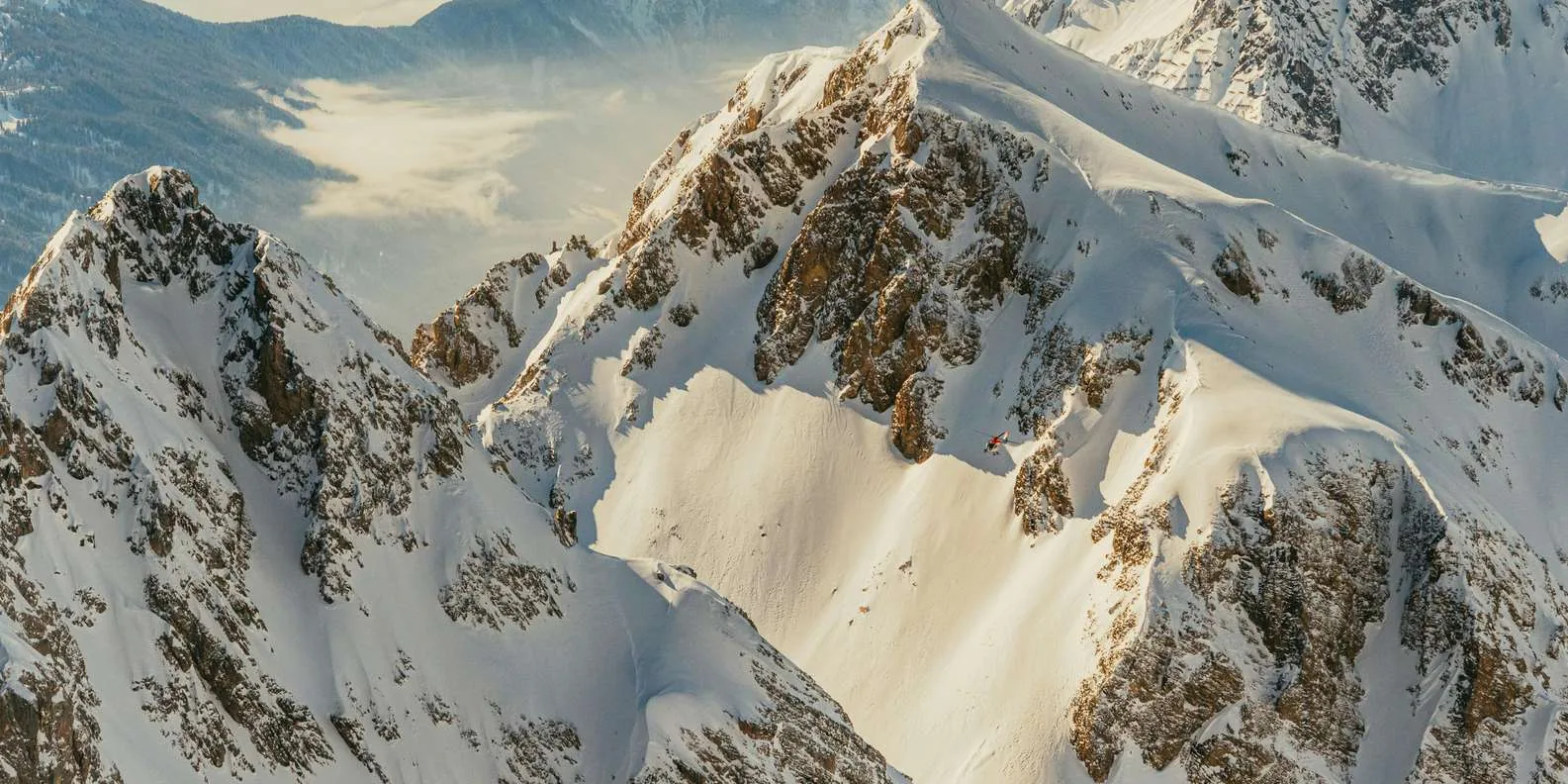
Photography from a moving helicopter is a different discipline from photography on a trek. The aircraft vibrates, the glass reflects, and the peak you want is usually on the wrong side. Three things help. First, sit on the side the pilot tells you the mountain will be on, and accept the seat you are given rather than negotiating at the door. Second, shoot through the cleanest part of the window, keep the lens close to the glass, and shade it with your hand to kill reflections. Third, use a fast shutter speed and continuous shooting, because at that vibration level a single frame is a gamble and ten frames are not.
Wide shots of the range rarely work as well as people hope. What survives the flight is scale: a helicopter on a snowfield, a line of prayer flags at the landing, the shadow of the aircraft on a glacier. Passengers who come back with the best images are usually the ones who stopped trying to fit Everest into a frame and photographed what was actually in front of them.
Booking a Ride Without Buying a Transfer Instead
The last thing worth knowing before you pay is what you are paying for. Nepal has three kinds of seller in this market: the operator that holds the air operator certificate and the aircraft, a licensed agent that sells on behalf of the operator, and a reseller that sells seats it has not secured. All three can produce a plausible itinerary. Only the first two can guarantee that the helicopter exists on your morning.
Ask for the certificate holder, the aircraft type and registration, and the name of the pilot before you pay a deposit. An operator will answer in one message. A reseller will answer by forwarding a quote. The aircraft question is worth asking anyway, because the two types used on these routes behave differently: the Airbus H125 is the high-altitude machine most often specified for landings above 5,000 m, and the Bell 407 is the other type you will see on shorter scenic work.
Then check the arithmetic of the group. A shared seat is a fixed price per person whatever the group size. A charter is a fixed price per aircraft, which means the cost per head falls as the group grows and rises sharply if you are flying alone. If you are four or five, pricing the whole aircraft is usually the better deal, and the Everest day tour comparison between the shared seat and the private charter is where most groups discover that.
Finally, if your plan is to fly high but not to walk, read the two guides that answer the questions this page cannot: what thin air does to the aircraft and the passenger in high altitude helicopter flight in Nepal, and how to pick the month that gives you a flyable dawn in the best time for a helicopter tour in Nepal. Both sit in the planning a helicopter tour in Nepal cluster, which is the right place to start if this is your first Himalayan flight.
If the ride is the point and you want the shortest version of it, the Everest scenic mountain flight is the one-hour, $260 fixed-wing alternative with a window seat guaranteed; if the landing is the point, the Everest Base Camp helicopter day tour is the product that puts you at 5,545 m and back in Kathmandu the same morning.
Frequently Asked Questions
How much does a helicopter ride in Nepal cost?
Published seat prices start at $860 per person for the Annapurna Base Camp day tour out of Pokhara and run through $1,080 for the Muktinath pilgrimage, $1,260 for the Everest Base Camp day tour with the Kala Patthar landing and $1,450 for the shared Everest product with breakfast included. A private Everest charter is priced per aircraft at $4,500 for up to five guests, which is cheaper per head for a full group. The $260 Everest scenic mountain flight is a fixed-wing aircraft, not a helicopter.
How long does the ride last?
The Everest day tour is a one-day product of about six hours door to door, including hotel pickup, briefing, the flight out, the ground stop at 5,545 m and the return. The private Everest charter runs about five to six hours because the breakfast stop at 3,880 m is part of it. The Annapurna Base Camp day tour from Pokhara is the shortest at roughly three to four hours, because the aircraft starts on the flank of the range rather than in Kathmandu.
How high does a helicopter land in Nepal?
Kala Patthar at 5,545 m is the highest landing on a standard commercial tour. Everest Base Camp itself, at 5,364 m, is overflown rather than landed because the glacier is not a landing site. Below that, Gokyo sits at 4,790 m, Annapurna Base Camp at 4,130 m, the Everest View Hotel at 3,880 m and Muktinath at 3,710 m.
Can I take a helicopter ride without trekking at all?
Yes, and that is the point of the format. A landing tour involves no walking beyond the apron and the landing point, so it suits travellers with limited time, limited mobility, children and older passengers. The only physical demand is the altitude itself, which arrives suddenly at the landing rather than gradually on a trail.
What time of year is best for a Himalayan helicopter ride?
The clear mornings of autumn and late winter give the best odds, and every ride is scheduled at dawn for that reason. Monsoon months bring cloud and rain, and the deep winter mornings can be fogged in at Kathmandu even when the mountains are clear. If your dates are fixed, book the ride early in the trip and keep a spare morning.
Is a helicopter ride in Nepal safe?
Scenic and landing flights are flown by pilots licensed by the Civil Aviation Authority of Nepal, in aircraft maintained under that authority and operated by a certificate holder. The main risk to your plan is weather, not engineering, which is why departures are early and why a spare morning matters. Ask for the certificate holder, the aircraft registration and the pilot name before you book.
Do I need a permit for a helicopter ride?
Not personally, for a day tour: the operator files the flight clearance and arranges the permits. The exception is the Sagarmatha National Park entry permit on Everest routings, at NPR 7,000 per person, which is normally paid at the gate rather than folded into the fare. Annapurna, Muktinath and Langtang flights usually have the conservation permit inside the package price. Ask which permits are included before you pay.
Can children and older passengers fly?
Yes. There is no trekking involved and no age limit on the flight itself, which is why the format works for multi-generation groups. The constraint is the landing altitude: a child or grandparent who is fine at 1,400 m may feel the sudden gain to 5,545 m, and anyone with a heart or lung condition should take medical advice first and tell the operator what that advice was.
What should I wear for the landing?
Layers, not a single heavy coat. The apron at dawn is cold, the cabin warms quickly in the sun, and the landing point is cold again with wind on top of it. A down or synthetic mid-layer, a windproof outer shell, gloves and sunglasses cover the whole morning. The packing list for a Nepal helicopter tour covers boots, camera batteries and the paperwork you should carry.
How much luggage can I bring?
Very little, and it is measured by weight rather than by bag. Operators plan the load around real body weights including hand luggage, with roughly 80 kg per person as the working figure on the smaller aircraft, so a heavy camera bag counts. Bags stay at the office or in the vehicle on day tours; on trek-up, fly-back itineraries the helicopter leg carries the same soft bag the trek does.
Which seat should I ask for?
All passenger seats in an H125 cabin are window seats, which is why the aircraft is used for this work. The pilot will assign seats to balance the load, and the front seat beside the pilot is usually given to the heaviest passenger or to whoever needs the most legroom. Asking is fine; negotiating at the door is not, because the load has already been calculated.
What happens if the weather cancels my flight?
The flight moves to the next available morning or is refunded under the published cancellation terms, with the decision made by the pilot on the day. Cloud in the Kathmandu valley, wind at the landing point and winter fog are the usual causes. Never schedule a Himalayan ride for the same day as your international departure.
Booked properly, a helicopter ride is the shortest honest route from a Kathmandu hotel to standing above 5,000 m, and the flight itself is the least complicated part of it. The complications are the weight, the permit, the weather and the spare morning — four things that are entirely within your control before you ever reach the apron.