
Short answer: A Gokyo helicopter tour from Kathmandu is a single-morning private charter rather than a seat on a scheduled shuttle. You lift off from Tribhuvan International Airport at 1,400 m, run east along the Himalayan crest to the Khumbu, and land beside the Gokyo lakes at 4,790 m, with the Ngozumpa Glacier, Cho La and the Everest massif filling the windows on the approach. There is no published per-seat fare for Gokyo the way there is for the Everest Base Camp day tour at $1,260 per person or the scenic mountain flight at $260 per person, because the aircraft flies for your group alone, up to five guests, and the operator quotes the whole flight.
- 4,790 mGokyo landing altitude
- 1,400 mKathmandu departure elevation
- 2,845 mLukla, the usual fuel stop
- 8,848.86 mEverest, on the same skyline
Most people who search for a Gokyo helicopter tour have already read about the turquoise lakes and the view of Everest from the ridge above the village, and they want one practical answer: can a helicopter put them beside those lakes in a single morning, and what does that morning actually look like from the moment the rotors turn. This guide takes the question in the order it matters — the shape of the flight, the altitude you genuinely stand at, the payload rules that decide how many of you can fly, the weather window, the permits, and the money.
It is written for the traveller weighing Gokyo against the Everest Base Camp day flight, and for the trekker who wants the walk in and a helicopter out. Every altitude and every fare quoted below is a published figure from the flights we operate, or a number already printed elsewhere on this site. Where a number does not exist, and Gokyo is one of the routes where the operator quotes per group rather than per seat, the page says so instead of inventing one.
What a Gokyo Helicopter Tour from Kathmandu Actually Includes
A Gokyo helicopter tour from Kathmandu is a charter, and that single fact explains almost everything else about the day. The departure time is yours to set inside the morning window. The aircraft waits while you walk to the lake edge. The routing can bend to take in a second landing if the weather, the fuel and the pilot agree. Nobody is holding a boarding pass for seat four.
On the day itself the pieces look like this:
- The aircraft and the crew. Normally a single-engine Airbus H125, the AS350 airframe that is one of the most common types in the Nepali helicopter fleet, flown by a pilot who holds the high-altitude endorsement required to land above 4,000 m. The cabin seats up to five guests in the configuration used for Everest-region charters.
- The departure. Check-in at the domestic terminal at Tribhuvan International Airport, a weight and baggage check, a short safety brief, then a lift-off timed to the light rather than to a timetable.
- The transit. A climb above the valley, a run east beside the Himalayan crest, and the point where the aircraft drops into the Dudh Kosi corridor and the Khumbu opens out below.
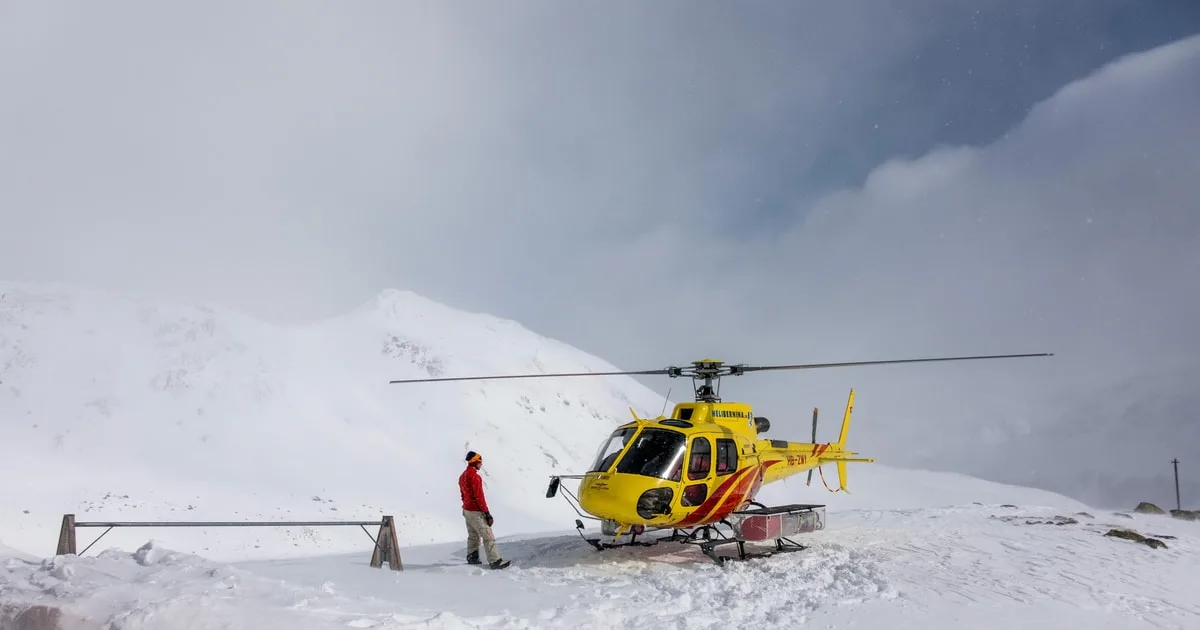
- The landing. A touchdown on open ground beside the lakes at 4,790 m, with time on the ground set by the pilot according to the wind and how the group is handling the altitude.
- The return. A climb out over the Ngozumpa Glacier, a last look at Everest and Cho Oyu on the northern skyline, and the flight back to Kathmandu, usually with the group back in the city well before the afternoon cloud builds.
What is not automatically in the quote matters just as much. National park permits, lodge food and drink on the ground, a second landing such as a pass crossing or a monastery stop, and the cost of an extra flight hour are almost always priced separately. Ask for those four lines in writing before you compare two quotes, because a Gokyo helicopter tour that looks cheap is usually a tour that stops once and charges for everything after that.
The practical difference from the Everest Base Camp helicopter day tour is worth stating plainly. The Base Camp flight is a fixed product with a published per-seat price and a fixed landing at Kala Patthar at 5,545 m, which is why it can be sold seat by seat. Gokyo has no such product page, no fixed departure, and no published seat price, so it is sold as an aircraft. The two flights share a corridor, an operator and a morning, and they give you completely different hours on the ground.
The Flight Plan, Leg by Leg
Nepali operators fly this route the same way most mornings, because the terrain and the airspace decide the shape of it long before the passenger does. What follows is the standard routing for a helicopter flight to Gokyo from Kathmandu, with the published altitudes of the places where the aircraft touches down.
| Leg | What happens | Altitude |
|---|---|---|
| 1. Tribhuvan International Airport, Kathmandu | Domestic terminal check-in, weight and baggage check, safety brief, early departure | 1,400 m |
| 2. The climb east | Aircraft climbs above the valley cloud and runs east beside the Himalayan crest, Langtang and Dorje Lakpa behind you | No landing |
| 3. Lukla, or a valley fuel stop | Refuel, and on some routings a short ground stop before the high leg | 2,845 m |
| 4. The Dudh Kosi corridor | Namche, Thyangboche and Ama Dablam slide past below; the aircraft turns east above the Dole side valleys | No landing |
| 5. Gokyo | Landing on open ground beside the lakes, time at the water edge at the foot of the ridge | 4,790 m |
| 6. The return | Climb out over the Ngozumpa Glacier, Everest and Cho Oyu on the northern horizon, then back down the valley to the capital | 1,400 m |
Two details in that table decide whether the day works. The first is the fuel stop. A helicopter that will land at 4,790 m cannot leave Kathmandu with full tanks and a full cabin at the same time, so the flight either refuels at Lukla at 2,845 m or takes on fuel at a valley strip on the way back. That stop is not a delay to be argued with — it is the reason the high landing is possible at all. The second is the turn above Dole, where the aircraft leaves the main Everest highway and cuts east towards the lakes. On a clear morning this is the best ten minutes of the flight, with the Ngozumpa Glacier opening below and the whole Gokyo basin appearing ahead.
If you are coming off a trek, the plan runs in reverse: walk in over the Cho La or up the valley, meet the aircraft at the lakes, and fly out to Kathmandu in a single leg with the fuel stop on the way. That version of the day is the one most trekkers book, because it removes the weather-exposed walk back down the valley without giving up the high route.
Fuel Stops, Payload and Why the Seats Are Weighed
High-altitude helicopter flying is a negotiation between fuel, people and air density, and at 4,790 m the margin is thin. Warmer air is thinner air, thinner air gives less lift, and every kilogram in the cabin is a kilogram the aircraft has to carry up to a landing that is already close to the edge of its performance envelope. This is why every serious operator weighs passengers and bags, and why a Gokyo helicopter tour quote starts with a headcount rather than a date.
The rules that follow from that physics are consistent across the industry:
- Five guests is the practical ceiling. The H125 cabin that flies these charters seats up to five, and a group of five will normally mean a lighter fuel load, an earlier departure while the air is cool, or a fuel stop on the way out.
- Bags are weighed, not estimated. Soft bags are asked for, hard cases are usually refused, and the allowance on a high-altitude charter is smaller than on a transfer flight at lower level.
- Seating is set by the pilot for balance. You may be asked to swap sides between legs, and the heaviest passenger is not always placed where they would choose.
- Declare real weights in advance. A group that under-declares and arrives heavy is the most common reason a high landing is dropped from a flight plan at the briefing desk.
None of this is a reason to avoid the flight. It is the reason to book it early, to travel light, and to be honest on the form. On a charter the payload conversation happens once, at booking, and then the day runs.
The Landing at 4,790 m: Altitude, Oxygen and Time on the Ground
Gokyo village sits at 4,790 m, roughly 570 m below Everest Base Camp and a little under 800 m below the Kala Patthar landing used on the Base Camp day flight. That sounds like a gentler number than it is. At this height the air holds roughly half the oxygen available at sea level, the temperature drops fast when the sun goes behind a ridge, and a short walk to the lake edge can leave an unfit traveller breathless for several minutes.
The flight profile is what makes it manageable. A helicopter ascends quickly, but the body does not acclimatise in the air, so the risk on a Gokyo helicopter tour is not the ascent — it is the stop. Guidelines that operators apply on the ground are simple and worth knowing before you go:
- Move slowly and deliberately. The walk from the landing area towards the water is short; treat it as a climb, not a stroll.
- Eat before you fly, and drink water. An empty stomach and dehydration both make altitude symptoms worse, and both are common on pre-dawn departures.
- Say something early. Headache, nausea, dizziness or unusual breathlessness are the signals to sit down next to the aircraft and tell the pilot, not to push on for a photograph.
- Do not plan the day around a fixed ground time. Oxygen is carried on board, and the pilot decides when the group has had enough of the altitude. A good operator will shorten the stop without argument if someone is struggling.
- Insurance should cover helicopter evacuation from altitude. Standard travel policies frequently exclude it, and the rescue flight is the one expense nobody wants to discover on the mountain.
What You Actually See: Lakes, Glacier and the Everest Skyline
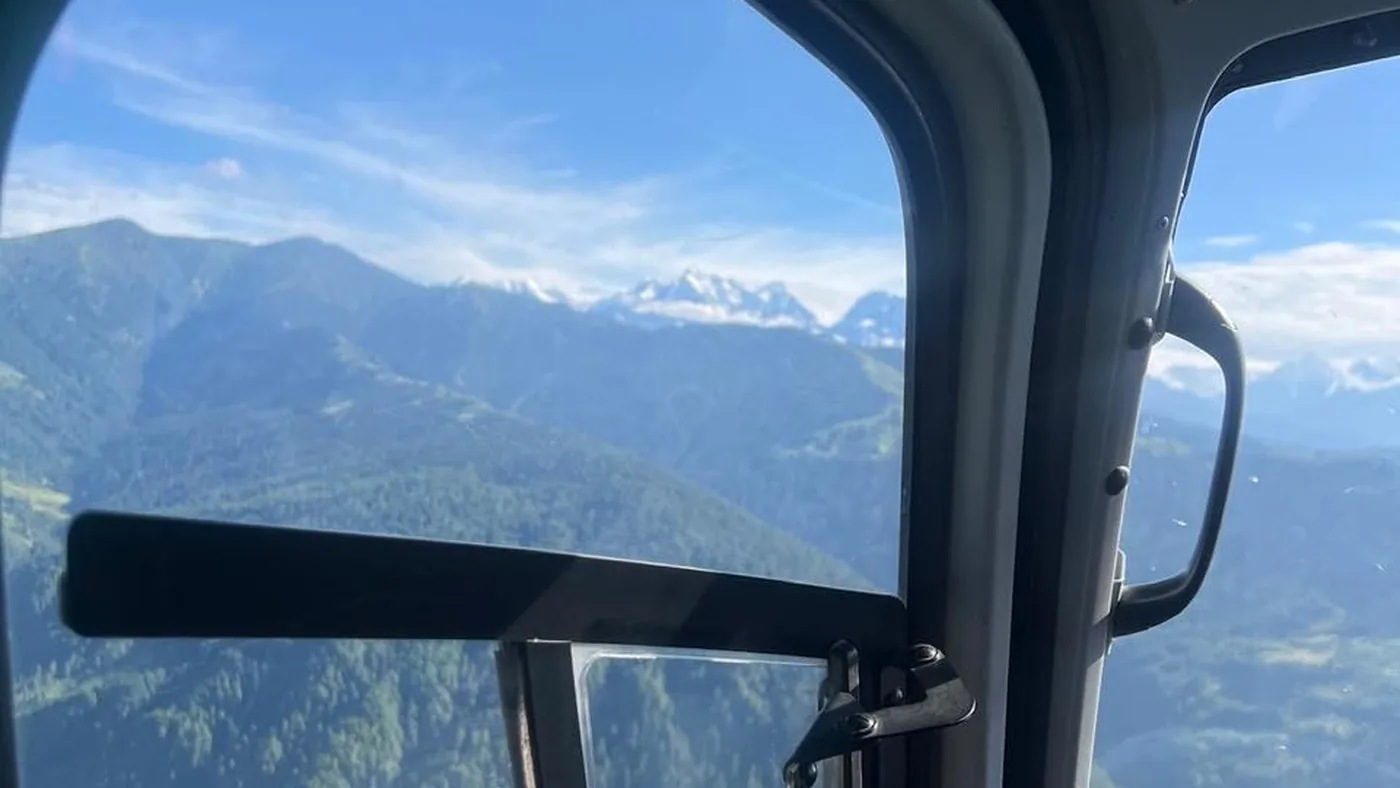
The scenery on this route is different in character from the Base Camp flight, which is the main reason to choose it. The Base Camp corridor is a valley flight towards a single famous objective. Gokyo is a basin flight: the aircraft arrives over a chain of glacial lakes, sets down on open ground beside them, and the great peaks of the region stand around you as a wall rather than as a target.
From the ground and from the aircraft windows you get four distinct things:
- The lakes themselves. Dudh Pokhari, the lake the village sits beside, carries the milk-green and turquoise colour that comes from glacial rock flour held in suspension. The colour is strongest in the post-monsoon weeks, when the water is full and the light is clean.
- The Ngozumpa Glacier. One of the longest glaciers in the Nepal Himalaya runs south from the Cho Oyu massif and forms the eastern wall of the valley. From the air it reads as a grey river of rubble and ice, and the aircraft crosses it twice on the way out.
- Cho La and the high route. The pass that links Gokyo with the Khumbu and the Everest Base Camp trail sits east of the lakes, and trekkers arriving on foot usually come over it.
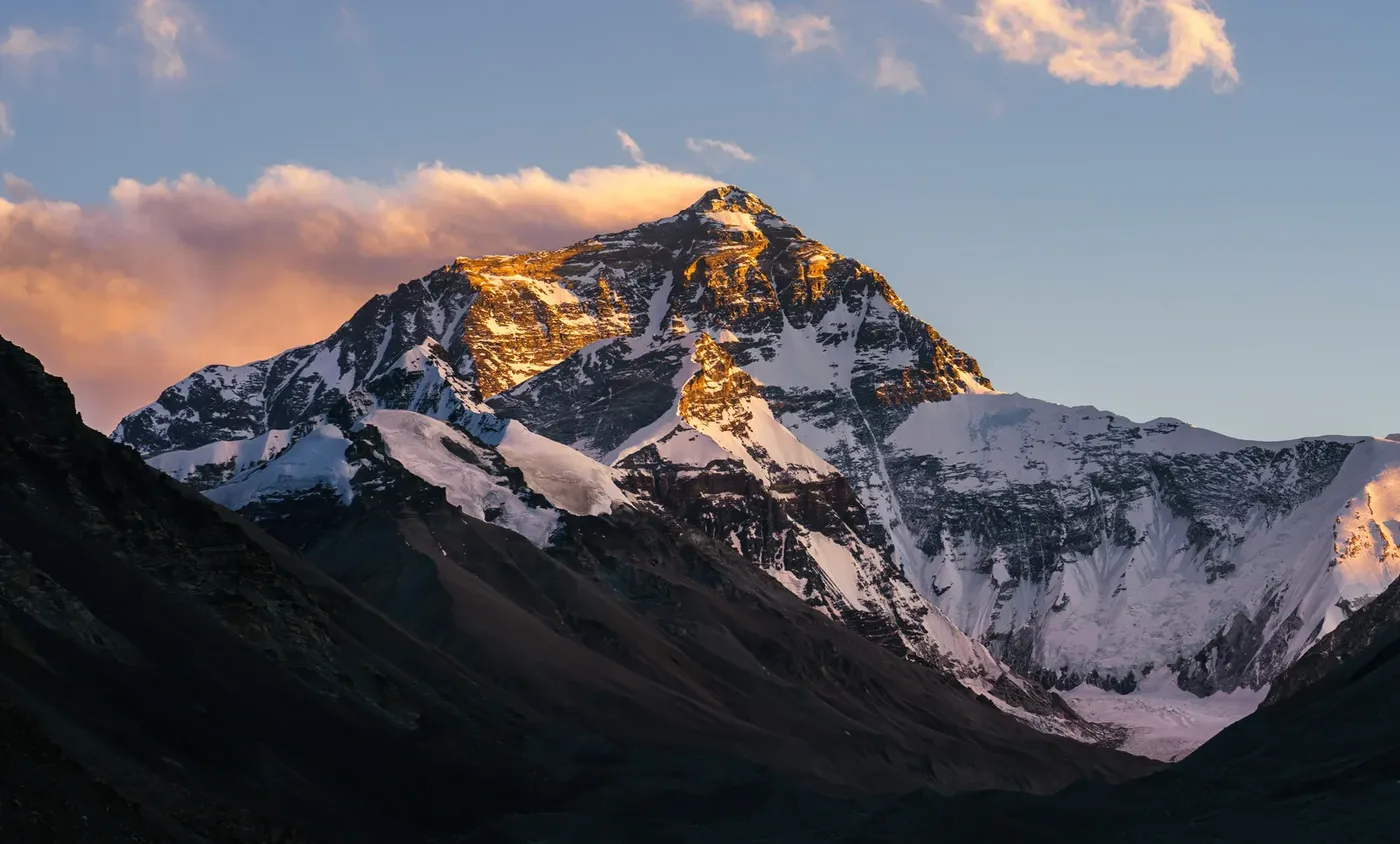
- The skyline. Everest at 8,848.86 m, Lhotse, Makalu and Cho Oyu are all visible on a clear morning, and the ridge above the village, Gokyo Ri, is the classic viewpoint for the whole group. Reaching the summit of the ridge is a walk of several hours and is not part of a morning charter.
Sunrise Departure and the Weather Window
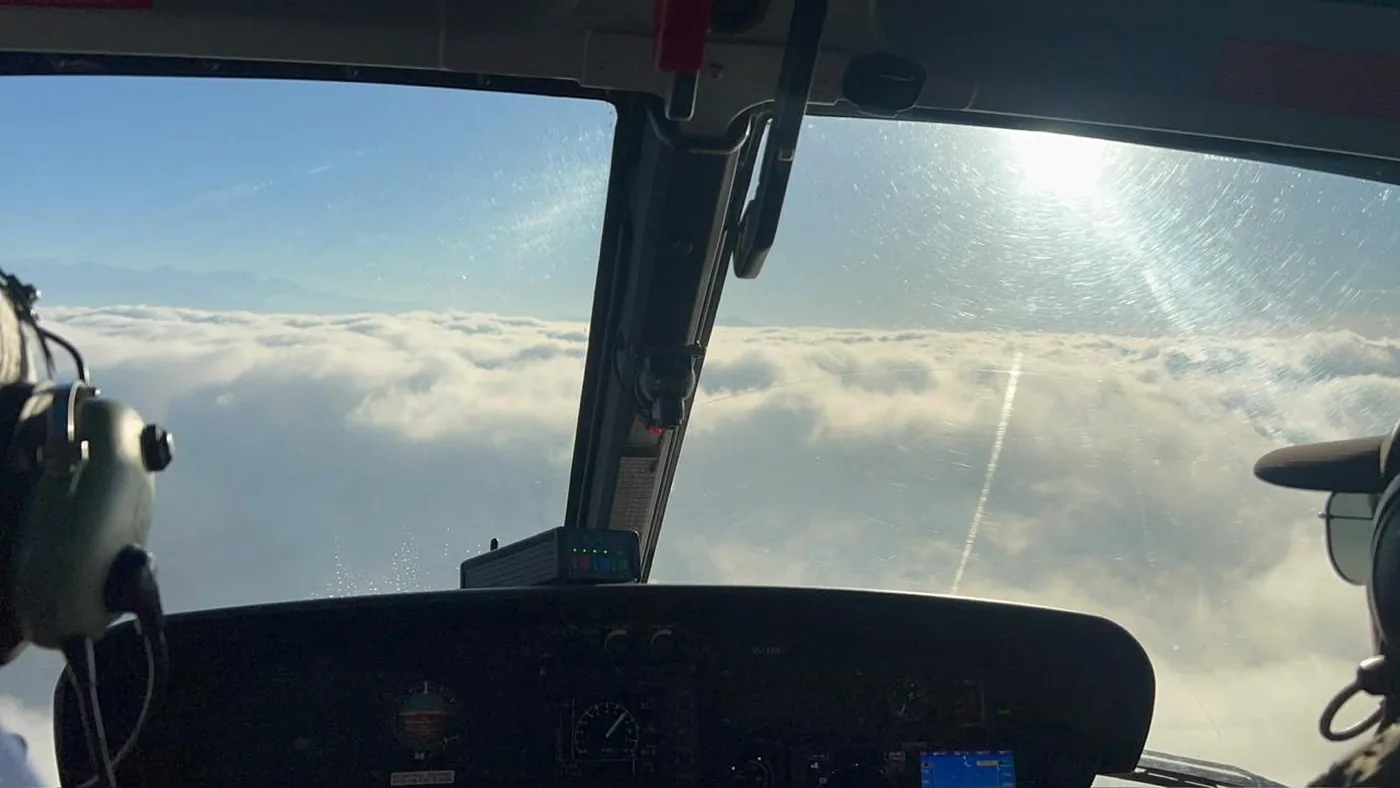
Every helicopter flight in the Khumbu is a morning flight, and Gokyo is no exception. The reason is the daily cycle of the mountains: valley cloud forms through the late morning, wind builds on the ridges and passes by early afternoon, and the air that was glass-calm at first light becomes the thing that cancels flights. An operator who offers you an afternoon departure to 4,790 m is offering you a flight with a poor chance of a landing.
That shapes the timetable. A Gokyo charter typically means a pre-dawn start from your hotel in Kathmandu, a departure from the domestic terminal as the light comes up, and a landing at the lakes while the air is still cold and the peaks are still sharp. Photographers get the best of it twice: the alpenglow on the high ridges during the transit, and the still water at the lakes before the wind picks up.
The seasons behave predictably enough to plan around. The post-monsoon weeks from late September into November give the clearest air of the year and the strongest lake colour. December and January are cold and stable but the days are short and the high ridges hold wind. The pre-monsoon spring months are warm and often hazy, with more afternoon build-up. The monsoon itself, from June into September, is the season to avoid for a high landing, not because flying stops entirely but because the visibility and the cloud base make a Gokyo landing unreliable.
No operator can promise a specific morning, so the planning answer is a buffer day. If the Gokyo helicopter tour is the centrepiece of a Nepal trip, give it two possible mornings and keep the second one free. Weather cancellations are a normal part of high-altitude flying in Nepal, and the difference between a good and a bad operator is what happens after the cancellation, not whether one occurs. The cancellation and weather policy is worth reading before you pay a deposit.
What a Gokyo Helicopter Tour from Kathmandu Costs
This is the part where most pages about Gokyo become unhelpful, because there is no published per-seat fare to quote. The honest version is that a Gokyo helicopter tour from Kathmandu is priced as an aircraft, by the flight hour, with the number of landings and the season adjusting the total. What can be published is the rest of the fleet, so you can see exactly where Gokyo sits against the fixed products on the same corridor.
| Flight | Published fare | Basis and landing |
|---|---|---|
| Everest scenic mountain flight | $260 | Per person, window seat, about one hour, no landing |
| Everest Base Camp helicopter day tour | $1,260 | Per person, shared flight, landing at Kala Patthar 5,545 m |
| Private Everest helicopter charter | $4,500 | Per aircraft, up to five guests, Everest View Hotel at 3,880 m |
| Everest Base Camp helicopter trek (trek up, fly back) | $1,840 | Per person, shared flight, ten days, max 5,545 m |
| Annapurna Base Camp day tour from Pokhara | $860 | Per person, shared flight, landing at 4,130 m |
| Muktinath helicopter pilgrimage | $1,080 | Per person, shared flight, one day, 3,710 m |
| Gokyo helicopter tour from Kathmandu | Quoted per group | Private charter, landing at 4,790 m, no published seat price |
Read the table as a scale rather than a menu. A single hour in the air with no landing is the cheapest possible helicopter experience, which is why the scenic mountain flight is the entry point at $260. A full day with a high landing, fuel stop, ground time and a pilot on standby costs many times that, and the shared Base Camp day tour at $1,260 per person is what that arithmetic looks like when the seats are sold individually. A private charter to the same region at $4,500 for the aircraft is the same arithmetic with nobody else in the cabin.
Gokyo sits at the private-charter end of that scale and slightly above the standard Everest charter, because the route is longer, the landing is higher than the Everest View Hotel at 3,880 m, and the aircraft usually spends longer on the ground. Five things move a Gokyo quote up or down:
- Flight hours. The single biggest line. A charter is priced on block time, and a route with a fuel stop and a high landing takes more of it than a straight run to the Khumbu and back.
- Landings. One landing beside the lakes is standard. A second stop, whether a pass, a monastery or a lodge, adds time and fuel.
- Group size. A full cabin of five splits the aircraft cost five ways. A couple pays for the same aircraft with two people in it unless the operator can combine them with another group.
- Season. Peak post-monsoon weeks carry the strongest demand and the least flexibility on dates.
- Ground time. Every minute the aircraft waits with the crew on the mountain is a minute the operator cannot sell elsewhere.
When you request a quote, ask for it broken into those lines, and ask whether the permit, the fuel stop and the ground time are inside the number. A Gokyo helicopter tour quoted as a single round figure with no breakdown is impossible to compare with anything.
Gokyo or Everest Base Camp: Which Helicopter Flight to Book
The two flights share a corridor and a morning and almost nothing else. The Everest Base Camp helicopter day tour is a fixed product: a shared aircraft, a published $1,260 per person, a landing at Kala Patthar at 5,545 m, breakfast at the Everest View Hotel at 3,880 m on the private version, and a schedule that runs most clear mornings in season. It is the right choice for a first visit, for anyone who wants the Base Camp photograph, and for a couple or a solo traveller who would rather share the aircraft than buy it.
The Gokyo helicopter tour is the quieter, higher-in-character option: a private aircraft, a landing at 4,790 m beside the lakes, no queue of other groups at the same viewpoint, and a route that gives you the Ngozumpa Glacier and the Cho La wall instead of the Khumbu icefall traffic. It suits photographers, returning visitors who have already stood at Base Camp, trekkers who want to fly out after walking the high route, and groups of three to five for whom the charter arithmetic works. If you are comparing products, the Base Camp day tour is the one with a price you can read on a page, and the private Everest charter is the closest published benchmark for what a whole aircraft costs in this region.
A third route is worth knowing about. If the objective is to stand high without a full charter, the Everest Base Camp helicopter trek at $1,840 per person combines a ten-day walk with a helicopter return, which is a different way of buying the same mountains and a better fit for anyone with the time to acclimatise properly.
Booking a Gokyo Helicopter Tour: The Checks That Matter
Because Gokyo is sold as a charter rather than a seat, the booking conversation carries more weight than it does for a fixed departure. Six questions separate a good booking from a hopeful one:
- Who owns the aircraft? The company that operates the helicopter, holds the air operator certificate and employs the pilot should be the company you pay. A reseller who passes your booking on adds a margin and removes your ability to talk to the crew when the weather turns.
- Is the landing confirmed or weather-dependent? A landing at 4,790 m is a pilot decision on the day. Ask what happens to the price if the landing is not possible and the flight becomes a scenic circuit instead.
- Which permits are included? Gokyo sits inside Sagarmatha National Park, so the entry permit and the local rural municipality charge apply. These are small items next to the charter, but they should be named in the quote rather than discovered at the check-in desk.
- What does the insurance cover? Helicopter evacuation from altitude should be explicit, and the policy should name the activity. This is the one item worth reading twice.
- What is the cancellation and refund rule? Weather cancellations are routine in the Khumbu. A policy that refunds nothing after a certain hour, or that only offers a credit, changes the real cost of the trip.
- Is there a buffer day? If the answer is no, the plan is fragile. One spare morning costs a night of hotel and buys the whole trip.
The permit paperwork itself is straightforward for a helicopter tour, because the operator handles most of it. It becomes more involved if you are filming commercially, carrying a drone, or combining the flight with a trek that crosses into a restricted area, and those cases are covered in the guide to helicopter flight permits in Nepal.
Frequently Asked Questions
Can a helicopter land at Gokyo?
Yes. Operators land on open ground beside the Gokyo lakes at 4,790 m, on a route that runs from Kathmandu with a fuel stop at Lukla or in a lower valley. The landing is a pilot decision on the day, taken on wind, cloud and the weight of the cabin, which is why no honest operator guarantees it in advance.
How much does a Gokyo helicopter tour cost?
There is no published per-seat fare for Gokyo, because the flight is sold as a private charter and priced per aircraft by flight hour. For a sense of scale, the published private Everest charter on the same corridor is $4,500 for the aircraft and up to five guests, and the shared Everest Base Camp day tour is $1,260 per person. A Gokyo quote usually sits at or above the private charter figure, since the route is longer and the landing is higher.
How many people can join a Gokyo helicopter tour from Kathmandu?
Up to five guests in the Airbus H125 cabin used for Everest-region charters. A full aircraft is the cheapest way to fly per person. A smaller group pays for the same aircraft, so the per-person cost rises sharply for a couple.
Is Gokyo higher than Everest Base Camp?
No. Gokyo village sits at 4,790 m and Everest Base Camp at 5,364 m, with the Kala Patthar landing used on the Base Camp day flight at 5,545 m. Gokyo is the higher-character flight, not the higher landing.
Can I fly to Gokyo and back in one day from Kathmandu?
Yes, and that is the standard format. The day starts before dawn in Kathmandu, lands beside the lakes in the morning and returns to the capital before the afternoon cloud builds. The single risk to the plan is weather, which is why a spare morning is worth more than an extra stop.
Do I need a permit for a Gokyo helicopter tour?
Gokyo is inside Sagarmatha National Park, so the park entry permit and the local rural municipality charge apply. The operator normally arranges both. The paperwork becomes more involved for commercial filming, drone use or a combined trek through restricted areas.
Is the walk to Gokyo Ri included?
No. The ridge above the village is a climb of several hours and is not part of a morning charter. A Gokyo helicopter tour puts you at the lakes at 4,790 m; the ridge walk is a trekking objective that needs its own day and its own acclimatisation.
What are the Gokyo lakes actually like on the ground?
Dudh Pokhari, the lake beside the village, is the one most photographs show: glacial rock flour gives it a pale turquoise colour that deepens in the post-monsoon weeks. The settlement is small, the lodges are simple, and the ground around the lake is stony moraine rather than meadow. It is a high, austere place, which is a large part of why people fly there instead of trekking to it.
How cold is it at the Gokyo landing?
Cold enough that a down jacket, gloves and a hat belong in the day bag even in October, and colder still in December and January. The aircraft cabin is heated in flight, but the ground stop at 4,790 m is not, and the wind at the lakes makes the temperature feel considerably lower than the forecast for Kathmandu suggests.
What happens if the weather cancels the flight?
You wait for the next flyable morning, or you take the refund or credit the operator policy allows. Weather cancellations are routine at this altitude and the policy, not the price, is what distinguishes operators. Read it before paying a deposit and build one buffer morning into the trip.
Can I fly to Gokyo after trekking the Cho La?
Yes, and it is a popular format: walk in over the pass or up the valley, meet the aircraft at the lakes, and fly back to Kathmandu in one leg. It removes the weather-exposed walk out without giving up the high route, and it works well for trekkers on a fixed return date.
Planning the Morning
A Gokyo helicopter tour from Kathmandu is one of the few high Himalayan experiences that fits inside a day, and the planning that makes it work is unglamorous: be honest about weights, travel with soft bags, book the operator rather than a reseller, read the weather policy, and keep a second morning free. Do those four things and the flight itself is simple — a pre-dawn departure, a climb above the valley cloud, a turn east above the Dudh Kosi, and a landing beside the lakes at 4,790 m with the Ngozumpa Glacier below and Everest on the skyline.
If you are still deciding between routes, the wider cluster on planning a helicopter tour in Nepal covers season, cancellation policy, altitude and operator selection in more depth. For the same mountains with a published price, see the Everest Base Camp helicopter day tour at $1,260 per person and the Everest scenic mountain flight at $260. If the draw is the lakes rather than the landing, the guide to the Gokyo Lakes helicopter tour goes deeper on the water, the glacier and the colour. Before you fly at this altitude, the notes on high-altitude helicopter flight in Nepal are worth ten minutes, and anyone carrying a camera commercially should read the helicopter flight permits guide first.
To hold an aircraft and a date, send the group size, the dates you could fly and whether a second landing matters. The quote comes back with the flight hours, the landing, the permits and the weather policy on separate lines, which is the only form in which a Gokyo helicopter tour can be compared honestly with anything else.