

Short answer: The Everest mountain flight Kathmandu travellers book leaves Tribhuvan International Airport, at 1,400 m, on a scheduled fixed-wing departure in the 6:30–8:00 am window, flies a one-hour circuit along the Himalayan crest to within sight of Everest at 8,848.86 m, and lands back at the same airport an hour later. Expect $260 per person for the window-seat package with hotel transfers and the printed certificate, or $230–$235 if you buy the seat direct from Shree Airlines or Buddha Air. No mountain flight lands in the Khumbu, so if you want to stand at Kala Patthar at 5,545 m you are buying the $1,260 helicopter day tour instead.
- 6:30–8:00 amScheduled Kathmandu departure window
- $260Window-seat package, per person
- 1 hrWheels-up to wheels-down
- 1,400 mTribhuvan International Airport elevation
Most people who buy an Everest mountain flight Kathmandu-side do it for one reason: they have run out of days. The walk to Base Camp needs the two weeks they do not have, and a helicopter day tour costs roughly five times the fixed-wing seat. The mountain flight sits in the gap — a scheduled airline departure on every clear morning of the year that puts the highest mountain on earth in a cabin window and has you back in the city while the city is still waking up. What decides whether that morning works is almost never the scenery. It is the departure end: which terminal, which operator, which seat, and what happens to your money when the ridge is closed in cloud.
This guide covers the Kathmandu half of the product — the airport, the morning window, the aircraft, the fare structure and the upgrade path — and leaves the peak-by-peak view to the pages that already do it properly. Every figure below is either a published fare or a measured altitude. Nothing is estimated, and nothing is averaged across airlines that do not fly the same schedule.
Everest Mountain Flight Kathmandu: Which Terminal You Leave From
Every scenic mountain flight in Nepal departs from the domestic terminal at Tribhuvan International Airport, the same airport that handled your international arrival. That detail matters more than it sounds. Travellers routinely book a mountain flight and then discover, on the morning, that their hotel has sent them to the international departures hall, or that they are waiting at a private helipad on the other side of the city. The fixed-wing flight is an airline product: you check in at a domestic counter, you walk out to a turboprop on the apron, and you board with the same cabin crew who will fly the Pokhara rotation afterwards.
The airport sits at 1,400 m, which is the reason the flight is comfortable for almost everyone. You are not climbing to altitude on the ground before you start; the aircraft does the climbing, in a pressurised cabin, over the course of the hour. The valley floor you take off from is lower than Kathmandu’s surrounding rim, and the aircraft is already well above the city before the first ridge line comes into view.
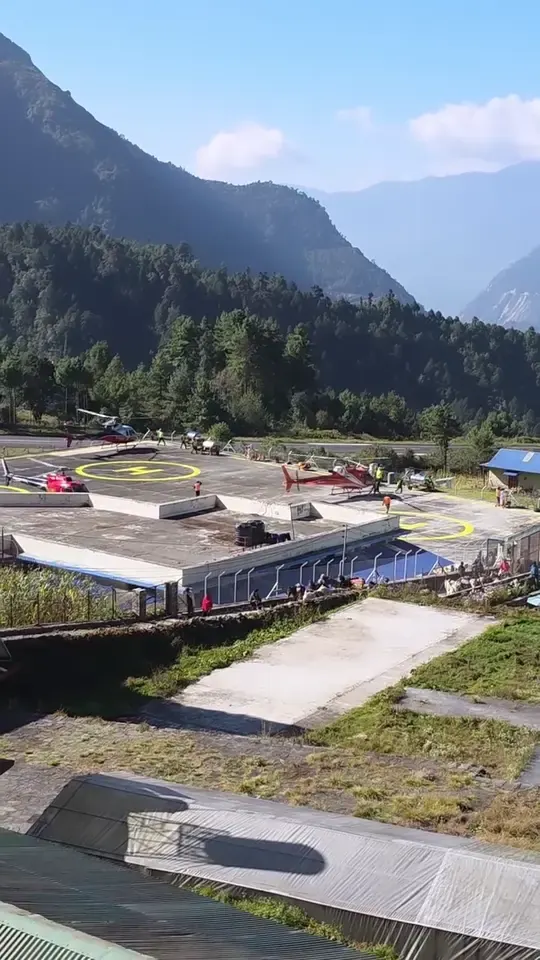
If you are staying in Thamel or the older city, the domestic terminal is a short transfer rather than an expedition, and most packaged tickets include the pickup. If you are staying further out, confirm the pickup point in writing before you pay, because a missed pickup on a one-hour product is the whole product. The terminal itself is small and single-storey in feel: a security gate, a check-in row, a departure lounge and a bus to the aircraft. There is no lounge culture and no duty free worth the detour. You are there for forty minutes of process to buy an hour of mountain.
Why Every Departure Sits Between 6:30 and 8:00 am
The schedule is not a marketing decision. Mountain flights fly first thing because the flying is best first thing: the valley is still, the haze has not built, and the cloud that forms against the Himalayan wall through the middle of the day has not yet started to grow. By late morning the same route can be marginal, and by afternoon the aircraft is often flying a different plan entirely. That is why every operator’s board is stacked into the early window, and why a mountain flight is the one product in Nepal where the earliest departure is also the best one.
Practically, this changes how you plan the day around the flight. A 6:30 departure means a pickup while it is still dark, a check-in before sunrise, and a landing back in Kathmandu in time for a late breakfast. If you are connecting to a trek, the flight fits comfortably before a midday transfer. If you are connecting to an international departure, it does not fit at all on the same morning, because the flight is weather-dependent and a turned-back aircraft will not respect your connection.
There is one more scheduling rule worth knowing: book the flight for your first clear morning in Kathmandu, not your last. Roughly one morning in four is lost to weather across the year, and the operators re-accommodate passengers onto the next available departure. If your only booked morning is the morning you fly home, a weather cancellation is not a delay, it is a lost product. Two spare mornings turns a coin-flip into a formality.
Who Actually Flies It: Operators and Aircraft from Kathmandu
Two scheduled operators dominate the Kathmandu mountain-flight board, and they are not identical products even though they sell the same view. Shree Airlines flies a 50-minute Everest scenic flight at an advertised ceiling of 25,000 ft, priced at $230 for foreign visitors and NPR 15,000 for Nepali citizens. Buddha Air flies the longer-running Everest Experience: a full hour in a Beechcraft 1900D twin-turboprop, at $235 for foreign visitors, INR 8,610 for Indian and SAARC nationals and NPR 13,776 for Nepali citizens, with the captain naming each peak over the PA as it comes into frame.
Aircraft type is worth understanding because it decides how much of the range you can actually see. The Beechcraft 1900D is a small, high-wing twin-turboprop with a window at every seat and a cabin that puts everyone within a few rows of the glass. Some schedules use an ATR 72 or a larger Shree Airlines aircraft, which gives a smoother ride and a different window geometry. On a small aircraft the mountain fills the window; on a large one you see more of the range at once but each peak is further away. Neither is wrong. They are different photographs.
| Product | Flight time | Foreign fare | What the fare covers |
|---|---|---|---|
| Shree Airlines Everest scenic flight | 50 minutes | $230 | Guaranteed window seat, advertised 25,000 ft ceiling |
| Buddha Air Everest Experience | 1 hour | $235 | Window seat, captain narration, printed certificate |
| Packaged window seat with transfers | 1 hour | $260 | Window seat, hotel pickup and drop, certificate of achievement |
The $260 figure that most travellers end up paying is not a different flight. It is the same seat with the ground logistics bundled: a pickup from your hotel, a drop back afterwards, and the certificate handed to you at the end. If you are comfortable arranging your own transfer at dawn, the airline-direct fares of $230 and $235 are the cheaper route to the same window. If you are not, the difference buys the one thing that can actually go wrong on the ground.
Your Seat: Rows, Glass and the Window Guarantee
The single most common misunderstanding about the mountain flight is that a window seat is something you might get. On this product the window seat is the product: the cabin is loaded so that every passenger sits at glass, with no middle row sold. The seats at the very front are another matter. On scenic flights the first four rows are blocked, which is why the advice from anyone who has flown it is the same: ask for row 5 or behind when you check in. Further back, the wing sits lower in your field of view and the near range stops being cropped by the engine nacelle.
Row choice also decides what you photograph. From the middle of the cabin you get the range on the horizon and a clean sightline down to the foothills; from the front rows the view is dominated by the nose and the propeller arc. If you are shooting through the glass, wipe the window before pushback, keep the lens close to it to kill reflections, and resist the urge to zoom: at this distance the peaks are large enough that a normal focal length frames them properly.
What you will not be sold on board is anything else. There is no photograph upsell, no seat upgrade at the door and no souvenir pitch. The certificate is part of the packaged fare and is handed over at the end of the flight. It is a small thing, and it is the reason a mountain flight is the easiest Everest product to explain to someone who asks what you did that morning.
Weather, Refunds and the One Morning in Four
Roughly one morning in four is lost to weather across the year, and the pattern is seasonal rather than random. Clear, stable mornings cluster in the post-monsoon months and again in spring; the monsoon itself and the deep winter weeks produce more marginal dawns, when the valley is flyable but the ridge is not. The decision to fly or turn back belongs to the captain, not to the booking desk, and it is made on the morning with the aircraft already loaded.
This is where the wording of your booking matters more than the price. Ask, before you pay, what happens if the flight is turned back: whether you are re-accommodated onto the next departure, whether the fare is refunded, and whether the transfer is refunded with it. A turned-back flight is not a scam and not an airline failure — it is the product working as designed, because the alternative is flying a sightseeing aircraft into a wall of cloud for a view nobody can see. But the difference between a full refund and a partial one is decided by the sentence you did not read.
Two habits make the weather risk manageable. First, book the first morning of your stay rather than the last, so a cancelled dawn has somewhere to go. Second, keep the morning flexible: if the operator offers you a departure an hour later on the same day, take it, because the ridge sometimes clears after the first attempt is scrubbed. What you should never do is treat the mountain flight as a fixed appointment in a tight itinerary. It is the most weather-exposed product on the Kathmandu board, and its price reflects that.
What the Kathmandu Fare Buys, and What It Does Not
A mountain flight is a sightseeing circuit, not a transfer, and that single sentence explains most of the value question. You take off from Kathmandu and you land at Kathmandu. The aircraft does not set down at Lukla at 2,845 m, it does not hover beside Base Camp at 5,364 m, and it does not put anyone on the ground at Kala Patthar at 5,545 m. What it does is fly the length of the Himalayan crest at a cruising altitude that keeps the range in the window, then turn for home. The altitude you experience is the cabin altitude of a pressurised aircraft, not the altitude of the terrain below.
That is precisely why the flight is accessible. Nobody on board is exposed to thin air, nobody needs a trekking permit, and nobody needs to be fit for a landing above five thousand metres. The passengers who cannot do a helicopter landing — the very young, the elderly, the traveller with a heart condition cleared only for pressurised flying — can still do the mountain flight. It is the one Everest product with no altitude question attached.
| Product | Price | Time | Altitude experience | Lands in the mountains |
|---|---|---|---|---|
| Everest mountain flight, window-seat package | $260 per person | 1 hour | Everest seen at 8,848.86 m from the cabin | No |
| Everest Base Camp helicopter day tour | $1,260 per person, shared | 1 day, about 6 hours | Landing at Kala Patthar, 5,545 m | Yes |
| Everest shared flight with hotel breakfast | $1,450 per person | 1 day, about 6 hours | Landing at Kala Patthar, 5,545 m | Yes |
| Private Everest helicopter charter | $4,500 per aircraft, up to 5 guests | About 5–6 hours | Breakfast at Everest View Hotel, 3,880 m | Yes |
| Everest Base Camp helicopter trek | $1,840 per person, shared | 10 days | Maximum 5,545 m, trek up and fly back | Yes, after the walk |
Read the table as a ladder rather than a menu. The $260 seat answers the question “can I see Everest from the air on this trip?” The $1,260 day tour answers a different question — “can I stand at Kala Patthar and be back in Kathmandu for dinner?” — and it costs five times as much because it burns rotor hours, lands at altitude and returns on a weather window that closes earlier than the fixed-wing one. Neither is overpriced relative to the other. They are simply not the same purchase, and the most common bad decision in this market is paying for one and expecting the other.
The Morning, Step by Step
It starts before dawn, with a pickup from your hotel if you booked the packaged fare. The drive ends at the domestic terminal rather than the international hall, and the first thing to confirm on arrival is that you are at the right counter: the airline desk, not a tour desk, because the mountain flight is sold as a scheduled service and checked in like one.
Check-in is where the seat conversation happens. Ask for a row from five backwards, hand over the passport the ticket was booked against, and keep the boarding pass with you rather than in a bag that goes under the seat. Security and the departure lounge follow, and then a bus or a short walk to the aircraft on the apron. Boarding is quick because the cabin is small and there are no bags to fight over.
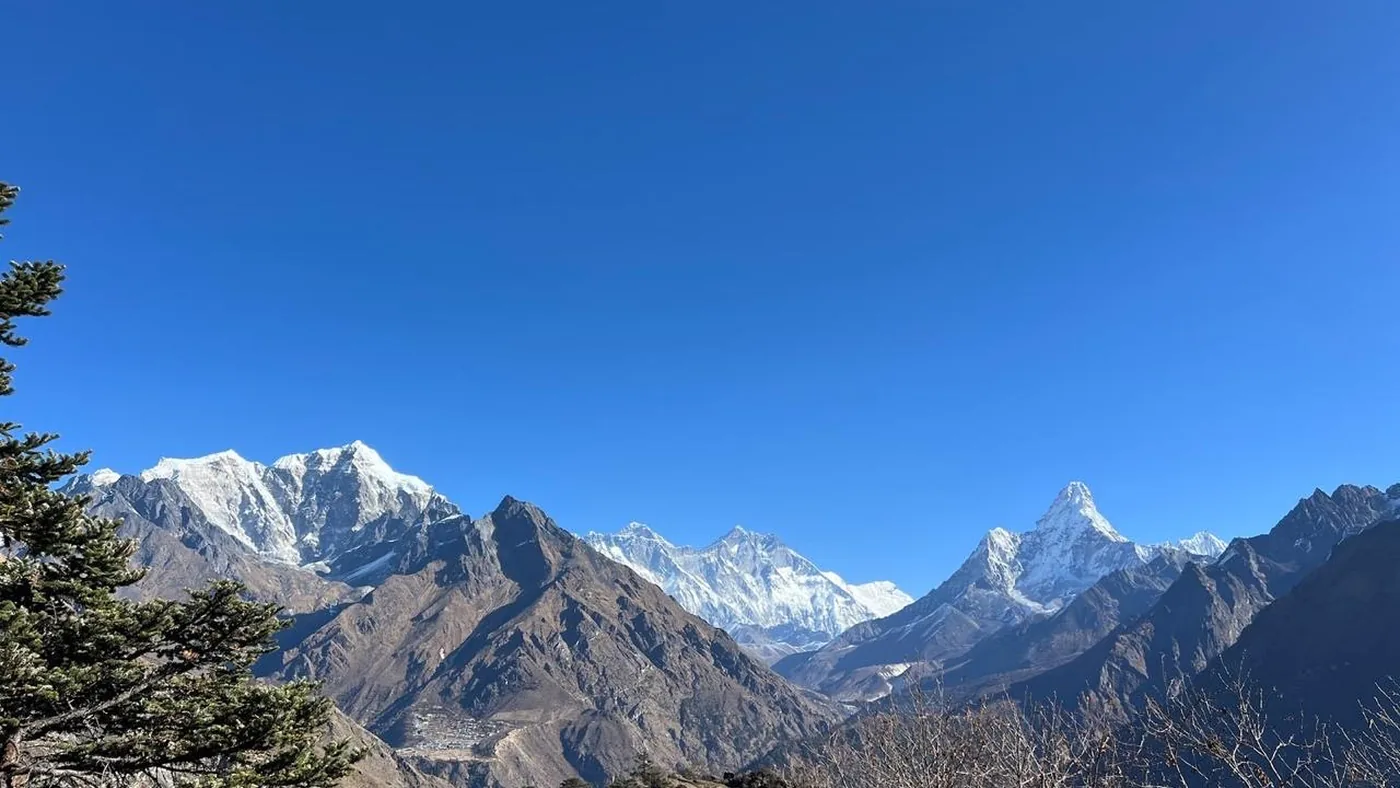
In the air, the sequence is fixed by geography rather than by the airline. The aircraft climbs out of the valley, turns north-east over the middle hills, and runs along the Himalayan wall with the high peaks ahead and to one side. The captain calls each summit as it comes into frame — the order and the names differ slightly by route, but the giants do not: Cho Oyu, Pumori, Nuptse, Lhotse, Makalu and Everest itself, at 8,848.86 m, on the far side of the crest. Then the aircraft banks away and returns to the valley, and you are on the ground again inside the hour.
Back at the terminal there is the certificate, the transfer if you bought it, and a morning that is still young. This is the part people underestimate: a 6:30 departure has you back in Kathmandu with the whole day in front of you. Trekkers use it as a preview before flying to Lukla. Families use it as the Everest box ticked without a trek. Photographers use it as a scouting run for a longer helicopter charter later in the trip.
Upgrading from the Window to a Landing
Plenty of travellers fly the mountain flight and immediately want the other thing: to be standing on the ground with the ice under their boots. That is a different purchase, and the Kathmandu departure is where you make it. The Everest Base Camp helicopter day tour runs as a single day of roughly six hours from the same airport, lands at Kala Patthar at 5,545 m, and returns you to the city. At $1,260 per person on a shared flight it is the cheapest way to touch the high Khumbu without a trek, and it includes the fixed-wing flight’s view plus the part the fixed-wing cannot give you.
The private version of the same idea is the charter: $4,500 per aircraft for up to five guests, with breakfast at the Everest View Hotel at 3,880 m rather than a landing on rock. It is the product families and small groups gravitate to, because the aircraft is yours for the morning, the schedule bends to the passengers, and the stop at 3,880 m is a hotel terrace rather than a moraine. Between the two sits the shared flight with breakfast at $1,450 per person, which lands at Kala Patthar and adds the hotel stop.
Then there is the hybrid: the Everest Base Camp helicopter trek at $1,840 per person, ten days, walking up and flying back, with a maximum altitude of 5,545 m. This is the product for people who want the walk but not the walk back, and it is the one to compare against a full trek rather than against a flight.
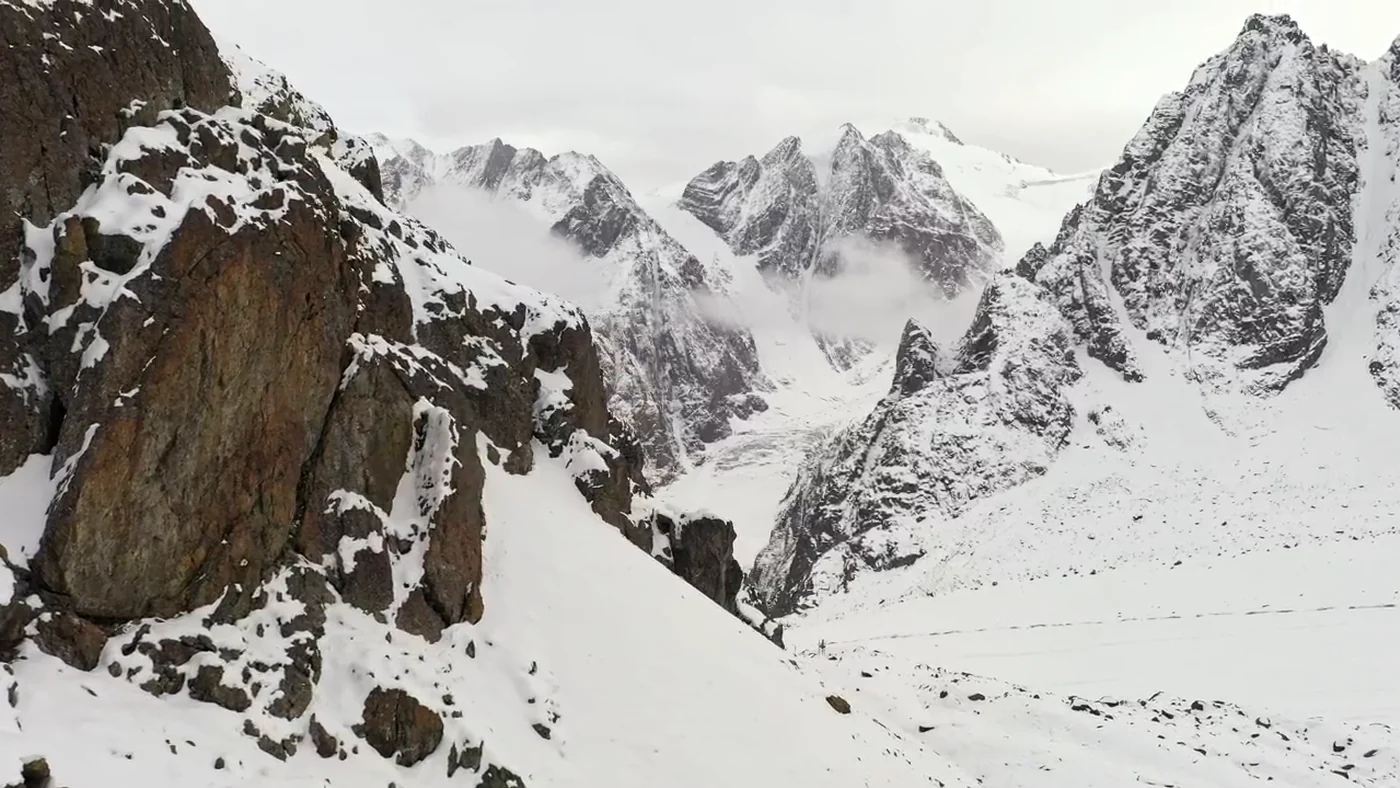
Whichever way you go, the ordering advice is the same. Do the mountain flight first if you are unsure about altitude, because it costs a fifth of the landing product and tells you how you feel in the air. Do the helicopter first if your trip is short and the landing is the point, because a turned-back mountain flight on day one should not cost you the landing on day three. The mistake is booking both on consecutive mornings and losing both to the same weather system.
Who the Kathmandu Departure Suits, and Who It Does Not
It suits the traveller with two or three days in Nepal and a list that already includes the valley temples. It suits the family with a grandparent who will not be walking at altitude, and the couple who want Everest in the photo album without a fourteen-day commitment. It suits anyone who has already trekked and wants to see the range from the other direction, and anyone flying out of Kathmandu who has a spare morning at the front of the trip rather than the back.
It does not suit the traveller whose only reason for being in Nepal is to stand at Base Camp. It does not suit the photographer who needs the Khumbu icefall in the frame, because the flight’s track keeps the range at a distance. And it does not suit anyone who cannot absorb a weather cancellation, because one morning in four is lost and no operator can promise otherwise. If any of those describe you, the helicopter day tour is the honest recommendation, and the mountain flight is the thing to do on the next trip.
There is also a budget argument that cuts the other way. At $260 the flight is cheap enough to be an add-on rather than a decision: it delivers the one photograph that most visitors to Nepal came for. Judged that way — not as a substitute for the trek, but as the highest-value hour in Nepali tourism — it is difficult to argue with. Our Everest mountain flight price breakdown sets the fares out airline by airline if you want to check the numbers before you commit.
Booking the Flight from Kathmandu: Five Checks
An Everest mountain flight Kathmandu booking is only as good as its weakest clause, and five things decide whether it is sound. None of them is the price. Check that the window seat is guaranteed rather than likely. Check which operator and which aircraft are actually flying your date, because a Beechcraft 1900D and a larger jet-turboprop are different experiences at the same fare. Check the terminal and the pickup point in writing. Check what the fare excludes — the airport tax treatment, the transfer, the breakfast if one is offered. And check the refund wording if the flight is turned back.
Our twelve-point mountain flight booking checklist walks through each of those in detail, and it is the page to read before you pay anyone. If you want the operator comparison in more depth, the Buddha Air mountain flight guide and the Shree Airlines scenic flight guide cover the two scheduled products fare by fare, while the aircraft, altitude and route guide explains what each airframe does differently over the crest.
For the mountain itself — its height, its naming, its record of first ascents — Mount Everest on Wikipedia is a reliable starting point. Everything else about the Kathmandu departure, from fares to weather windows, belongs on this site.
Frequently Asked Questions
Where does the Everest mountain flight leave from in Kathmandu?
The domestic terminal at Tribhuvan International Airport, at 1,400 m — the same airport as your international arrival, but a different hall. Check in at the airline counter, not at a tour desk.
What time do mountain flights depart?
Departures sit in the 6:30–8:00 am window. The schedule is early because the valley is calmest and the ridge is clearest before the day’s cloud builds, not because of the sunrise.
How much does the Everest mountain flight cost from Kathmandu?
$260 per person for the window-seat package with hotel transfers and certificate, $235 direct with Buddha Air, or $230 direct with Shree Airlines. Nepali and SAARC fares are published separately by each airline and are lower.
How long is the flight?
One hour wheels-up to wheels-down on the Buddha Air Everest Experience, and 50 minutes on the Shree Airlines scenic flight. The full morning, including the transfer and check-in, is longer than the flight.
Does the mountain flight land at Everest Base Camp?
No. It is a sightseeing circuit that takes off and lands at Kathmandu. If you want to stand at Kala Patthar at 5,545 m, that is the Everest Base Camp helicopter day tour at $1,260 per person.
Do I need a permit or a trekking licence?
No. The flight stays inside Nepali domestic airspace and never enters a national park on foot, so there is no TIMS card and no park permit to buy.
Is the flight suitable for children, older travellers or someone with a heart condition?
Generally yes, because the cabin is pressurised and nobody is exposed to altitude on the ground. Anyone with a medical condition should clear pressurised flying with their own doctor first, and the flight is a far easier option than a landing above 5,000 m.
What happens if the weather cancels my flight?
The captain decides on the morning. Ask before paying whether your fare is re-accommodated onto the next departure, refunded, and whether the transfer is refunded with it. Roughly one morning in four is lost across the year.
Which seat should I ask for?
Row 5 or further back. Rows 1 to 4 are blocked on scenic flights, and the middle of the cabin gives you the cleanest sightline to the range without the nose or the propeller arc in frame.
Is the mountain flight better than a helicopter tour?
Cheaper, not better. The flight costs $260 and shows you Everest from the air; the helicopter day tour costs $1,260 and puts you on the ground at 5,545 m. They answer different questions, and the ladder between them is set out in the table above.
Can I book the mountain flight for tomorrow morning?
Often, in the low season, because seats are sold daily and the aircraft are small. In peak weeks the early departures sell out days ahead, which is another reason to book the first morning of your stay rather than the last.
Do Nepali citizens pay the same fare?
No. Both scheduled operators publish separate domestic rates — NPR 13,776 with Buddha Air and NPR 15,000 with Shree Airlines — which are substantially below the foreign visitor fare for the same seat and the same view.
The whole cluster of mountain-flight and helicopter guides is collected on the Everest mountain flight hub, and the fixed-wing product itself is set out on the Everest scenic mountain flight tour page. If this page has done its job, the only decision left is which morning you can spare — and the answer, almost always, is the first one.