

Short answer: the Annapurna Base Camp trek costs $1,199 per person on the 2027 six day trek up, fly back itinerary, and that figure is close to all in. It covers the licensed guide, the porters, the ACAP permit and TIMS card, five nights of twin share lodge accommodation, every meal on the trail, and the 25 minute helicopter from Base Camp back to Pokhara. If you want to stand at 4,130 m without walking there, the day tour from Pokhara is $860 per person shared, or $2,585 to charter the whole aircraft for up to five passengers. Budget separately for the $50 Nepal visa, mandatory insurance that covers helicopter evacuation, hotels in Pokhara, tips conventionally around 10%, and one spare night in case the flight window closes.
- $1,1996 day trek, helicopter exit
- $860Day tour seat, shared
- 4,130 mAnnapurna Base Camp
- 6 daysPokhara to Pokhara
Search for the Annapurna Base Camp trek cost and you will get numbers from a few hundred dollars to several thousand, which usually means the page has not decided what it is pricing. The figure moves depending on whether you walk both ways or fly out of the Sanctuary, whether permits and meals are inside the quote, and whether you are paying for a seat or for the whole aircraft. This guide pins each of those variables to a published 2027 price, so you can see which version of the trek you are buying and what still has to come out of your own pocket.
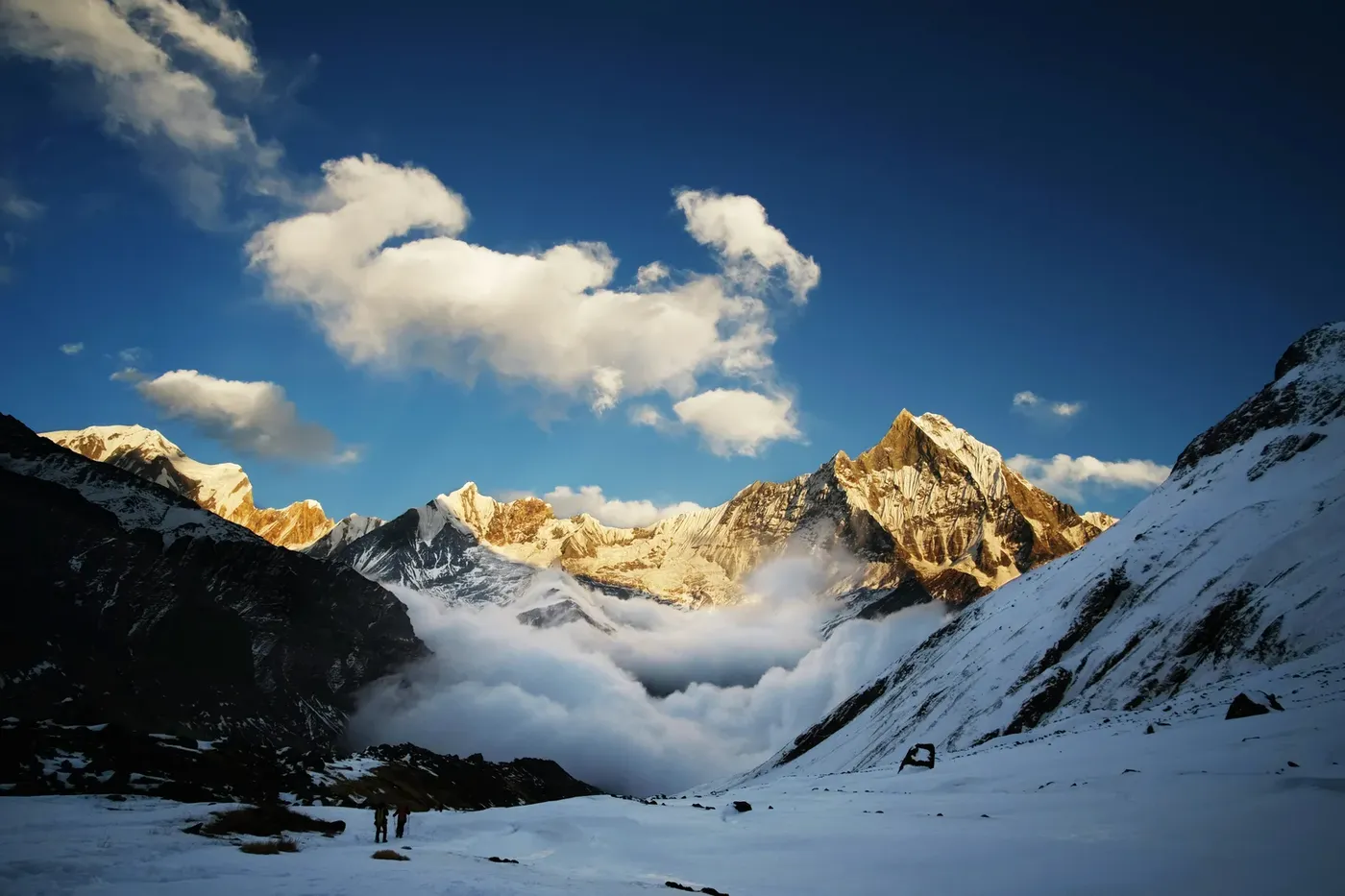
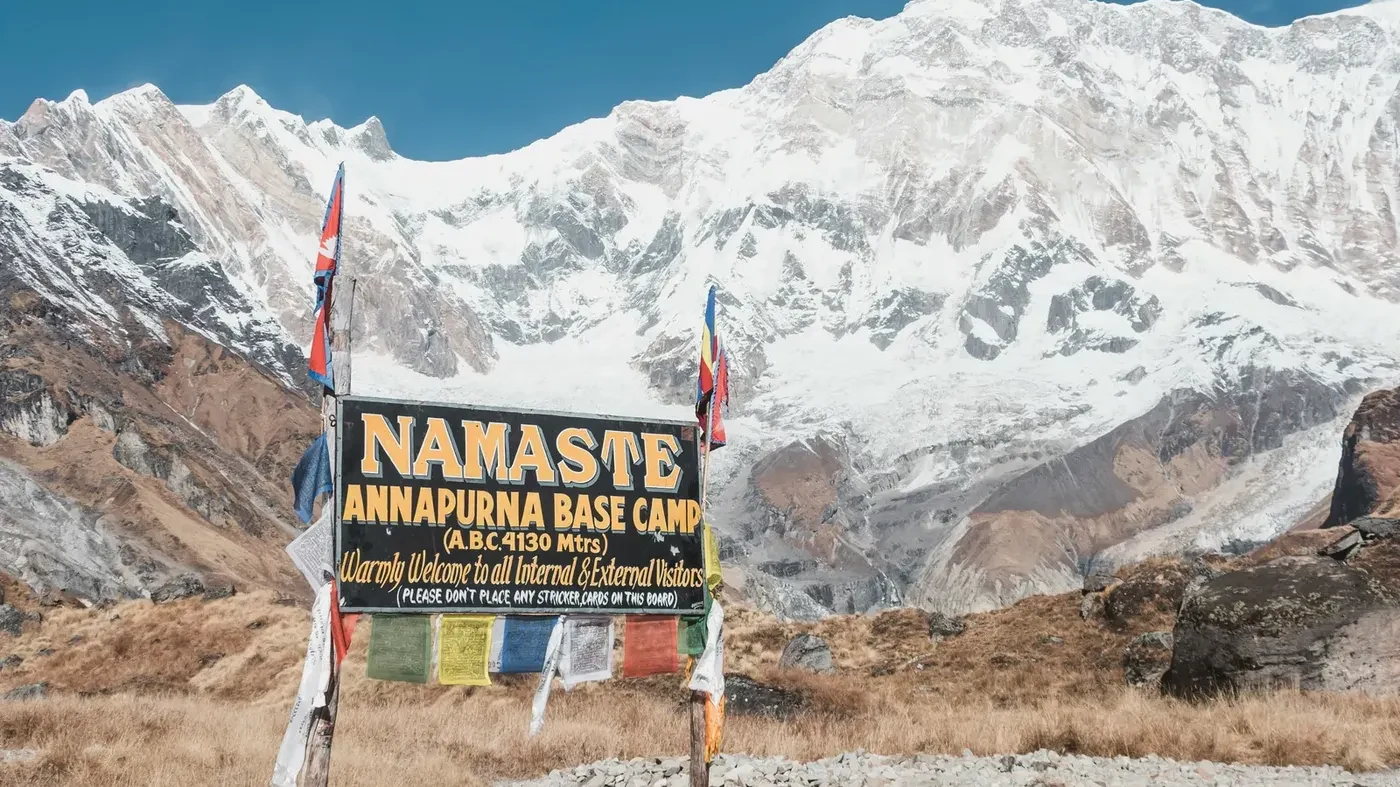
The Sanctuary itself sits at 4,130 m in central Nepal, in an enclosed amphitheatre below Annapurna I at 8,091 m and Machapuchare, the sacred Fishtail peak, at 6,993 m. Reaching it on foot is a nine to eleven day round trip from Pokhara on the classic route, walking up through Ghandruk, Chhomrong and the Modi Khola valley. Reaching it by helicopter is a three to four hour morning from Pokhara. The cost gap between those two experiences is smaller than most people expect once lodge nights, meals, guide days and the walk out are counted, and that is the honest way to read every number below.
What the Annapurna Base Camp Trek Cost Actually Buys
A trek price is not a ticket price. When you pay for a helicopter seat you are buying aircraft time, fuel and a pilot, and almost nothing else. When you pay for a trek, most of the money goes to labour and logistics: a licensed guide for six days, porters carrying duffels on a one to two ratio, permits bought in your name, five lodge beds, three meals a day and somebody making sure the helicopter is at Base Camp on the morning you arrive. That difference is why comparing a $1,199 trek with an $860 flight seat as if they were the same product leads people to the wrong conclusion.
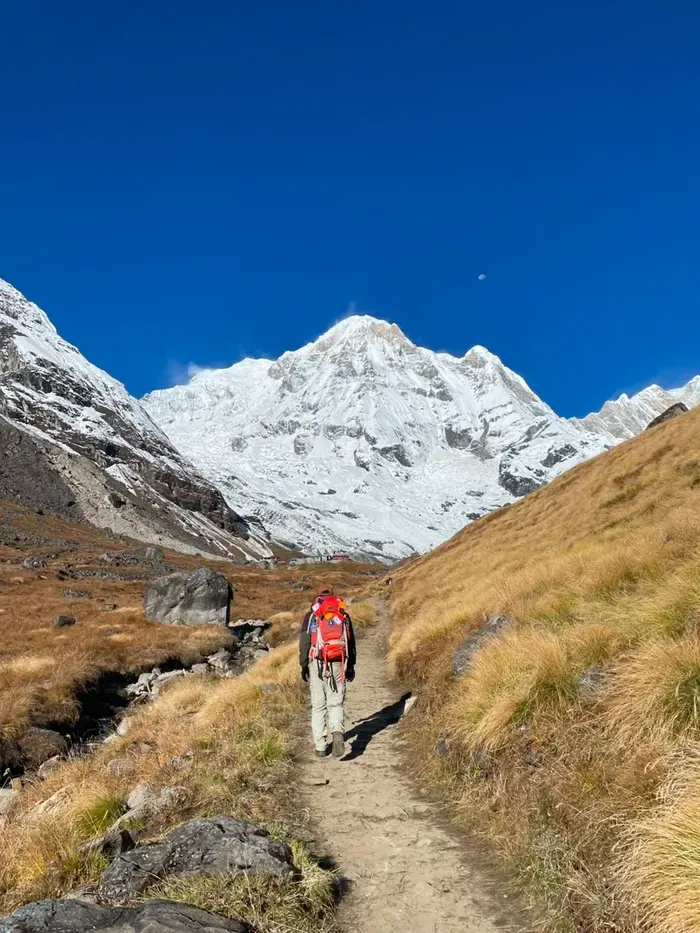
Our 2027 product is the six day trek up, fly back route, priced at $1,199 per person on a shared flight basis. You walk into the Sanctuary over five walking days, sleep in the same Gurung village lodges that trekkers have used for decades, reach Base Camp on foot, and then lift off from the Base Camp helipad and land in Pokhara about 25 minutes later. The flight replaces the three day walk back down the same stone steps. That is the whole commercial idea: you keep the walk in, which is the part worth doing, and delete the descent, which is the part that wrecks knees and eats annual leave.
The alternative is the one day Annapurna Base Camp helicopter tour from Pokhara, which lands at the same 4,130 m without any walking at all. It runs about three to four hours door to door and costs $860 per person shared. Between those two products sits the real decision most travellers face, and the rest of this page prices it line by line. Full route detail for the walking version lives in the six day Annapurna Base Camp trek with helicopter return guide, while the flight only option is broken down in the Annapurna Base Camp helicopter tour cost guide.
Three Ways to Reach Base Camp, and What Each One Costs
There are four published ways to get to Annapurna Base Camp, plus one scenic flight that gets you close without landing. Read the duration column before the price column, because that is where the value sits.
| Way to reach Base Camp | Time from Pokhara | Highest point | 2027 price |
|---|---|---|---|
| Trek in, walk out, classic route | 9 to 11 days round trip | 4,130 m | Quoted per itinerary |
| Trek in, helicopter out | 6 days | 4,130 m | $1,199 per person, shared flight |
| Helicopter in and out, day tour | 3 to 4 hours | Landing 4,130 m | $860 per person, shared flight |
| Private charter of the day tour | 3 to 4 hours | Landing 4,130 m | $2,585 per aircraft, up to 5 guests |
| Fixed wing scenic flight, no landing | 1 hour | Overflight only | $150 to $250 per person |
Two things are worth pointing out in that table. First, the scenic flight is not an alternative to the trek at all: it never lands, so you see the Annapurna and Dhaulagiri ranges from a window seat and never stand in the Sanctuary. Second, the classic walk in and walk out has no fixed seat price because it is not a seat product. It is a custom itinerary, and its cost depends on how many days you add, how many trekkers share one guide, and what standard of lodge you accept. Anyone quoting you a hard number for a nine to eleven day walk without knowing those three things is guessing.
The trek up, fly back version is the one we publish as a fixed package because the variables are fixed: six days, five lodge nights, one shared helicopter exit, one published price. That is the number this page is built around, and it is the number to compare against anything else you are offered.
Inside the $1,199: What the Quote Includes
The most common way to be misled on trek cost is a low headline price with the essentials stripped out. Ask any operator for the inclusion list in writing. Ours for the six day Annapurna trek has not changed: everything below is inside the $1,199, and everything in the right hand column is outside it.
| Line item | Inside the $1,199 |
|---|---|
| Licensed trekking guide, all six days | Yes |
| Porter service, one porter per two trekkers | Yes |
| Annapurna Conservation Area permit and TIMS card | Yes |
| Five nights twin share lodge accommodation on the trail | Yes |
| All meals on trek, breakfast, lunch and dinner with tea | Yes |
| Pokhara transfer to the roadhead | Yes |
| Helicopter exit, Base Camp to Pokhara, with a 10 kg bag | Yes |
| Hotels in Pokhara before and after the trek | No |
| Travel insurance covering helicopter evacuation | No, mandatory and arranged by you |
| Personal gear, clothing and sleeping bag | No |
| Hot showers, device charging, bottled drinks and lodge snacks | No |
| Tips for guide, porters and pilot crew | No |
| Extra nights caused by a weather delayed helicopter | No |
Two exclusions decide whether your budget holds. Travel insurance is not optional on this route. The policy has to name helicopter evacuation and trekking above 4,000 m explicitly, and we ask for proof before departure, because a cheap policy that excludes trekking above 4,000 m is effectively no policy at Base Camp. The second is the weather buffer. One extra lodge night and a couple of meals cost very little, but if a closed morning window means you miss an international flight home, the cheapest trek on the market has just become the most expensive.
The Line Items That Sit Outside Every Quote
Every operator excludes roughly the same things, and they are the reason two people can pay the same trek price and finish with very different bills. Here is what to add on top of $1,199 before you decide the trip is affordable.
Nepal visa. $50 for 30 days, paid on arrival or online in advance. It is a fixed, published fee and there is no way around it.
Insurance. A policy that actually covers helicopter evacuation and trekking to 4,500 m. Prices vary enormously by age and nationality, so we do not publish a figure, but do not treat this as a place to save $30.
Permits, if you are building the trek yourself. Inside the package the Annapurna Conservation Area permit and the TIMS card are already counted. If you are pricing a self organised trek instead, the ACAP permit is NPR 3,000 per person, and the TIMS card is a separate charge. On a package these are small money relative to the guiding and the flight, which is exactly why they should not be the thing an operator trims.
Tips. Convention on this route is around 10% of the package cost, split between guide, porters and the pilot crew. It is not compulsory and it is not included, but it is expected, and it should be in your budget from day one rather than discovered on the last morning.
Lodge extras. Hot showers, device charging, bottled drinks, chocolate and wifi where it exists are all paid in cash on the trail. Carry small notes. None of it is expensive individually and all of it adds up over five nights at altitude.
Pokhara hotels and international flights. The trek starts and ends in Pokhara, so you need at least one night before and a buffer night after. Add your airfare to Kathmandu and the domestic or road transfer to Pokhara, which for most international travellers is the single largest line in the whole budget.
Cost Per Day: Why the Six Day Trek Is Not the Expensive Option It Looks
Put the day tour next to the trek and the trek looks like the luxury purchase: $1,199 against $860. The difference is $339. For that $339 you get five additional days in the Sanctuary, five lodge nights, three meals a day for the duration, a licensed guide and porter support for the whole route, and the same 25 minute helicopter out at the end. Read as a per day figure, the trek works out at roughly $200 a day for guiding, beds, food, permits and the flight, which is a completely different proposition from $860 for a single morning.
The comparison that actually matters is not trek against flight. It is trek with helicopter exit against the classic nine to eleven day walk in and walk out. Walking out adds three days of lodge nights, three days of meals, three more days of guide and porter wages and three more days of your own annual leave, and it ends with a road transfer from the trailhead rather than a landing in Pokhara. The helicopter exit exists precisely because those three days are the least rewarding part of the route: you have already seen the Sanctuary, and the descent retraces ground you have walked.
So the fair question is not whether $1,199 is cheap. It is whether the three days and the knee damage you avoid are worth the difference, and for most people booking twelve time zones away with a fixed return ticket, they are. The full day by day route, including the altitude profile up to Base Camp, is in the trek up, fly back itinerary.
Group Economics: When a Private Charter Beats Five Shared Seats
The published charter price for the Annapurna Base Camp day tour is $2,585 for the whole aircraft, up to five passengers. Five shared seats at $860 come to $4,300. That is a difference of $1,715, or about $343 per person, and it buys you control of the departure time, the length of the ground stop at Base Camp and the route flown.
Below four passengers the maths flips and shared seats are cheaper. At three passengers the charter is $862 per person against $860 shared, which is a wash and not worth the argument. At two it is clearly the wrong product financially. The charter earns its price for groups of five, for photographers who need a longer ground stop, and for families where one member cannot be separated from the group. If you are a solo traveller or a couple, the shared seat is the correct purchase, and the honest answer is that you should wait for a departure that already has seats filled rather than pay for an empty aircraft.
For a group considering a longer route instead, the same logic applies at a larger scale: the Manaslu helicopter return trek is $2,160 per person for thirteen days and a maximum altitude of 5,160 m, and it is the product we point groups to when they want a restricted area circuit rather than the Annapurna Sanctuary.
How Spring 2027 Changes the Number
March and April 2027 are the two months this route is built for, and they behave differently. March is the quieter month: clear mornings, fewer trekkers on the trail and on the Base Camp landing pad, and more room to move a date if the weather turns. April is the busiest month for helicopter tours in Nepal, with the best all round conditions of the year and more afternoon cloud building over the high peaks as the month goes on.
That rhythm sets the daily timetable, and the timetable is not negotiable. Every flight leaves before sunrise, because the valley air is stable and the peaks are clear first thing, while by early afternoon cloud has built over the high peaks and the Sanctuary landing is closed for the day. The same rule governs the trek exit: the helicopter comes up to Base Camp in the morning window, not at lunchtime. If you are planning a late morning start, you are planning a cancellation.
For April specifically, confirm your seat several weeks ahead, and do it before you book flights to Kathmandu. April demand is real, seats on shared departures fill early, and a fixed international ticket that lands you in Nepal with no confirmed helicopter seat is the most expensive mistake in this whole budget. Dates are confirmed in writing at the time of booking rather than promised in advance, and the fixed departures page lists what actually runs and how often.
For the wider seasonal picture, including the monsoon and winter trade offs, read the best time for a helicopter tour in Nepal guide. If you are weighing Everest against Annapurna for the same spring window, the best time to go Everest Base Camp guide applies the same month by month logic at 5,364 m.
Booking From Abroad: What to Confirm Before You Pay a Deposit
Almost every booking on this route is made from outside Nepal, usually from the United States, and the mechanics matter as much as the price. Prices are quoted and paid in US dollars. What you want before any money moves is a written itinerary with the inclusion list above attached, the confirmed date of the helicopter leg, and the name of the operator who holds the aircraft, not just the agent who sold you the seat.
Three practical details decide whether the morning runs smoothly. Passenger weight is declared in advance because weight and balance at 4,130 m is a real constraint: the limit is typically 15 kg per passenger, and the helicopter exit from Base Camp carries a 10 kg bag. Pickup in Pokhara is early, typically between 5:45 and 6:30 am from the Lakeside area, with a 15 to 20 minute drive to Pokhara International Airport, which opened in January 2023 and took over the domestic and helicopter operation from the old lakeside field. You get your exact pickup time the evening before.
Ask about the aircraft as well. The Annapurna region is high altitude work, and a modern AS350 B3e or H125 is the right machine for it. An operator who cannot tell you what type is flying you, or who will not put the inclusion list in writing, is telling you something useful about how the booking will go.
The aircraft, the guides and the permits are the operator's problem. The one thing that remains yours is the buffer day in Pokhara, and it is the cheapest insurance you will buy on this trip.
Annapurna Against Everest and Manaslu
Most travellers comparing Annapurna are also looking at Everest, so here are the live 2027 figures side by side. Every number below is a published price, not an estimate.
| Product | Duration | Max altitude | 2027 price |
|---|---|---|---|
| Annapurna Base Camp day tour, from Pokhara | 1 day, 3 to 4 hours | Landing 4,130 m | $860 per person, shared flight |
| Annapurna Base Camp trek up, fly back | 6 days | 4,130 m | $1,199 per person, shared flight |
| Manaslu helicopter return trek | 13 days | 5,160 m | $2,160 per person, shared flight |
| Everest Base Camp helicopter trek, trek up and fly back | 10 days | 5,545 m | $1,840 per person, shared flight |
| Everest Base Camp helicopter day tour, from Kathmandu | 1 day, about 6 hours | Landing 5,545 m at Kala Patthar | $1,260 per person, shared flight |
Annapurna is the cheapest of the three trekking versions for a simple geographic reason: Pokhara is close to the Sanctuary, so the helicopter leg is short and the walk in starts from a roadhead a few hours from town. Everest costs more because everything stages through Kathmandu, Lukla and the Khumbu, and Manaslu costs more again because it is a restricted area with a longer approach and a separate permit regime. None of that makes Annapurna the lesser mountain: Annapurna I at 8,091 m is the tenth highest peak on earth, and the Sanctuary is one of the most enclosed mountain amphitheatres in Nepal.
If you want the wider comparison across every route we fly, the Nepal beyond Everest guide hub collects the Langtang, Gosaikunda, Rara, Muktinath and Manaslu options in one place, and the Annapurna and Pokhara hub covers the Sanctuary flights, Tilicho Lake at 4,919 m and the Mardi Himal alternatives.
Frequently Asked Questions
How much does the Annapurna Base Camp trek cost in 2027?
$1,199 per person on the six day trek up, fly back itinerary, on a shared flight basis. That covers the licensed guide, porters, the ACAP permit and TIMS card, five nights of twin share lodge accommodation, all meals on the trail and the helicopter from Base Camp back to Pokhara. Visa, insurance, Pokhara hotels and tips are extra.
Is the Annapurna Base Camp trek cheaper than the helicopter day tour?
No. The day tour from Pokhara is $860 per person and the six day trek is $1,199, so the trek costs $339 more. For that difference you get five extra days in the Sanctuary, five lodge nights, all meals, a guide and porters, and the same helicopter out at the end.
What is not included in the trek price?
Nepal visa at $50 for 30 days, travel insurance with helicopter evacuation cover, hotels in Pokhara before and after the trek, personal gear including a sleeping bag, hot showers and device charging in lodges, bottled drinks and snacks, tips around 10%, international airfare, and any extra lodge nights caused by a weather delayed helicopter.
How much are the permits for the Annapurna Base Camp trek?
The Annapurna Conservation Area permit is NPR 3,000 per person, and trekkers also need a TIMS card. On our six day package both are already inside the $1,199, which is why the permit line should never be the reason one quote looks cheaper than another.
Do I need travel insurance for the Annapurna trek?
Yes, and it is not a formality. The policy must explicitly cover helicopter evacuation and trekking above 4,000 m, and we ask for proof before departure. A policy that excludes trekking at altitude is effectively no cover at Base Camp.
How much should I tip the guide, porters and pilot crew?
Convention on this route is around 10% of the package cost, shared between the guide, the porters and the flight crew. It is not included in the price and it is not compulsory, but it should sit in your budget from the start.
Can I book and pay from the United States?
Yes. Prices are quoted in US dollars and the booking is confirmed in writing with the itinerary, the inclusion list and the date of the helicopter leg. The only thing worth arranging early is the April seat, because demand is highest then and shared departures fill.
Is March or April better for the Annapurna trek?
March is quieter, with clear mornings and fewer trekkers on the trail and the landing pad. April has the best all round conditions and the most helicopter traffic, with more afternoon cloud as the month progresses. Both work; April needs a seat confirmed weeks ahead, before you book flights to Kathmandu.
What time do the flights leave, and why so early?
Before sunrise. The valley air is stable and the high peaks are clear first thing, while cloud builds over them by early afternoon and closes the Sanctuary landing for the day. The helicopter comes up to Base Camp in that morning window, so a late start is a cancellation.
Can five people charter the helicopter instead of buying shared seats?
Yes, and at five it is cheaper. The charter is $2,585 for the whole aircraft, against $4,300 for five shared seats, a saving of about $343 per person. Below four passengers the shared seats work out cheaper.
What happens if the helicopter cannot fly on the day?
The morning window is the constraint, and a closed window means a delay rather than a lost trip. That is why a spare night in Pokhara belongs in the budget. The reschedule rules are set out in the weather cancellation policy and confirmed in writing at booking.
How fit do I need to be for the six day version?
You need to walk four to six hours a day for five days with a day pack, while your duffel travels by porter. There is no technical climbing and no ropes. The altitude at Base Camp is 4,130 m, and the route is graded as a trek rather than an expedition.
The Next Step
If the number you came for is the one number, it is $1,199 for six days with the helicopter out, and $860 for the morning flight if you would rather not walk. Everything else on this page is the detail that decides whether your final bill matches the quote: the insurance clause, the buffer night, the April seat, and the honest difference between a shared seat and a charter.
The Annapurna Sanctuary is one of the few places in Nepal where a genuine Himalayan trek and a helicopter exit can be combined inside a single week. Booking it properly means booking the date first and the international flight second. Start with the Annapurna helicopter return trek itinerary and 2027 price, check the fixed departures for what is running, and if you are still deciding between routes, the cost comparison in the Nepal beyond Everest hub shows what the same money buys further west.
For context on the mountain itself, the Annapurna Massif reference is a useful starting point on the geography and the climbing history.