

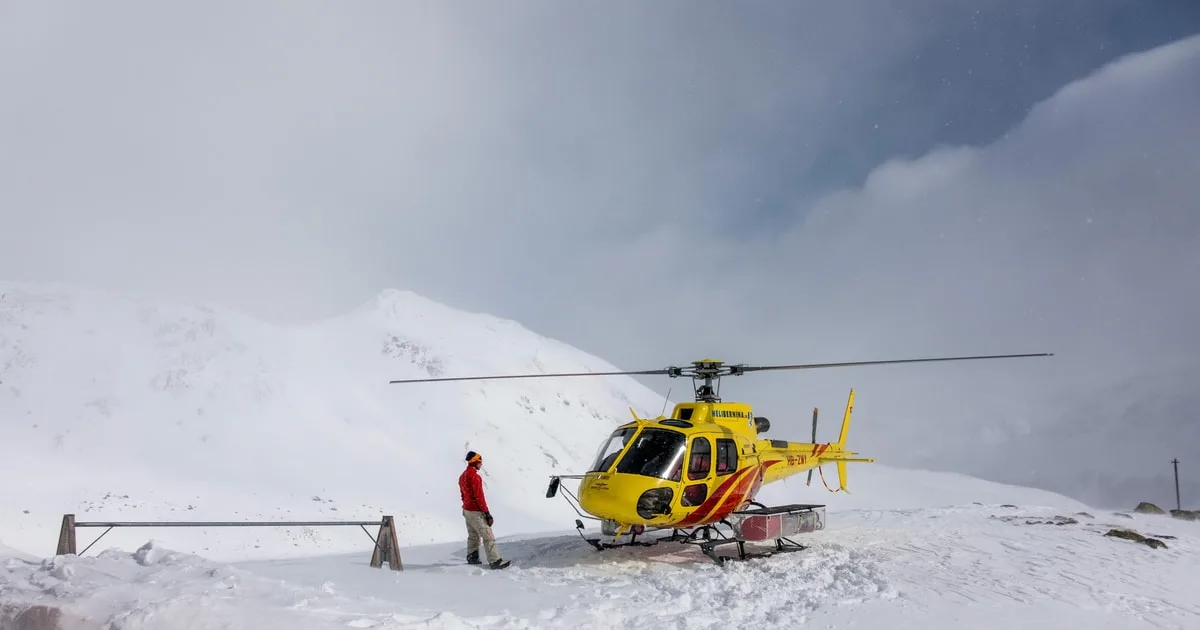
Short answer: The charter helicopter price to Mount Everest in 2027 is $4,500 per aircraft, not per person — a private AS350 B3 for up to five guests, roughly five to six hours door to door, including the Kala Patthar landing at 5,545 m and the Everest View Hotel stop at 3,880 m. Split five ways that is $900 each.
What a Charter Actually Buys You
A private charter is your aircraft, your schedule, your routing: the helicopter, pilot, fuel, and crew are yours alone for the booked block. You choose the departure time (within the weather window), the landing stops (subject to altitude rules), who sits where, and how long you stay. Shared-seat tours exist precisely because charters are expensive — five strangers splitting one aircraft is how a $4,500 Everest morning becomes a $1,260 seat.
- $260Cheapest seat, scenic flight
- $860Annapurna Base Camp
- $1,260Everest Base Camp day tour
- $4,500Private charter, whole aircraft
The people who should charter, without hesitation: families with young children (age rules on shared flights are strict), photography and film crews (door-off configurations and circling time are impossible on shared seats), corporate and incentive groups, medical and evacuation flights, and anyone whose schedule cannot survive a one-in-four weather delay. The people who should not: solo travellers and couples whose goal is the experience itself — the shared product delivers the identical flight for a third of the price.
The 2027 Price Table by Route
These are Kathmandu-based 2027 rates for a five-seat mountain-class helicopter (Airbus H125 / AS350 family — the workhorse of the Nepal fleet), quoted for the full aircraft. Prices move with fuel and season; treat these as the planning baseline and confirm the day's quote in writing.
| Charter route | Block time | 2027 price (full aircraft) |
|---|---|---|
| Kathmandu – Everest region day tour (Kala Patthar + Everest View Hotel) | ~4–5 h | $4,500 |
| Kathmandu – Lukla (one way) | ~1 h | from $1,700 |
| Kathmandu – Lukla (round trip, wait) | ~2–3 h | from $2,800 |
| Kathmandu – Muktinath day tour (with ground time) | ~4 h | from $4,200 |
| Kathmandu – Pokhara transfer (one way) | ~1 h | from $1,900 |
| Pokhara – Annapurna Base Camp (with landing) | ~1.5 h | from $2,585 |
| Kathmandu – Langtang Valley day tour | ~2 h | from $2,400 |
| Wedding / proposal flight, Kathmandu Valley | ~1 h | from $1,500 |
| Medical evacuation, within Nepal (case-dependent) | varies | quoted per case |
Reading the table honestly: the Everest day is the most expensive product on the board because it is the longest block at the highest altitudes, with two landings and the tightest weather window. The Lukla transfers look like poor value per minute until you remember the alternative is the world's most famous short runway. The Muktinath day carries a full hour of ground time at the temple, which is why it sits near the Everest price despite a shorter flight.
The Five Variables That Move Your Quote
1. Block time, not flight time. Operators quote in block hours — engine start to engine stop, including taxi, hover, waiting on the ground, and repositioning. A "45-minute flight to Lukla" is a 60–75 minute block. When you compare quotes, compare block totals, not the flying-time bullet point.
2. Weight. At 5,000 metres, a helicopter lifts roughly half of what it lifts at sea level. Every route has a maximum all-up weight — passengers, bags, fuel, crew. Lukla charters carry a hard 450–550 kg total; Everest landings restrict it further. Heavy groups split across two aircraft, and the quote doubles. Weigh-ins happen at the domestic terminal and are not negotiable.
3. Landings. Each high-altitude landing adds time, fuel burn, and pilot workload. A Everest day with two landings (ridge viewpoint + hotel breakfast) prices differently from a single-stop version. If a quote looks cheap, check which landings it actually contains.
4. Season and day of week. Peak-season mornings (October, March–May, Dasain/peak weekends) price at the top of the range. Midweek monsoon-season charters can come in under it. The weather risk in June–August is real, but on a clear monsoon morning the visibility is often dramatic and the price is the year's lowest.
5. Departure point. Kathmandu-based pricing is what the table above shows. A charter starting in Pokhara, Lukla, or elsewhere carries repositioning cost — the dead-leg flight to get the aircraft to you.
Hourly Rates and Why Everest Costs More per Minute
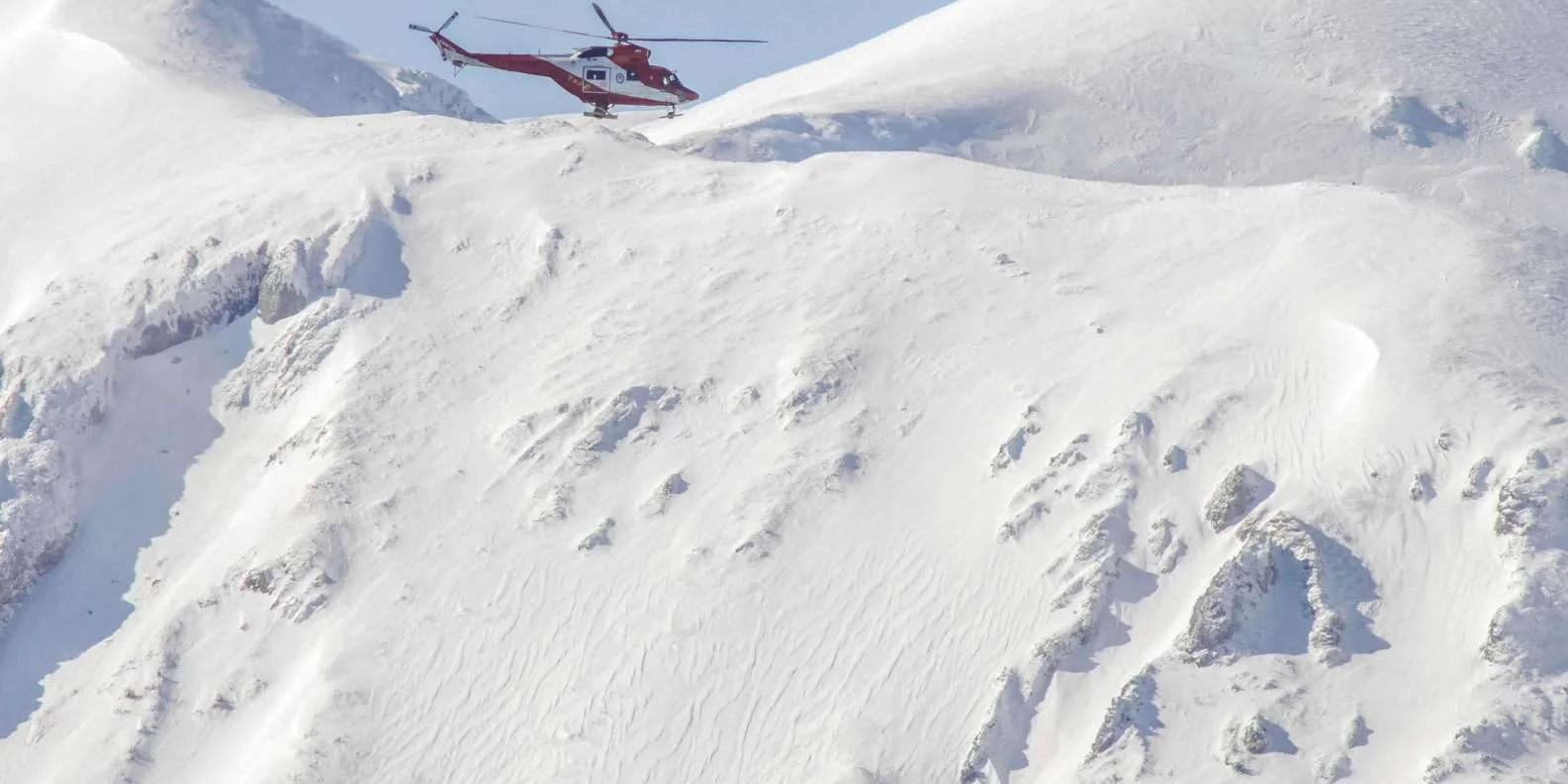
Flatten the table into rough per-hour economics and Nepal charters run $1,400–2,200 per block hour depending on route complexity. But per-minute, Everest is the most expensive air in the country, and it is worth understanding why. High-altitude performance limits mean the aircraft burns more fuel to lift less; the weather window concentrates all demand into the same four morning hours; and the landing sites demand the fleet's most experienced pilots, whose day rates reflect a decade of Khumbu flying. You are not paying for distance. You are paying for the density of difficulty packed into each minute.
This is also why the $260 scenic flyover and the $4,500 charter share the same sky and the same views for wildly different money: the flyover group fills an aircraft on a fixed schedule, the charter buys exclusivity and landings. Our Everest charter cost breakdown goes deeper on that specific route, and the complete charter guide covers aircraft types and route planning.
Weight Limits: The Number That Changes Everything
More charters die on weight than on price. The short version for planning: five average adults with day packs is the ceiling for most mountain routes; four adults with camera bags is the realistic Everest-landing configuration; and luggage beyond a small day bag belongs on the airline, not the helicopter. The weigh-in is with you at check-in, and the scale does not negotiate. Travellers who arrive with a trek duffel and a surprise suitcase discover that the choice is between leaving bags or leaving seats — and the seats cost more.
One planning trick that consistently saves groups money: put the main luggage on the scheduled flight (or leave it at the hotel in Kathmandu — every operator stores it free) and fly the mountain leg with day packs only. The difference in weight is frequently the difference between one aircraft and two.
Hidden Costs and Fair Refund Terms
Reputable operators quote one number that contains permits, crew, fuel, hotel transfers and (on day tours) the breakfast stop. What is legitimately outside: your travel insurance (mandatory, must cover helicopter activity), personal expenses at the stop, and hotel pickup outside the ring road. What should set off alarm bells: a "landing fee" quoted after payment, a fuel surcharge discovered on the helipad, or refund terms that vanish when weather cancels. Standard fair terms across the industry: weather cancellation means full refund or free rebooking on the next window, at your choice. Our cancellation and weather policy guide lists what to insist on in writing.
Charter helicopter price to Mount Everest in 2027
The number most people are looking for is $4,500 for the whole aircraft. That is a private AS350 B3 for up to five guests, and it is a per-aircraft price — not a per-seat fare — so the cost per person falls as the group grows: $900 each at five passengers, $1,125 at four, $1,500 at three, $2,250 at two.
| Passengers | Per person | What each is paying for |
|---|---|---|
| 1 | $4,500 | The whole aircraft and pilot for the morning |
| 2 | $2,250 | Same aircraft, split two ways |
| 3 | $1,500 | Same aircraft, split three ways |
| 4 | $1,125 | Same aircraft, split four ways |
| 5 | $900 | Same aircraft, full cabin — cheapest per seat |
What the $4,500 covers: the aircraft and pilot for the morning, hotel pickup and drop-off in Kathmandu, the Kala Patthar landing at 5,545 m, breakfast on the Everest View Hotel terrace at 3,880 m, operator permits, fuel, and flight insurance. It does not cover the national park and rural-municipality permits or the breakfast bill itself, which are charged locally in rupees.
How it compares with shared seats: five shared seats on the Everest Base Camp day tour cost five times $1,260 — $6,300 — against $4,500 for the whole aircraft. A full charter is therefore cheaper per person than five shared seats, and you control the departure time. For one or two travellers the maths reverses: shared seats are far cheaper, and a charter only makes sense when the aircraft is nearly full or the flexibility matters more than the fare.
Why Everest costs more per flying minute than any other route in the country: the aircraft climbs to 5,545 m, holds there while passengers are on the ground, and descends — and high-altitude time burns fuel and engine hours faster than a valley transfer does. That is also why the Everest day is the one route where the block time (~4–5 hours) is quoted rather than guaranteed.
If you want the bookable product rather than the planning baseline, the private Everest helicopter charter page carries the current inclusions and the confirmation terms.
Charter vs Shared Seat: The Real Math
| Charter (full aircraft) | Shared seat | |
|---|---|---|
| Everest day tour, 5 people | ~$4,500 → $900 each | ~$1,260 each |
| Everest day tour, 2 people | ~$4,500 → $2,250 each | ~$1,260 each |
| Everest day tour, 1 person | ~$4,500 | ~$1,260 |
The math flips at five passengers: a full charter among five friends costs less per head than five shared seats, buys a private aircraft, flexible timing and a schedule that waits for your group. Below four passengers, shared seats win unless exclusivity, photography, or schedule control is the actual product you are buying. The full comparison including group-joining dynamics is in our group joining vs private guide.
How to Book a Charter
Charters are booked person-to-person, not through forms: WhatsApp the Kathmandu office with your route, date, passenger count, and total weight estimate (yes, an honest guess), and you will get a same-day quote with the aircraft type, block time, and refund terms in writing. From first message to confirmed booking is typically under an hour in season. The direct line and office details are on our contact page, and the flagship product to start from is the Private Everest Helicopter Charter page. For Indian passport holders routing to Muktinath, the Indian travellers' guide covers documentation and temple timing specifics.
For the official background on this landmark, see Everest (8,848.86 m). It is worth reading before you plan, though nothing in it changes what the flight itself can do.
Related reading in this cluster: Group Joining Helicopter Flight in Nepal: Shared Seats vs…, Helicopter Charter in Nepal: The Complete 2027 Guide, and Helicopter Tour in Nepal 2027: Every Route, Price and Package.
Five questions to ask before you pay a charter deposit
- Is the quote per aircraft or per seat? A per-person figure on a charter is a red flag; the aircraft is the unit being sold.
- Is the landing point named? Kala Patthar and Everest Base Camp are different altitudes and different permissions. Get the intended one in writing.
- Are permits and breakfast inside or outside the number? They are charged locally in rupees, so a quote that omits them is not comparable with one that includes them.
- What is the weather rule? Rebooking, refund and the time of the morning call should be stated before payment, not negotiated after a cancelled flight.
- Which aircraft and how many seats? The AS350 B3 seats five for this route; a quote built on a smaller cabin changes the per-person maths completely.
None of these are trick questions, and a serious operator answers all five without hesitating. If one of them produces a vague answer, that is the answer.
Frequently Asked Questions
How much does it cost to charter a helicopter in Nepal in 2027?
Full-aircraft charters run from about $1,500 for a Kathmandu Valley hour to $4,500 for the Everest day tour and $4,200+ for a Muktinath day. Short transfers like Kathmandu–Lukla start near $1,700 one way. Quotes are per aircraft, not per person.
Is chartering cheaper than shared seats?
Only with a full aircraft. Five passengers splitting a $4,500 Everest charter pay $900 each — less than the $1,260 shared seat. For one or two people, shared seats are significantly cheaper.
What is the hourly rate for a helicopter in Nepal?
Roughly $1,400–2,200 per block hour (engine start to engine stop) for a five-seat H125/AS350 class aircraft, depending on route complexity and altitude. Everest-region flying sits at the top of the range.
How many people can a charter carry?
Up to five passengers on most mountain routes — but total weight, not seat count, is the binding limit: typically 450–550 kg for passengers plus bags combined on high-altitude routes. Heavier groups need a second aircraft.
Do I pay if weather cancels my charter?
Fair operators offer full refund or free rebooking on the next weather window at your choice. This should be stated in writing on the booking. Avoid any operator whose refund terms are verbal only.
Can I charter a helicopter from Lukla or Pokhara instead of Kathmandu?
Yes, but the quote carries repositioning cost — the dead leg to bring the aircraft to your departure point. Kathmandu-based pricing is the cheapest configuration for most routes.
Is helicopter charter in Nepal safe?
Nepal's mountain charter fleet is centred on the Airbus H125/AS350 family flown by high-time Khumbu pilots, with landings only at established sites. Operators follow altitude protocols: short ground time above 5,000 m, strict weight limits, and weather minimums that close the high routes roughly one morning in four.
How much is a charter helicopter to Mount Everest in 2027?
$4,500 for the whole aircraft, up to five guests, including the Kala Patthar landing at 5,545 m and the Everest View Hotel stop. It is a per-aircraft price, so five passengers pay $900 each.
Is a charter to Everest cheaper than five shared seats?
Yes. Five shared seats at $1,260 come to $6,300, against $4,500 for the entire aircraft. The charter is cheaper per person once the group is full, and you set the departure time.
What is not included in the $4,500 Everest charter?
The national park and rural-municipality permits and the breakfast bill at the Everest View Hotel. Both are charged locally in rupees and are itemised on the Everest cost guide.
Can a charter land at Everest Base Camp instead of Kala Patthar?
The landing point is decided by the pilot on the morning, subject to weather and regulations. Kala Patthar at 5,545 m is the higher and more reliable viewpoint; Base Camp sits at 5,364 m.
How long does the Everest charter take?
About five to six hours door to door from your Kathmandu hotel, with roughly four to five hours of block time on the aircraft, including the ground stop at altitude and the Everest View Hotel breakfast.